%201.avif)
How to Stay Cool During DFW Heat Waves: 7 Cooling Tips
Learn how to stay cool during DFW heat waves with 7 practical tips, safety advice, and long-term solutions for North Texas homes.

.svg)
.svg)
.svg)
DFW Summers Are Getting Dangerous — Here's What You Need to Know
Knowing how to stay cool during dfw heat waves could genuinely save your life. In North Texas, summer temperatures regularly climb past 100°F, and when humidity pushes the heat index to 105°F or higher, the danger escalates fast. Heat kills more Americans every year than tornadoes and floods combined — and most of those deaths are entirely preventable.
Quick Answer: How to Stay Cool During DFW Heat Waves
- Set your thermostat to 78°F when home, higher when away
- Limit outdoor activity to early morning or after sunset
- Drink 9–13 cups of water daily — before you feel thirsty
- Keep blinds and curtains closed on south- and west-facing windows
- Use public cooling centers like libraries and recreation facilities
- Apply cool water to pulse points (neck, wrists, armpits) for fast relief
- Never leave children or pets in a parked car
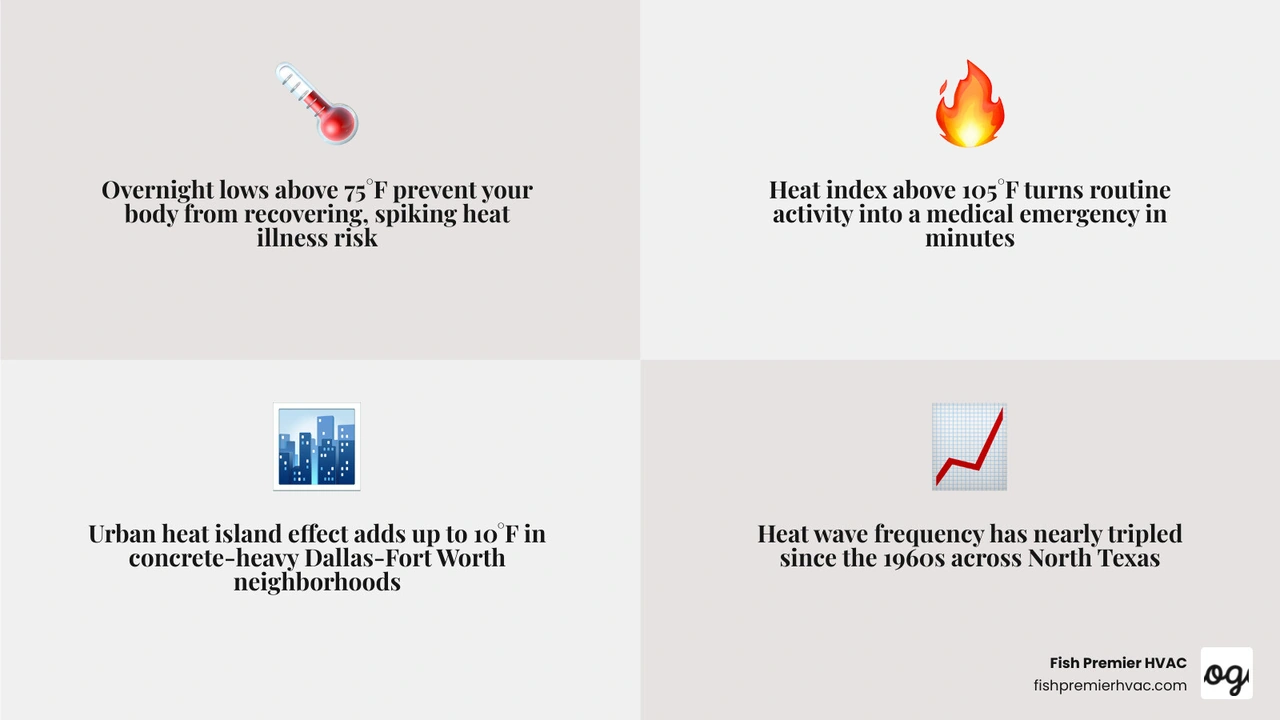
What makes DFW summers especially brutal is not just the daytime heat — it's the nights. When overnight lows stay above 75°F, your body never fully recovers from the day's heat stress. Experts note that those warm nights are when heat illness and heat stroke rates climb sharply. Add in the urban heat island effect from Dallas and Fort Worth's dense concrete and asphalt, and conditions can feel relentless from June through September.
Heat wave frequency has also nearly tripled since the 1960s. What once felt like an occasional extreme event is now a regular feature of North Texas summers — and your home comfort systems need to be ready for it.
This guide walks you through everything you need: how to recognize heat-related illness, protect your family and pets, access local cooling resources, and set your home up to handle the heat efficiently all season long.
How to stay cool during dfw heat waves glossary:
Understanding the Danger: How to Stay Cool During DFW Heat Waves
To effectively protect your home and family, we must first look at the science behind North Texas weather. Our regional summer climate is heavily influenced by high-pressure systems known as "heat domes." These atmospheric phenomena trap hot ocean air like a lid on a pot, preventing cloud cover and wind from cooling the ground.
When you combine a heat dome with our high dew points—often hovering around 65°F or higher—the air becomes thick and humid. Humidity is a major risk factor because it impairs the body's primary cooling mechanism: the evaporation of sweat. When the air is already saturated with moisture, sweat cannot evaporate efficiently, leaving your body unable to shed excess heat.
This is why meteorologists talk so much about the heat index, or the "feels like" temperature. For example, an air temperature of 96°F combined with 45% relative humidity falls squarely into the National Oceanic and Atmospheric Administration's (NOAA) "Danger" category for prolonged exposure. In concrete-heavy urban centers, this is further amplified by the urban heat island effect, where roads, parking lots, and brick buildings absorb radiant heat during the day and slowly release it at night.
As overnight temperatures fail to drop below 75°F, the cumulative strain on your cardiovascular system increases. This lack of overnight relief also forces your air conditioning system to run continuously without a break. To understand how these prolonged high temperatures degrade your system’s performance and what you can do about it, take a look at our guide on How Heat Waves Affect AC Efficiency.
Furthermore, extreme demand during these multi-week heat events puts an unprecedented load on the ERCOT electrical grid. Ensuring your home is prepared to stay cool efficiently not only protects your family but also helps reduce the strain on our state's power infrastructure.
Recognizing and Responding to Heat-Related Illnesses
When the human body is exposed to extreme temperatures for too long, its natural temperature-regulation system can begin to fail. The physiological effects of heat exposure typically progress through three distinct stages: heat cramps, heat exhaustion, and heat stroke.
Heat cramps are usually the first warning sign. Characterized by painful muscle spasms in the calves, arms, or abdomen, they occur when heavy sweating depletes the body's moisture and essential salt levels. If you experience heat cramps, you must stop all activity, move to a cool spot, and drink water or an electrolyte-rich beverage.
If left unchecked, heat cramps can quickly escalate into more severe conditions.
Identifying Heat Exhaustion vs. Heat Stroke
It is critical to know how to distinguish between heat exhaustion and heat stroke, as the latter is a life-threatening medical emergency.
| Symptom / Sign | Heat Exhaustion | Heat Stroke |
|---|---|---|
| Body Temperature | Usually under 103°F | 103°F or higher |
| Skin Condition | Cold, pale, clammy, and moist | Hot, red, dry, or heavily damp |
| Sweating | Heavy, excessive sweating | Sweating may have completely stopped |
| Pulse Rate | Fast and weak | Rapid and exceptionally strong |
| Neurological State | Dizzy, headache, faint, or fatigued | Confused, slurred speech, delirious, unconscious |
| Stomach Issues | Nausea, vomiting, or stomach cramps | Nausea or vomiting may occur |
Immediate First Aid for Extreme Heat Exposure
If you suspect someone is suffering from heat exhaustion:
- Move them to a shaded or air-conditioned indoor area immediately.
- Loosen or remove tight, heavy clothing.
- Apply cool, wet cloths to their skin, or have them take a cool bath.
- Place cold rags or ice packs on their pulse points—specifically the neck, wrists, armpits, and groin—where large blood vessels run close to the skin's surface.
- Have them slowly sip cool water. Do not let them drink too quickly, and avoid caffeinated or sugary beverages.
- If they begin vomiting or their symptoms worsen, seek professional medical attention immediately.
If you suspect someone is experiencing heat stroke:
- Call 911 immediately. This is a medical emergency that can lead to permanent organ damage or death.
- Move the person to a cooler environment.
- Rapidly lower their body temperature using whatever means available: douse them with cool water from a hose, place them in a cool bath, or wrap them in cold, wet sheets.
- Do NOT give them anything to drink. An individual with heat stroke may have an altered mental state or be semi-conscious, making drinking a severe choking hazard.
7 Practical Tips to Stay Cool and Safe in North Texas

Surviving a Texas summer requires a mix of smart home management, personal care, and daily behavioral adjustments. Below are seven practical, highly effective tips to protect your health and keep your home comfortable.
1. Optimize Your Thermostat and HVAC Settings
Your air conditioner is your primary line of defense during a DFW heat wave. However, asking it to maintain a chilly 68°F when it is 105°F outside is a recipe for system failure.
To protect your system from breaking down under extreme stress, we recommend setting your thermostat to 78°F when you are at home. While this might sound warm initially, you can pair this setting with ceiling fans running in a counterclockwise direction. This creates a "wind-chill" effect, making the room feel up to four degrees cooler than the actual air temperature without placing extra load on your compressor.
When you leave your home for more than four hours, raise the thermostat setting to 82°F or 85°F. Do not turn the AC completely off; doing so allows high levels of indoor humidity to build up, making it twice as hard for your system to cool the home back down later. For a complete breakdown of how to program your system for maximum savings, see our guide on the Best Thermostat Settings for Energy Savings in Texas.
Additionally, keeping your system running smoothly requires simple, proactive steps like replacing your air filters monthly during peak summer. For more advice on keeping your system operational during extreme weather, read How to Help Your AC During a Texas Heat Wave.
2. Adjust Your Daily Routine and Outdoor Activities
Minimizing your heat exposure requires adjusting the timing of your daily activities. Limit strenuous outdoor exercise, yard work, or walks to the early morning hours (before 8:00 AM) or late evening hours (well after sunset).
You should also adjust how you use your household appliances. Large appliances like clothes dryers, dishwashers, and ovens generate significant ambient heat and moisture inside your home. Run these appliances after 8:00 PM when outdoor temperatures have dropped, reducing the thermal load on your air conditioner.
Additionally, unplug unused electronics and chargers. Many devices draw power and emit heat even when turned off—a phenomenon known as "vampire draw." Switching to LED lightbulbs also helps, as traditional incandescent bulbs release up to 90% of their energy as heat. For more behavioral adjustments that save energy, check out our Summer Energy Saving Tips for DFW Homeowners.
3. Utilize DFW Cooling Centers and Public Spaces
If your home’s air conditioning is struggling to keep up, or if you do not have access to reliable cooling, you should take advantage of public air-conditioned spaces. Spending even two to three hours in a cool environment significantly reduces the cumulative heat stress on your body.
Throughout the Dallas-Fort Worth Metroplex, municipal governments and non-profit organizations open designated cooling centers during extreme heat advisories:
- Dallas County: Dallas public libraries and community recreation centers serve as daytime cooling locations during normal business hours. The West Dallas Multipurpose Center and the Martin Luther King Jr. Community Center are also designated cooling sites.
- Arlington: The Arlington Public Library branches and local recreation centers are open to residents seeking relief from the heat.
- Emergency Services: Organizations like the Salvation Army operate dedicated cooling stations equipped with hydration and seating when the heat index reaches triple digits. The Office of Homeless Solutions also coordinates emergency outreach and cooling resources for unsheltered individuals.
Before heading out, check your local city or county severe weather portal to verify operating hours and locations.
4. Master Hydration and Nutrition Best Practices
Staying hydrated is your body's best defense against heat-related illness. As a general rule, most adults need between 9 to 13 cups of water daily, but this requirement increases significantly when temperatures soar or if you are physically active.
- Drink before you feel thirsty: Thirst is an early sign of mild dehydration. Sip water consistently throughout the day.
- Avoid dehydrating beverages: Limit drinks containing high amounts of caffeine, alcohol, or sugar. These act as diuretics, causing your body to lose fluids more rapidly.
- Recognize dehydration signs: Watch for warning signs such as dark-colored urine, dry mouth, extreme fatigue, dizziness, or a rapid pulse.
- Eat light, balanced meals: Heavy meals rich in proteins and fats require more metabolic energy to digest, which naturally increases your internal body temperature. Opt for light, water-rich foods like salads, fresh fruits, and vegetables to help maintain your hydration levels.
5. Protect Vulnerable Loved Ones, Workers, and Pets
Extreme heat does not affect everyone equally. Certain groups require extra attention and protection during a heat wave:
- Children and Older Adults: Children adjust to heat more slowly than adults, and older adults may have pre-existing cardiovascular conditions or take medications that impair their body's ability to regulate temperature. Check on elderly neighbors and family members at least twice a day.
- Outdoor Workers: If you or a loved one must work outdoors, utilize a strict "buddy system." Monitor each other for signs of confusion, heavy sweating, or slurred speech. Take frequent, mandatory breaks in shaded or air-conditioned areas.
- Pet Safety: Never leave a pet inside a parked car, even for a few minutes. On a 95°F day, the interior temperature of a vehicle can climb to 120°F in less than ten minutes, even with the windows cracked.
- Protecting Paws: Before walking your dog, touch the pavement with the back of your hand for seven seconds. If it is too hot for your hand, it will burn your pet's paw pads. Schedule walks for early morning or late evening, and never leave pets outside unattended above 85°F. Remember: a standard wooden doghouse does not provide adequate shade in a Texas summer; without airflow, it acts like an oven.
6. Implement DIY Cooling Methods Without Air Conditioning
If you find yourself without functioning air conditioning during a heat wave, you must take immediate, proactive steps to keep your body temperature down:
- Create a Cool Corner: Choose one room in your home—ideally on the lowest level and away from direct sunlight—to seal off and focus your cooling efforts there.
- The Ice Fan Trick: Place a shallow bowl of ice directly in front of a box fan. The fan will blow air over the melting ice, creating a cool, refreshing mist.
- Soak Your Pulse Points: Submerge your feet and lower arms in cool water for 10 to 15 minutes, or apply cool, damp towels to your neck, wrists, and underarms.
- Hanging Wet Towels: In dry indoor environments, hanging damp towels near open windows or in front of fans can help lower air temperatures through evaporative cooling.
- Dampen Your Clothing: Soak a lightweight t-shirt in cool water, wring it out, and wear it while sitting in front of a fan. Re-wet the shirt hourly to keep your core temperature down.
- Window Reflectors: Use temporary cardboard panels covered in aluminum foil placed inside your windows to reflect radiant solar heat back outdoors.
7. Prepare Your Home and Reduce Energy Costs
Keeping your home cool is largely about preventing outdoor heat from getting inside in the first place. By taking a few simple steps, you can lower your indoor temperature and reduce your energy bills:
- Manage Your Windows: Keep curtains, blinds, and drapes tightly drawn during the day, particularly on south- and west-facing windows. Installing temporary window reflectors or solar-control films can block a significant amount of radiant heat.
- Seal Air Leaks: Apply weather-stripping around doors and apply caulk to seal gaps around window frames. This prevents expensive, conditioned air from escaping while keeping hot, humid outdoor air out.
- Inspect Ductwork and Insulation: Ensure your attic door is sealed and that your air conditioning ducts are properly insulated. Leaky ducts in a hot attic can lose up to 30% of your system's cooling capacity before the air ever reaches your living spaces.
For more actionable strategies to lower your monthly utility costs, see our guide on Reducing Cooling Costs During Heat Waves. If your system is already running constantly but your home still feels warm, read our troubleshooting resource on When Your AC Can't Keep Up With the Heat.
Long-Term Solutions for Managing Comfort in DFW
While immediate, short-term adjustments are essential during an active heat wave, the most effective way to ensure year-round comfort and safety is through long-term home improvements. Proactive upgrades protect your family from extreme weather while lowering your overall energy footprint.
A great starting point is improving your home's thermal envelope. Upgrading your attic insulation to a higher R-value prevents radiant heat from migrating from your roof into your living spaces. Additionally, installing outdoor awnings, louvers, or solar screens on your windows can reduce the amount of solar heat entering your home by up to 80%.
Regular preventative maintenance is also critical to keeping your comfort systems running reliably. To learn more about how professional tune-ups extend the lifespan and efficiency of your system, read our guide on the Benefits of Regular AC Maintenance in Texas.
Upgrading to High-Efficiency Systems for DFW Heat Waves
When it is time to replace your air conditioner, upgrading to a modern, high-efficiency system is one of the smartest investments you can make.
Modern systems designed for hot climates feature advanced technologies:
- High SEER2 Ratings: The Seasonal Energy Efficiency Ratio (SEER2) measures how efficiently an AC unit operates over an entire cooling season. Systems with higher SEER2 ratings use significantly less electricity to deliver the same amount of cooling.
- Variable-Speed Compressors: Traditional air conditioners operate on an "all-on" or "all-off" cycle. Variable-speed systems continuously adjust their output to match your home's exact cooling needs. This allows them to run at lower, highly efficient speeds for longer periods, providing superior humidity control and keeping your home's temperature incredibly stable.
- ENERGY STAR Certification: Choosing ENERGY STAR certified equipment ensures your system meets strict efficiency guidelines set by the EPA.
To understand what goes into professional maintenance and how to keep your system in peak condition, explore our AC Maintenance Southlake TX Complete Guide. If your system is older, keeping it well-maintained is especially important to avoid Late Summer AC Performance Issues.
Smart Thermostats and Home Improvements for DFW Heat Waves
Integrating a smart thermostat into your home comfort setup provides precise control over your indoor climate. These devices learn your daily schedule and temperature preferences, automatically adjusting settings when you are away to maximize efficiency.
Many smart thermostats also monitor outdoor weather conditions and indoor humidity levels, adjusting your system's run times to prevent humidity spikes. You can manage your home's climate remotely via your smartphone, allowing you to cool your home back down right before you return.
These automated adjustments prevent your system from working harder than necessary during peak afternoon heat, protecting your equipment from AC End of Summer Heat Spikes.
Frequently Asked Questions about DFW Heat Waves
What is the safest indoor temperature during a Texas heat wave?
For most homes, the ideal target is 78°F when you are awake and at home. This setting provides a safe, healthy indoor environment while preventing your AC system from running continuously and overheating. For sleeping comfort, a setting between 72°F and 75°F paired with a ceiling fan is recommended. Avoid dropping the thermostat to extremely low settings (like 65°F) during the hottest part of the day; this will not cool your home any faster and can place dangerous stress on your compressor.
Why is my AC struggling to keep up with the extreme heat?
Most residential air conditioning systems are designed to handle a maximum temperature difference of about 20 degrees between the outdoor air and the indoor air. When DFW temperatures surpass 100°F, your system must work significantly harder. Common reasons your system might struggle include a dirty air filter, restricted airflow around the outdoor condenser unit, low refrigerant levels, leaky ductwork in your attic, or insufficient attic insulation. For a detailed guide on diagnosing these issues, read When Your AC Can't Keep Up With the Heat.
Where can I find emergency cooling centers in Dallas-Fort Worth?
During periods of extreme heat, designated cooling centers are opened across the metroplex. You can find active cooling centers at local public libraries, municipal recreation centers, and community facilities in Dallas, Fort Worth, Arlington, and surrounding cities. Organizations like the Salvation Army and local severe weather portals provide up-to-date lists of locations, operating hours, and transportation options.
Experience True Home Comfort with Fish Premier HVAC
At Fish Premier HVAC, we believe your home should be a sanctuary of comfort, health, and luxury—especially when North Texas summers are at their most extreme. Serving homeowners in Keller, Westlake, Colleyville, Southlake, and the broader Dallas-Fort Worth area, we deliver concierge-level service tailored to those who demand the absolute best in residential comfort.
Our comprehensive comfort solutions include:
- High-Efficiency HVAC Systems: Expertly designed and installed premium air conditioning systems that keep your home perfectly cool while maximizing energy efficiency.
- Advanced Air Scrubbers: Whole-home air purification systems that eliminate airborne contaminants, allergens, and odors, ensuring pristine indoor air quality.
- Whole-House Backup Generators: Reliable backup power solutions that keep your home fully powered, comfortable, and safe during summer storm outages and grid emergencies.
- Premium Home Scenting: Custom, sophisticated scenting solutions that elevate your indoor living experience.
We operate Monday through Friday from 8:00 AM to 6:00 PM, with prompt, expert after-hours emergency services available to ensure you are never left without cooling when you need it most. Our highly trained technicians are known for their great analysis capabilities, precise diagnostics, and prompt, professional service.
Experience the difference of whole-home luxury and expert service. Contact us today to schedule your system consultation.
Explore Our Premium Air Conditioning Solutions
Fish Premier HVAC | Fort Worth, TX | Texas License #TACLB99535E