%201.avif)
A Quick Start Guide to Summer Energy Saving Tips for DFW Homeowners
Beat the North Texas heat with these summer energy saving tips for dfw homeowners to lower cooling costs and boost efficiency.

.svg)
.svg)
.svg)
Why Summer Energy Bills Hit DFW Homeowners Harder Than Almost Anywhere Else
The best summer energy saving tips for DFW homeowners start with one hard truth: North Texas summers are not like anywhere else. From June through September, temperatures routinely push past 100°F, your AC runs almost nonstop, and that August electricity bill can feel like a second mortgage.
Here are the highest-impact ways to cut cooling costs this summer:
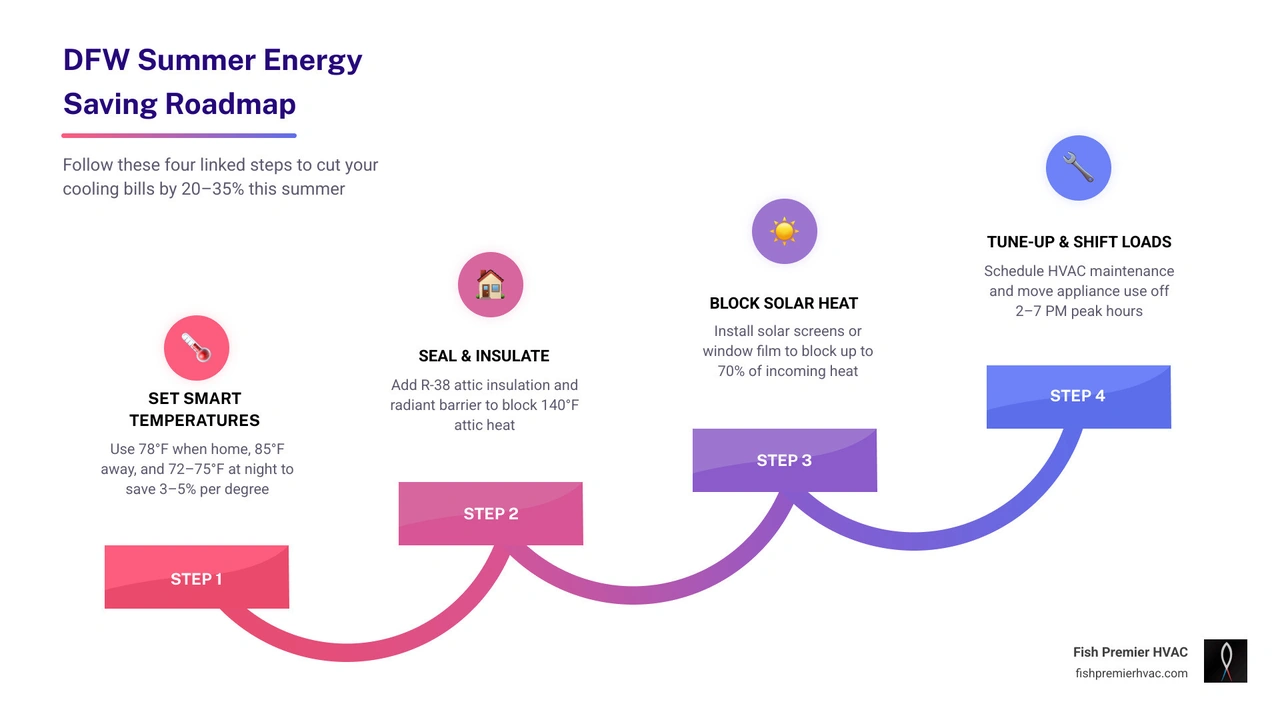
- Set your thermostat to 78°F when home, 85°F when away, and 72°F–75°F for sleeping
- Seal air leaks around doors, windows, and attic hatches to stop 10–25% of cooled air from escaping
- Upgrade attic insulation to R-38 and add a radiant barrier — attic temps can hit 140°F in DFW
- Schedule an HVAC tune-up before peak heat to keep your system running up to 15% more efficiently
- Block solar heat gain with solar screens, window film, or blackout curtains on south- and west-facing windows
- Shift appliance use — dishwasher, dryer, and oven — to before 10 AM or after 9 PM to avoid peak demand hours
- Shop electricity rates on PowerToChoose.org and lock in a fixed-rate plan before summer pricing peaks
- Unplug idle devices to eliminate phantom loads that quietly drain energy around the clock
The average Texas household spends around $1,750 a year on electricity, with monthly bills typically landing between $130 and $170 — and that number climbs fast in a DFW summer. Air conditioning alone accounts for 50–60% of your home's electricity use during July and August. Every degree you drop below 78°F adds roughly 3–5% to your cooling costs, so small thermostat decisions add up quickly.
The good news? A layered approach — smarter thermostat settings, better attic performance, routine HVAC care, and a few daily habit shifts — can realistically cut your summer cooling costs by 20–35%. This guide walks you through each step in plain language so you can start saving right away.
Optimizing Your Thermostat for the North Texas Heat

In the DFW Metroplex, the thermostat is the "command center" for your home's energy consumption. Many homeowners believe that cranking the AC down to 68°F will cool the house faster, but air conditioners don't work like a garden hose; they remove heat at a steady rate. Setting it lower only increases the runtime, putting immense strain on your equipment during 105°F afternoons.
Understanding How Heat Waves Affect AC Efficiency is vital. When the temperature differential between the outdoors and your desired indoor setting exceeds 20 degrees, your system has to work significantly harder. By following the "3-5% rule"—where every degree below 78°F increases your bill by 3% to 5%—you can see why a setting of 72°F could easily add $50 to your monthly bill compared to 78°F.
Recommended summer energy saving tips for dfw homeowners: Temperature Settings
Finding the "sweet spot" for your thermostat involves balancing comfort with humidity control. In North Texas, we recommend a three-tiered approach:
- At Home: 78°F. This is the industry-standard balance for energy efficiency. If this feels too warm, pairing it with a ceiling fan can make it feel like 74°F.
- Away (4+ hours): 85°F to 88°F. Never turn your AC completely off. In our humid climate, an "off" system can lead to mold growth and make it nearly impossible for the unit to recover when you return.
- Sleeping: 72°F to 75°F. Most people sleep better in cooler temperatures. Lowering the temp at night is more efficient because the system isn't fighting the afternoon sun.
Learning How to Maintain Your AC in Extreme Heat ensures your system can actually reach these targets without failing mid-July.
Smart Technology and Air Circulation
Smart thermostats are a game-changer for DFW residents. Features like geofencing can detect when your smartphone leaves the Southlake or Keller area and automatically shift to "Away" mode. This technology can save up to 10% on annual cooling costs by ensuring you aren't cooling an empty house.
Don't forget the power of the windchill effect. Ensure your ceiling fans are rotating counter-clockwise in the summer. This pushes air straight down, creating a breeze that helps moisture evaporate from your skin. Just remember: fans cool people, not rooms. Turn them off when you leave the room to avoid wasting electricity. Understanding how these small adjustments impact your AC SEER Rating Costing You Money helps you appreciate the long-term value of efficiency.
Fortifying the Attic and Home Envelope
If your home is in Westlake or Colleyville, your attic is likely the biggest "energy drain" in your house. On a 105°F July afternoon, a poorly ventilated DFW attic can reach temperatures of 140°F to 150°F. This heat radiates through your ceiling and heats up the ductwork, forcing your AC to work twice as hard to deliver cool air.
High-Impact summer energy saving tips for dfw homeowners: Insulation and Sealing
To combat this "oven effect," your attic needs a two-pronged defense:
- Insulation: North Texas building codes generally recommend R-38 insulation. If you can see your floor joists in the attic, you likely need more blown-in insulation.
- Radiant Barriers: These reflective foils or sprays can reduce attic temperatures by 20 to 45 degrees by reflecting solar heat back out through the roof.
| Insulation Type | Typical R-Value | DFW Benefit |
|---|---|---|
| Blown-in Fiberglass | 2.2 - 2.7 per inch | Excellent for covering gaps and hard-to-reach corners. |
| Cellulose | 3.2 - 3.8 per inch | Higher density, great for soundproofing and heat resistance. |
| Radiant Barrier | N/A (Reflective) | Essential for blocking the intense Texas sun. |
Beyond insulation, air sealing is critical. Small gaps around utility penetrations, attic hatches, and recessed lighting can account for 10% to 25% of your home's energy loss. Using weatherstripping on doors and caulking around window frames prevents your expensive "conditioned" air from leaking into the Texas heat. Following HVAC Maintenance Tips for Texas Homeowners will help you identify these hidden leaks during your seasonal inspections.
Managing Solar Heat Gain and Window Efficiency
Windows are essentially "heat magnets" for your home. In DFW, west-facing windows are particularly problematic as they catch the brunt of the late-afternoon sun. One of the most effective summer energy saving tips for dfw homeowners is to stop the heat before it enters the glass.
- Solar Screens: These are exterior screens that can block 65% to 90% of solar radiation. They are incredibly popular in neighborhoods across Keller and Southlake because they work without ruining your view.
- Window Film: A professional-grade tint can block up to 70% of solar heat gain. This is a great "invisible" option for modern luxury homes.
- Thermal and Blackout Curtains: Inside the home, heavy drapes can reduce heat gain by up to 77%. Keep them closed on the sunny side of the house from 10 AM to 6 PM.
- Reflective Roofing: If you are due for a roof replacement, consider "Cool Roof" shingles or Energy Star-rated materials. These can reduce your roof's surface temperature by up to 50 degrees.
Professional Maintenance and High-Efficiency Upgrades
You wouldn't drive your car across the country without an oil change, yet many homeowners expect their AC to run 2,000 hours a summer without a tune-up. A well-maintained system cools faster and uses up to 15% less energy.
Our concierge-level service at Fish Premier HVAC focuses on proactive care. An annual tune-up should include cleaning the condenser coils, checking refrigerant levels, and calibrating the thermostat. You can see How a Maintenance Plan Extends AC Life in Texas to understand why these visits are more than just a "check-up"—they are a safeguard for your home's comfort.
Essential summer energy saving tips for dfw homeowners: HVAC Care
The single most important DIY task is changing your air filter. During a DFW summer, we recommend checking your filter every 30 days. A dirty filter restricts airflow, forcing the blower motor to work harder and potentially causing the evaporator coil to freeze.
If your system is more than 12-15 years old, it may be time to consider an upgrade. Modern SEER2 standards mean new units are significantly more efficient than those installed just a decade ago. We can help you navigate Texas Energy Rebates for HVAC Upgrades and show you How to Apply for Energy Rebates in Texas to offset the investment. For many DFW homes, exploring Heat Pump Benefits for Texas Homeowners is a smart move, as these systems provide incredibly efficient cooling and are perfect for our mild North Texas winters.
Smart Habits and Electricity Plan Management
Sometimes, the best summer energy saving tips for dfw homeowners don't cost a dime—they just require a change in routine.
- Appliance Timing: Avoid using the oven, dishwasher, or clothes dryer between 2 PM and 7 PM. These appliances generate heat that your AC then has to work to remove. Try "batch cooking" or using an outdoor grill to keep the kitchen cool.
- Peak Demand: ERCOT (the Texas grid operator) often sees peak demand in the late afternoon. Reducing your usage during these hours helps stabilize the grid and can save you money if you are on a "time-of-use" plan.
- PowerToChoose.org: Since Texas has a deregulated energy market, shopping for a better rate is the fastest way to lower your bill. Look for fixed-rate plans and always read the Electricity Facts Label (EFL) to avoid hidden fees.
- Phantom Loads: Electronics like gaming consoles, coffee makers, and chargers draw power even when turned off. Unplug them or use smart power strips to kill the "vampire" energy drain.
Frequently Asked Questions about DFW Summer Energy
What is the best thermostat setting for a Dallas summer?
We recommend 78°F when you are at home. While it might take a day or two to adjust, pairing this setting with ceiling fans provides excellent comfort. When you are away for more than four hours, bump it up to 85°F. For sleeping, most DFW residents find 72°F–75°F to be the ideal range. Every degree you can stand to raise the setting saves about 3% on your bill.
How often should I change my AC filter in North Texas?
During the peak of summer (June through September), you should inspect your filter every 30 days. If you have pets or live in a high-dust area like a new construction zone in Keller or Westlake, you might need to replace it monthly. High-efficiency pleated filters are great, but make sure they aren't so thick that they restrict your system's airflow.
Do radiant barriers actually work in DFW attics?
Absolutely. In the intense North Texas sun, radiant heat is the primary cause of high attic temperatures. A radiant barrier acts like a mirror, reflecting that heat away. Homeowners often report attic temperature drops of 20 to 45 degrees, which significantly reduces the heat "soaking" into your living spaces and ductwork.
Conclusion
At Fish Premier HVAC, we believe that home comfort should be a luxury, not a source of stress. Whether you are in Keller, Westlake, Colleyville, or Southlake, our concierge-level service is designed to provide "Whole Home Luxury" through high-efficiency systems, advanced air scrubbers, and reliable backup generators. We don't just fix AC units; we engineer environments where you can relax, breathe clean air, and even enjoy custom home scenting solutions.
Don't let the North Texas heat dictate your summer budget. From premium installations to expert analysis of your home's energy drains, we are here to ensure your sanctuary remains cool and efficient all season long.
Schedule your premium air conditioning consultation today or call us to learn more about our high-efficiency upgrades and luxury comfort solutions.