%201.avif)
The Ultimate Guide to Best HVAC Setup for DFW Area Weather
Discover the best HVAC setup for DFW area weather with high-efficiency systems, humidity control, and expert installation for year-round comfort.

.svg)
.svg)
.svg)
Why the Best HVAC Setup for DFW Area Weather Is Unlike Anywhere Else in the Country
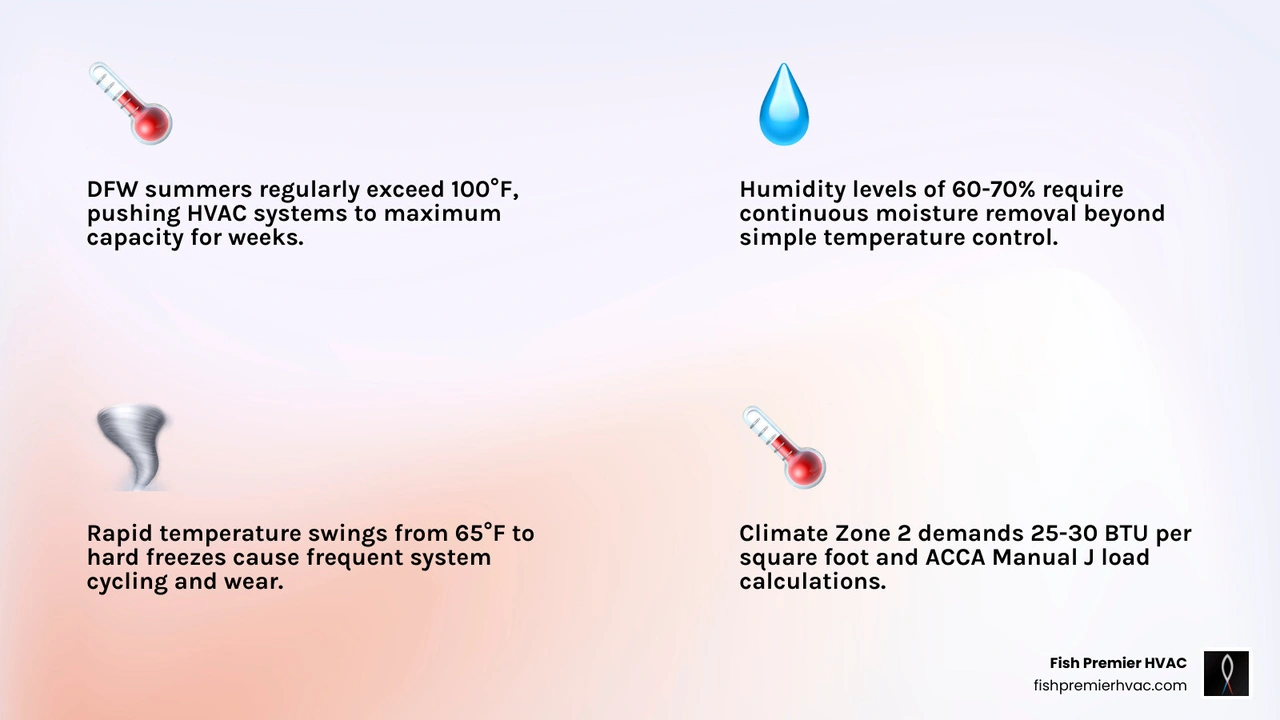
Finding the best HVAC setup for DFW area weather is not just about picking a brand off a list — it is about matching your system to one of the most demanding climates in the United States. Dallas-Fort Worth summers routinely push past 100°F, average humidity hovers between 60% and 70%, spring pollen clogs filters fast, and winter can swing from 65°F one afternoon to a hard freeze the next morning. Standard HVAC systems built around national averages simply were not engineered for this.
Here is a quick-reference summary of what the best DFW HVAC setup looks like:
| Feature | DFW Recommendation |
|---|---|
| Efficiency Rating | 18-22 SEER2 minimum; 20+ SEER2 ideal |
| Compressor Type | Variable-speed (inverter-driven) |
| Sizing Standard | 25-30 BTU per square foot (not the national 20) |
| Sizing Method | ACCA Manual J load calculation |
| System Type | Central AC + gas furnace or dual-fuel heat pump |
| Key Add-Ons | Whole-home dehumidifier, smart thermostat, zoning |
| Maintenance | Bi-annual tune-ups (spring and fall) |
| Refrigerant | R-454B or R-32 (R-410A production ended January 2025) |
What makes this region uniquely tough on HVAC equipment is not any single factor — it is the combination. Extreme heat drives your system to run longer. High humidity demands continuous moisture removal, not just temperature drop. Rapid seasonal swings cause frequent cycling that accelerates wear. And for homeowners in DFW's most sought-after neighborhoods, a system that simply "keeps the house cool" is not enough. You want whole-home comfort, whisper-quiet operation, and the confidence that your investment is protected for the long haul.
This guide breaks down every piece of that puzzle — from efficiency ratings and compressor technology to sizing standards, seasonal maintenance, and smart comfort upgrades — so you can make an informed decision about the right setup for your home.
Understanding the Best HVAC Setup for DFW Area Weather Challenges

Living in the Dallas-Fort Worth metroplex means preparing for a climate that is classified as "hot and humid" (Climate Zone 2). The ASHRAE design temperatures for our area are 100-102°F for summer, but as any resident of Keller or Southlake knows, reality often exceeds those numbers for weeks at a time. This extreme heat is a primary driver of system failure. How Heat Waves Affect AC Efficiency is a critical topic because, at 105°F, a standard unit loses a significant portion of its cooling capacity just trying to keep up with the ambient outdoor temperature.
Beyond the heat, we face "Texas-sized" humidity. Average levels of 60-70% mean your air conditioner has to work double duty: it must lower the temperature while simultaneously wringing gallons of water out of the air. If your system isn't optimized for this, you’ll end up with a home that feels "cold and clammy" rather than crisp and comfortable.
Furthermore, How Texas Storms Affect Your HVAC System is a reality every spring. High winds, hail, and power surges can wreak havoc on outdoor condensers. When you combine this with the rapid temperature swings of North Texas—where mornings can be in the 50s and afternoons in the 80s—your HVAC system undergoes a "stress test" daily. The best hvac setup for dfw area weather must be robust enough to handle these fluctuations without frequent cycling or mechanical strain.
Why Humidity Control is the Best HVAC Setup for DFW Area Weather
In North Texas, comfort is often determined more by humidity than by the thermostat reading. High indoor humidity doesn't just make you feel sticky; it creates a breeding ground for mold and degrades indoor air quality. It is also a primary reason Why Do AC Units Wear Out Faster in Hot Climates. When humidity is high, the system must run longer cycles to reach the "dew point" on the evaporator coil.
A sophisticated setup treats dehumidification as a priority. This involves choosing systems that can run at lower speeds for longer periods, allowing for maximum moisture removal without over-cooling the home. For the ultimate luxury experience, integrating a dedicated whole-home dehumidifier ensures your home remains at a perfect 45-50% humidity level, even when it’s raining outside in Westlake.
High-Efficiency Technology: SEER2 and Variable-Speed Performance
As of May 2026, the standard for efficiency has shifted toward SEER2 ratings. While the federal minimum for our region is 14.3 SEER2, that is merely the "floor." For homeowners in Colleyville and surrounding areas, a higher rating is essential for managing the high electricity demands of long Texas summers. Heat Pump Efficiency in Warm Climates Explained reveals that modern systems can reduce energy consumption by up to 30% compared to models from just a decade ago.
The real game-changer in HVAC technology is the variable-speed compressor. Unlike traditional single-stage units that are either "100% on" or "off," variable-speed systems (often called inverter-driven) can modulate their output.
| System Type | Operation Style | Comfort Level | Efficiency |
|---|---|---|---|
| Single-Stage | On/Off like a light switch | High temperature swings | Standard |
| Two-Stage | High and Low settings | Moderate consistency | High |
| Variable-Speed | Modulates from 30% to 100% | Precise, steady comfort | Ultra-High |
Why Variable-Speed is the Best HVAC Setup for DFW Area Weather
Variable-speed technology is the gold standard for North Texas for several reasons. First, it offers continuous modulation. Instead of the loud "thump" of a system kicking on at full blast, a variable-speed unit ramps up gently. It can run at half speed while using only about 25% of the power required for full-speed operation.
Understanding How Does a Heat Pump Work in this context is helpful: by moving heat gradually and constantly, these systems eliminate the "hot spots" often found in two-story DFW homes. They provide whisper-quiet operation and superior air filtration because the air is constantly moving through your high-end filters and air scrubbers rather than sitting stagnant during "off" cycles.
Proper Sizing and Professional Installation Standards
One of the most common mistakes in North Texas is "rule-of-thumb" sizing. Many contractors simply assign one ton of cooling for every 500 square feet. However, the best hvac setup for dfw area weather requires a Manual J load calculation. This scientific approach accounts for your home’s orientation to the sun, the type of insulation in your attic, the number of windows, and even the height of your ceilings.
In DFW, we typically recommend 25-30 BTU per square foot to account for the extreme 100°F+ days. An oversized unit is just as bad as an undersized one; it will "short-cycle," turning off before it has a chance to dehumidify the air, leaving your home feeling "muggy." How to Extend the Life of Your AC in Texas begins with getting the size right from day one.
Furthermore, ductwork integrity is paramount. In many older homes in Keller or Southlake, leaky ducts can waste up to 30% of your cooled air into a 140-degree attic. A professional installation includes a full ductwork inspection and airflow balancing to ensure every room receives the luxury comfort you expect. Knowing How Long Does an AC System Last in Texas—usually 12 to 17 years—emphasizes why a matched system (where the indoor and outdoor units are designed to work together) is a non-negotiable requirement for warranty validity and peak performance.
Maximizing Longevity with the Best HVAC Setup for DFW Area Weather
To protect your investment, professional dealer support is vital. High-end systems require technicians who understand the complexities of communicating thermostats and inverter boards. How to Maintain Your AC in Extreme Heat involves more than just changing a filter; it requires checking refrigerant pressures, cleaning coils that have been pelted by spring pollen, and ensuring the condensate drain lines are clear of algae buildup.
Choosing a setup with extended labor coverage and a 10-year parts warranty provides peace of mind. When you invest in concierge-level service, you aren't just buying equipment; you are securing a decade or more of uninterrupted home comfort.
Enhancing Comfort with Smart Features and Air Quality
Modern luxury HVAC goes beyond just "cold air." It is about creating an environment. Smart thermostats are the brain of the best hvac setup for dfw area weather. They can automatically switch between cooling and heating during those erratic Texas spring days and can even manage humidity levels by communicating directly with your variable-speed compressor.
Zoning systems are another essential for larger DFW homes. Why cool the guest wing or the formal dining room to 70 degrees when they aren't in use? Zoning allows you to direct comfort where it's needed most. When considering Heat Pump vs Traditional HVAC, many North Texas homeowners are opting for "dual-fuel" setups—a high-efficiency heat pump for 90% of the year, paired with a gas furnace for those rare, bitter North Texas ice storms.
To achieve "Whole Home Luxury," we also recommend:
- Air Scrubbers: These premium additions use light technology to reduce contaminants and allergens, which is a lifesaver during the heavy oak and ragweed seasons in DFW.
- Whole-Home Dehumidifiers: For absolute control over that "sticky" feeling.
- Backup Generators: DFW storms can knock out power for days; a generator ensures your HVAC and luxury amenities never skip a beat.
- Home Scenting Solutions: Integrated directly into your HVAC, these systems allow you to infuse your entire home with a signature luxury fragrance.
Seasonal Maintenance and Texas Energy Incentives
In North Texas, maintenance isn't optional—it's a survival tactic for your equipment. HVAC Maintenance Tips for Texas Homeowners emphasize the importance of the "Spring Tune-Up." Before the first 90-degree day hits in May, your coils should be cleaned and your electrical components tested.
The good news is that the state of Texas and local utilities often provide financial encouragement for these upgrades. Oncor and Texas Energy Rebates for Homeowners can provide significant returns when you install high-efficiency systems. We specialize in helping homeowners navigate Texas Energy Rebates for HVAC Upgrades and How to Apply for Energy Rebates in Texas, ensuring you receive every incentive available for your new, premium installation.
Frequently Asked Questions about DFW HVAC Systems
What SEER2 rating is recommended for North Texas in 2026?
While 14.3 is the legal minimum, we recommend a minimum of 16 to 18 SEER2 for most homes. However, for maximum long-term savings and the best humidity control, 20+ SEER2 variable-speed systems are the ideal choice. These high-efficiency models offer the best Heat Pump Benefits for Texas Homeowners, including lower monthly bills and superior comfort.
How does variable-speed technology improve DFW home comfort?
Variable-speed systems eliminate the "swing" in temperature. Instead of the house getting slightly too warm, then slightly too cold, the system stays in a "low gear" to maintain a perfect, steady temperature. This constant, low-speed operation is also far superior for dehumidification and ensures your air is being constantly filtered through your air scrubber.
Why is a Manual J calculation necessary for my DFW home?
A Manual J calculation ensures your system is perfectly "right-sized." In DFW, homes have unique needs based on attic insulation, window orientation (West-facing windows in Texas are brutal!), and square footage. A proper calculation prevents "short-cycling," which is when an oversized unit turns off too quickly, leaving the air humid and causing unnecessary wear on the compressor.
Conclusion
At Fish Premier HVAC, we believe that your home should be a sanctuary from the unpredictable Texas elements. Achieving the best hvac setup for dfw area weather requires more than just high-end hardware; it requires a concierge-level approach to design, installation, and long-term care. Whether you are in Keller, Westlake, Colleyville, or Southlake, our team is dedicated to providing "Whole Home Luxury" through innovation and expert engineering.
From high-efficiency variable-speed systems and air scrubbers to backup generators and home scenting, we offer the premium residential solutions that North Texas homeowners demand. Don't settle for a standard "one-size-fits-all" air conditioner. Choose a system designed for the rigors of the DFW climate and a team that stands behind it with expert analysis and prompt service.
Schedule your expert HVAC service for whole home comfort today and experience the difference that concierge-level HVAC care can make for your home.
Fish Premier HVACTexas License #TACLB99535EServing Keller, Westlake, Colleyville, Southlake, and the greater DFW area.