%201.avif)
Is Your HVAC System Reaching Its Expiration Date?
Discover how old is too old for an HVAC system. Spot signs, check age, weigh repair vs replace in Texas heat. Avoid breakdowns now!

.svg)
.svg)
.svg)
How Old Is Too Old for an HVAC System?
How old is too old for an HVAC system is one of the most important questions a homeowner can ask, especially before summer heat in the Dallas-Fort Worth area pushes your equipment to its limits. Most systems do not fail all at once. They slow down, cost more to run, and break at the worst possible moments long before they fully stop working.
Here is a quick answer by system type:
| HVAC System Type | Average Lifespan |
|---|---|
| Central Air Conditioner | 15-20 years |
| Gas Furnace | 15-20 years |
| Heat Pump | 10-15 years |
| Ductless Mini-Split | 15-20 years |
| Boiler | 20-35 years |
Key thresholds to know:
- 10 years - Start monitoring closely; efficiency begins declining
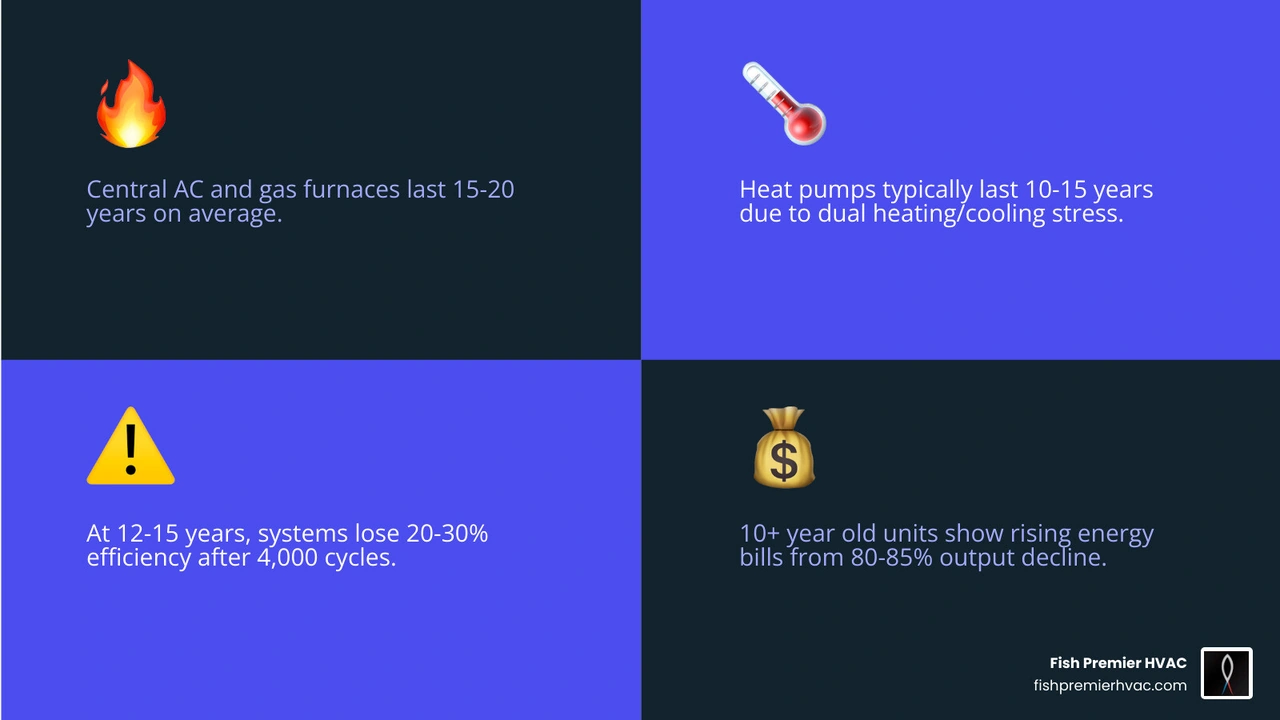
- 12-15 years - Major turning point; most systems have lost 20-30% of original efficiency
- 15-20 years - Replacement is strongly worth considering for most system types
- 20+ years - Replacement is recommended regardless of whether the system still runs
By the time a central AC reaches the 12-year mark, it has typically completed over 4,000 full cooling cycles. At that point, most units are operating at only 80-85% of their original efficiency, which shows up directly on your energy bills. For homeowners in DFW, where cooling seasons are long and demanding, that wear happens even faster.
This guide will walk you through everything you need to know: how to find your system's actual age, the warning signs that matter most, what shortens or extends lifespan in Texas, and how to decide whether to repair or replace before an emergency makes the decision for you.
There is no single birthday when every HVAC system suddenly becomes "too old." But there is a very real wear-out phase. For most homeowners in Keller, Westlake, Colleyville, Southlake, and the greater Dallas-Fort Worth area, that phase usually starts around years 12 to 15.
That is when we often see a pattern:
- More repairs
- Longer run times
- Rising energy use
- Less consistent comfort
- More risk of a peak-season breakdown
In plain English: if your system is old enough to remember a different thermostat trend, it may be time for a serious evaluation.
How old is too old for an HVAC system for central AC, furnaces, and heat pumps?
A helpful benchmark comes from residential lifespan data and field experience:
| System Type | Typical Lifespan | When "Too Old" Usually Starts |
|---|---|---|
| Central AC | 15-20 years | 12-15 years |
| Gas Furnace | 15-20 years | 15+ years |
| Heat Pump | 10-15 years | 10-12 years |
| Ductless Mini-Split | 15-20 years | 12-15 years |
| Boiler | 20-35 years | 20+ years |
Heat pumps generally wear out sooner because they work year-round for both heating and cooling. Furnaces can sometimes last longer, especially if they have been maintained well and only run during heating season. Boilers are often the long-distance runners of the HVAC world.
The National Association of Home Builders has commonly cited a median service life of about 12 to 15 years for residential air conditioners, which lines up with what many homeowners experience in real life.
When age alone is not enough to judge an HVAC system
Age matters, but it is not the whole story. A 10-year-old system that has been neglected may be in worse shape than a 16-year-old system that was installed properly and serviced regularly.
What affects lifespan most:
- Maintenance history
- Installation quality
- DFW heat and long cooling seasons
- How often the system runs
- Airflow problems
- Duct leakage
- Corrosion and outdoor exposure
A poor installation can shorten system life from day one. Oversized equipment, low airflow, dirty coils, or incorrect refrigerant charge all create stress that adds up over time.
Why 12 to 15 years is a major turning point
This age range matters because the numbers start to stack up against older equipment.
Research shows that by year 10, many central air systems are operating at only about 80% to 85% of original efficiency. By 12 years, many have lost 20% to 30% of their original efficiency and are much more likely to fail. Older systems can also use significantly more energy than newer alternatives.
That means:
- Higher utility bills
- More strain during 100-degree Texas afternoons
- Greater risk of compressor, capacitor, blower, or motor failures
- Less dependable humidity control
And when a breakdown happens during summer peak demand, repair wait times can stretch dramatically. That is exactly the kind of surprise most homeowners would rather skip.
How to Tell the Age of Your HVAC System and Judge Its Remaining Life

If you do not know your system's age, do not guess. HVAC equipment carries its "birth certificate" on the unit itself.
How old is too old for an HVAC system if you do not know the install date?
Start with the nameplate or manufacturer label.
For central systems, check:
- The outdoor condenser cabinet
- The indoor air handler or furnace cabinet
- The model and serial number label
Many manufacturers encode the manufacture date in the serial number. Often, the first four digits indicate the week and year, but not always. Each brand formats serial numbers differently, so decoding may require a manufacturer reference or professional help.
Important note: manufacture date is not always the exact install date, but it is usually close enough to estimate age.
Also check the refrigerant listed on the nameplate:
- R-22 usually means an older system
- R-410A usually means a newer but still aging system
- Newer low-GWP refrigerants may indicate very recent equipment
Why the indoor and outdoor units may be different ages
Many homes have split systems, which means the indoor and outdoor components are separate. That creates a common issue: the condenser outside may be one age, while the furnace or coil inside is another.
This matters because mismatched systems can:
- Reduce efficiency
- Affect airflow performance
- Cause compatibility issues
- Shorten the life of the newer component
If one part was replaced years after the other, your "system" may not really be the same age across the board. We always recommend evaluating both pieces together before deciding what to repair or replace.
Refrigerant clues that make a system feel older than it is
Sometimes a unit is not mechanically ancient, but it becomes functionally old because of refrigerant issues.
The biggest example is R-22. Production of R-22 was banned in 2020, so systems that need it are much more expensive and difficult to service. If your older unit needs a recharge because of a leak, that is often a strong sign to think about replacement instead of throwing more money at old technology.
R-410A systems are more modern than R-22, but even they are now part of a refrigerant transition period. In 2025 and 2026, the industry continues shifting toward lower-GWP refrigerants. That does not mean every R-410A system is obsolete today, but it does mean long-term repair economics and parts availability deserve a closer look.
The Biggest Signs Your HVAC System Is Too Old to Trust
An aging HVAC system usually gives warnings before total failure. The trick is noticing them before your home turns into a sauna or a meat locker.
Performance signs that usually show up before total failure
Watch for:
- Short cycling
- Weak airflow
- Hot and cold spots
- Humidity that feels sticky indoors
- Thermostat readings that do not match room comfort
- System struggling to keep up in normal weather
These signs often point to worn components, reduced capacity, airflow restrictions, or declining refrigerant performance. Even if the equipment still turns on, it may no longer be doing its job well.
Efficiency and comfort problems that raise red flags
Some of the clearest clues show up in everyday living:
- Utility bills rising without a major lifestyle change
- Longer run times
- More noise at startup or shutdown
- Dust buildup around vents
- Poor dehumidification
- Uneven sleep comfort at night
A 10- to 15-year-old AC that runs constantly but cools less effectively is often costing more while delivering less. Upgrading to a modern high-efficiency system can reduce heating and cooling energy use significantly, with many homeowners seeing immediate savings in the 20% to 40% range depending on what they are replacing.
Safety signs homeowners should never ignore
Old systems can be more than inconvenient. They can become unsafe.
Never ignore:
- Carbon monoxide concerns from a gas furnace
- A cracked heat exchanger
- Burning smells
- Frayed or damaged wiring
- Repeated breaker trips
- Water leaks from condensate issues
- Mold, bacteria, or air quality concerns linked to poor drainage or dirty coils
Gas furnaces deserve special attention. A damaged heat exchanger can create a carbon monoxide risk. Electrical wear can also increase fire risk in both indoor and outdoor equipment. If something smells off, sounds wrong, or trips power repeatedly, it needs professional attention right away.
What Shortens or Extends HVAC Lifespan in Texas Homes
In North Texas, HVAC systems do not live easy lives. Long cooling seasons, intense heat, attic temperatures, and heavy run times all accelerate wear.
Why hot climates age AC systems faster
DFW summers are hard on equipment. More runtime means more stress on:
- Compressors
- Capacitors
- Fan motors
- Electrical components
- Refrigerant pressures
Hot weather raises head pressure in air conditioning systems, which forces the compressor to work harder. Add hot attics, dusty outdoor conditions, and long afternoons of nonstop operation, and wear builds quickly.
For more on this topic, see when to replace your AC in a hot climate.
The maintenance habits that add years to a system
Regular maintenance does not make a system immortal, but it can absolutely help it last longer and perform better.
The most important habits include:
- Annual professional tune-ups
- Cleaning condenser and evaporator coils
- Checking refrigerant charge
- Clearing condensate drains
- Inspecting electrical connections
- Replacing filters consistently
- Keeping the outdoor unit clear of debris
A good technician should also inspect the base pan, blower components, thermostat calibration, and signs of electrical wear. Want a deeper look? Read is an HVAC maintenance plan worth it and how a maintenance plan extends AC life in Texas.
Hidden factors that shorten system life faster than homeowners expect
Some lifespan killers are easy to miss:
- Oversized equipment
- Poor original installation
- Dirty ducts
- Clogged filters
- Neglected blower assemblies
- Leaky ductwork
- Restricted return air
Bigger is not always better. An oversized AC may cool too quickly, shut off too soon, and fail to remove enough humidity. That short cycling increases wear and reduces comfort.
If you want practical ways to protect your system, see how to extend the life of your AC in Texas and why AC units wear out faster in hot climates.
Repair or Replace? How to Make the Right Call Before an Emergency
This is the part most homeowners care about most: do we fix the old system, or is it finally time to let it retire with dignity?
How old is too old for an HVAC system to keep repairing?
Two common rules of thumb can help:
- 50% Rule: If one repair involves a large share of what a replacement would require, replacement usually makes more sense.
- $5,000 Rule: Multiply the age of the system by the repair scope. If the total is high, replacement is often the better decision.
These are not perfect laws of nature, but they are useful sanity checks.
Also watch for the "slow bleed" pattern:
- One repair this summer
- Another in the fall
- Another next year
- No warranty benefit
- Same old efficiency problems
When major components start failing on an older system, especially compressor, evaporator coil, heat exchanger, or blower motor, replacement often becomes the smarter long-term move.
When a repair still makes sense
Repair can still be the right call when:
- The system is relatively young
- The issue is minor
- The unit has been maintained well
- The equipment uses a serviceable refrigerant
- The system has a good repair history
- Parts are available
- Warranty coverage still applies
For example, a minor electrical part on a middle-aged unit is very different from a major refrigerant or compressor issue on a system approaching end of life.
Should you replace the furnace and AC together or separately?
Sometimes together makes sense. Sometimes separately is fine. The answer depends on age, condition, compatibility, and efficiency goals.
Replacing both together is often worth considering when:
- Both components are older
- The system is a matched pair near end of life
- You want the best efficiency and comfort
- The furnace airflow may limit a new AC
- One failing part is likely to be followed by another soon
Replacing separately can make sense when:
- One component is still in good condition
- The ages are very different
- The remaining equipment is compatible
- A phased plan fits the home better
Still, matched indoor and outdoor systems usually perform best together. To dig deeper, read replace vs repair aging AC system.
How to avoid a surprise breakdown from an aging system
Do not wait for the hottest week of summer to make a decision. Planning ahead gives you more control and far less stress.
Preventive steps:
- Schedule spring and fall inspections
- Track repair history in one place
- Replace filters on schedule
- Ask about refrigerant type and parts availability
- Have the system evaluated once it crosses 10 to 12 years
- Start replacement planning before peak season
- Replace aging equipment in spring or fall when possible
- Pay attention to small comfort changes before they become big failures
That last one matters. HVAC systems are rarely dramatic until they are very dramatic.
Frequently Asked Questions About How Old Is Too Old for an HVAC System
Is a 10-year-old HVAC system too old?
Usually not. A 10-year-old system is better described as middle-aged. But in DFW, where ACs work hard, 10 years is the point when we recommend closer monitoring.
At this age, evaluate:
- Maintenance record
- Repair frequency
- Energy use
- Comfort consistency
- Refrigerant type
A well-maintained 10-year-old system may have good years left. A neglected one may already be on borrowed time.
Can an HVAC system last more than 20 years?
Yes, some can. Furnaces and boilers are the most likely to do it, especially with lighter use and excellent maintenance. But "can last" is not the same as "should keep running."
An old unit may still operate while delivering:
- Worse efficiency
- Poorer comfort
- More breakdown risk
- More difficult repairs
- Less available parts
In other words, survival is not the same as value.
Is it bad to keep running an old HVAC system if it still works?
It can be. If the system is safe, properly maintained, and still performing well, continued use may be reasonable for a while. But older systems often hide problems:
- Efficiency loss
- Rising energy bills
- Weak dehumidification
- Reliability issues
- Safety concerns with older furnaces
- Sudden failure risk during extreme weather
If your system is 15 to 20 years old and showing multiple warning signs, "still works" may simply mean "has not quit yet."
Conclusion
Knowing how old is too old for an HVAC system is really about more than age alone. It is about reliability, safety, comfort, and whether your equipment is still serving your home well in the Texas heat.
For most homeowners in Keller, Westlake, Colleyville, Southlake, and surrounding DFW communities, the key turning point is usually 12 to 15 years. That is when efficiency drops, repairs become more frequent, and surprise breakdowns become much more likely.
At Fish Premier HVAC, we help homeowners make that decision with a clear plan, not guesswork. Our team delivers concierge-level service, high-efficiency solutions, and Whole Home Luxury for discerning homeowners across Dallas-Fort Worth. We are based in Fort Worth, TX, and operate under Texas License #TACLB99535E. Our regular business hours are Monday through Friday, 8am to 6pm, and we also offer after-hours emergency service when comfort cannot wait.
If your HVAC system is aging and you want expert guidance on the next step, explore our services.