%201.avif)
Heat Pumps Explained Without the Boring Science
Discover how does a heat pump work for ultimate efficiency in Texas summers. Explore cooling, energy savings & expert DFW installation tips!


.svg)
.svg)
.svg)
What Every DFW Homeowner Should Know About How a Heat Pump Works
How does a heat pump work is one of the most common questions homeowners ask before upgrading their home comfort system — and for good reason. Understanding the answer can save you money, reduce energy waste, and help you make a smarter decision for your home in the Dallas-Fort Worth area.
Here is the short answer:
A heat pump works by moving heat from one place to another — not by generating it.
- In winter: It pulls heat energy from the outdoor air and moves it inside to warm your home.
- In summer: It reverses the process, pulling heat from inside your home and pushing it outside to cool it.
- The engine behind it: A refrigerant circulates through the system, changing between liquid and gas states to absorb and release heat as needed.
- The result: For every 1 unit of electricity used, a heat pump can deliver up to 4.5 units of thermal energy — making it far more efficient than a traditional furnace or electric resistance heater.
That single principle — moving heat rather than creating it — is what makes heat pumps one of the smartest home comfort investments available in 2026, especially in a climate like DFW where both hot summers and cool winters put real demands on your system.
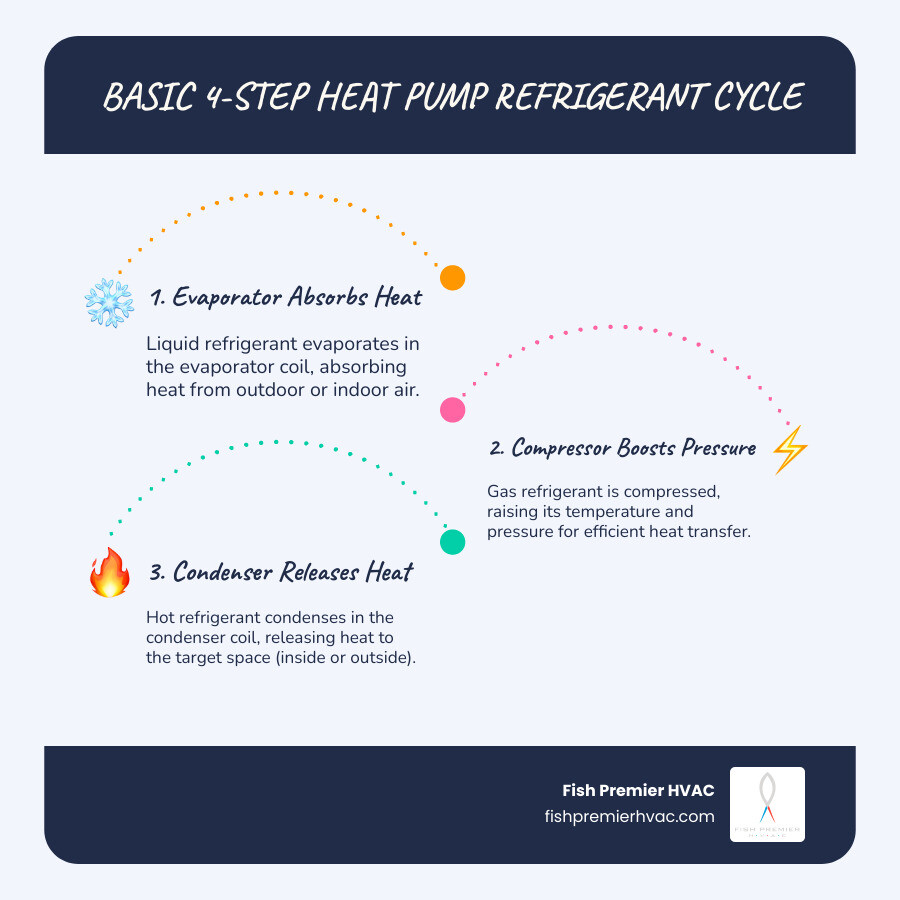
The Simple Science: How Does a Heat Pump Work?
To understand how this magic happens, we have to look at the second law of thermodynamics. Usually, heat naturally flows from a hot area to a cold area. Think about a cup of hot coffee sitting on a kitchen counter in Southlake; it eventually gets cold because the heat escapes into the cooler room.
A Heat Pump does the opposite. It uses a small amount of mechanical work to force heat to move "uphill" — from a cooler space to a warmer one. It’s like a sponge that can soak up heat in one room and squeeze it out in another.
This is achieved through a process called the vapor-compression cycle. By changing the pressure of a special fluid called refrigerant, we can make it boil (evaporate) at very low temperatures to soak up heat, or condense at high temperatures to release it. Even when it’s 40°F outside in Keller, there is still plenty of ambient energy in the air. Physically, heat is present in anything above absolute zero (-473°F), so even a "chilly" Texas morning is full of energy waiting to be harvested.
How does a heat pump work in the Texas summer?
In the middle of a triple-digit August in Colleyville, your heat pump acts exactly like a high-end air conditioner. The system uses a specialized component called a reversing valve to direct the flow of refrigerant.
In cooling mode, the indoor coil acts as an "evaporator." Cold refrigerant flows through this coil, and as your home's warm air is blown over it, the refrigerant soaks up that heat. This process doesn't just lower the temperature; it’s also a master of dehumidification. Because the coil is cold, moisture from our humid Texas air condenses on it and drains away, leaving your home feeling crisp and comfortable. The "hot" refrigerant then travels to the outdoor unit, where it is compressed and the heat is rejected into the outside air. If you've ever felt the hot air blowing out of the top of an outdoor AC unit, you’re feeling the heat that used to be inside your living room!
If your system is struggling to keep up with the humidity or the heat during these peak months, you may need Heat Pump Repair Southlake TX to ensure your reversing valve and refrigerant levels are performing at their peak.
How does a heat pump work to save energy compared to a furnace?
The biggest difference between a heat pump and a furnace is "generation" versus "transfer." A gas furnace or an electric heater has to create heat. An electric resistance heater is 100% efficient, meaning for every 1 watt of power you put in, you get 1 watt of heat out.
A heat pump, however, is the overachiever of the HVAC world. Because it is only moving existing heat, it can achieve efficiencies of 300% to 400% or more. In fact, at a cost of 1 kWh of electricity, heat pumps can transfer 1 to 4.5 kWh of thermal energy into a building.
By utilizing electricity to power a compressor rather than to create fire or glowing orange coils, you significantly lower your monthly utility usage. If you are currently using an old, inefficient electric furnace, a Heat Pump Replacement Fort Worth TX could potentially cut your heating energy consumption by more than half.
The Four Essential Components of the Cycle
While it might seem like a complex box of wires, every vapor-compression heat pump relies on four main parts to do the heavy lifting. Think of these as the "Big Four" of home comfort.
- The Compressor: The heart of the system.
- The Condenser Coil: Where heat is released.
- The Expansion Valve: The "cooling" trigger.
- The Evaporator Coil: Where heat is absorbed.
To keep these components humming along, regular maintenance is vital. Professional Heat Pump Service Fort Worth TX ensures that these coils are clean and the valves are moving freely, which is the key to maintaining that high efficiency we love.
The role of the compressor
The compressor is located in the outdoor unit. Its job is to take the low-pressure refrigerant gas and squeeze it. When you compress a gas, its temperature rises rapidly (the same way a bike pump gets hot when you use it). This creates a high-pressure, high-temperature gas that is now much hotter than the air outside (in winter) or the air inside (in summer), allowing it to shed its heat easily.
The expansion valve function
The expansion valve is the unsung hero of the cooling effect. After the refrigerant has released its heat and turned into a high-pressure liquid, it passes through this valve. The valve acts like a nozzle, causing a sudden pressure drop. This "flash evaporation" causes the temperature of the refrigerant to plummet instantly. This super-chilled liquid is what allows the system to absorb heat from the air, even when that air already feels relatively cool to us.
Why Heat Pumps Are the Efficiency Kings
As of April 2026, heat pumps have become the gold standard for residential efficiency. The primary metric we use to measure this is the Coefficient of Performance (COP).
| Heating System Type | Typical COP | Efficiency Percentage |
|---|---|---|
| Electric Resistance Heater | 1.0 | 100% |
| High-Efficiency Gas Boiler | 0.95 | 95% |
| Air Source Heat Pump (ASHP) | 3.0 - 4.5 | 300% - 450% |
| Ground Source Heat Pump (GSHP) | 3.0 - 6.0 | 300% - 600% |
In mild weather, the COP for an ASHP may even reach as high as 5.0. This means for every dollar you spend on electricity, you get five dollars' worth of heat. For homeowners looking to maximize their investment, Heat Pump Installation Fort Worth TX provides a return on efficiency that traditional systems simply cannot match.
Environmental impact in 2026
The global shift toward heat pumps is driven by a need for decarbonization. Heat pumps offer average emissions savings of over 45% compared to high-efficiency gas boilers. In countries or states with "greener" power grids, those savings can reach 80%.
Furthermore, the choice of refrigerant has become a major environmental focus. Older refrigerants had a high Global Warming Potential (GWP). In 2026, we are seeing a massive move toward refrigerants like Propane (R-290), which has a 100-year GWP of just 0.02 — approximately 7,000 times less than older alternatives like R-32. By installing a modern system, you are significantly reducing your home's total carbon footprint.
Performance in mild climates
Our North Texas weather is actually the "sweet spot" for heat pump performance. Because our winters in Westlake and Southlake are generally mild, an air-source heat pump can operate in its most efficient range for the majority of the year.
Modern systems also utilize variable-speed technology. Unlike older units that were either "on" or "off," variable-speed compressors can ramp up or down to match the exact needs of your home. This prevents the "blast of hot air followed by a cold draft" cycle and keeps your home at a perfectly steady temperature. If your current unit is constantly cycling on and off, it might be time for a professional evaluation or Heat Pump Repair Keller TX to see if a variable-speed upgrade is right for you.
Frequently Asked Questions about Heat Pump Operation
Can a heat pump work in freezing temperatures?
Yes! This is the biggest myth in the HVAC world. While older models struggled when temperatures dropped below 25°F, modern cold-climate heat pumps are game-changers. Select models can operate at full potential down to -5°F and continue to provide heat even at -22°F. Even at temperatures below −8°C (18°F), many systems still achieve a COP of 1 to 4, which is still significantly more efficient than electric space heaters. For those rare Texas "Arctic Blasts," most systems are equipped with a backup electric heat strip to ensure you stay warm no matter what.
Does a heat pump bring in fresh air from outside?
No. This is a common misconception. A heat pump recirculates the air already inside your home. The only thing moving between the indoor and outdoor units is the refrigerant inside the copper lines. However, because heat pumps run more consistently (especially variable-speed models), they are excellent for indoor air quality. They provide constant filtration and can be easily paired with air scrubbers to keep your home's air clean. If you notice a "musty" smell when your heat is on, it’s usually a sign you need Heat Pump Repair Colleyville TX to check your indoor coils and drainage.
What is the average lifespan of a modern system?
A well-maintained heat pump typically lasts between 15 and 25 years. Because the system works year-round (unlike a furnace that sits idle all summer), routine service is the most important factor in its longevity. Keeping the coils clean and ensuring the refrigerant charge is exact will prevent the compressor from overworking. If you live in an area like Westlake, where landscaping and dust can clog outdoor units, scheduling Heat Pump Repair Westlake TX for a seasonal cleaning is the best way to protect your investment.
Conclusion
At Fish Premier HVAC, we believe that your home should be a sanctuary of comfort and luxury. We don't just "fix ACs"; we provide a concierge-level service that ensures your home's climate is as refined as the rest of your lifestyle. Whether you are in Keller, Westlake, Colleyville, or Southlake, our team is dedicated to premium installations and high-efficiency solutions that stand the test of time.
If you’re ready to experience the quiet, consistent, and incredibly efficient comfort of a modern system, contact us for a Heat Pump Installation Southlake TX. Let us show you how the latest in HVAC technology can transform your home into a masterpiece of thermal comfort.