%201.avif)
The Ins and Outs of What Happens If You Don't Change Your AC Filter
Discover what happens if you dont change your ac filter—avoid breakdowns, high bills, and poor air quality with timely replacements.

.svg)
.svg)
.svg)
The Real Cost of Skipping Your AC Filter Change
What happens if you don't change your AC filter is a question more Dallas-Fort Worth homeowners should be asking — because the answer affects everything from your energy bills to your family's health to the lifespan of your system.
Here's a quick summary of what happens when you skip filter changes:
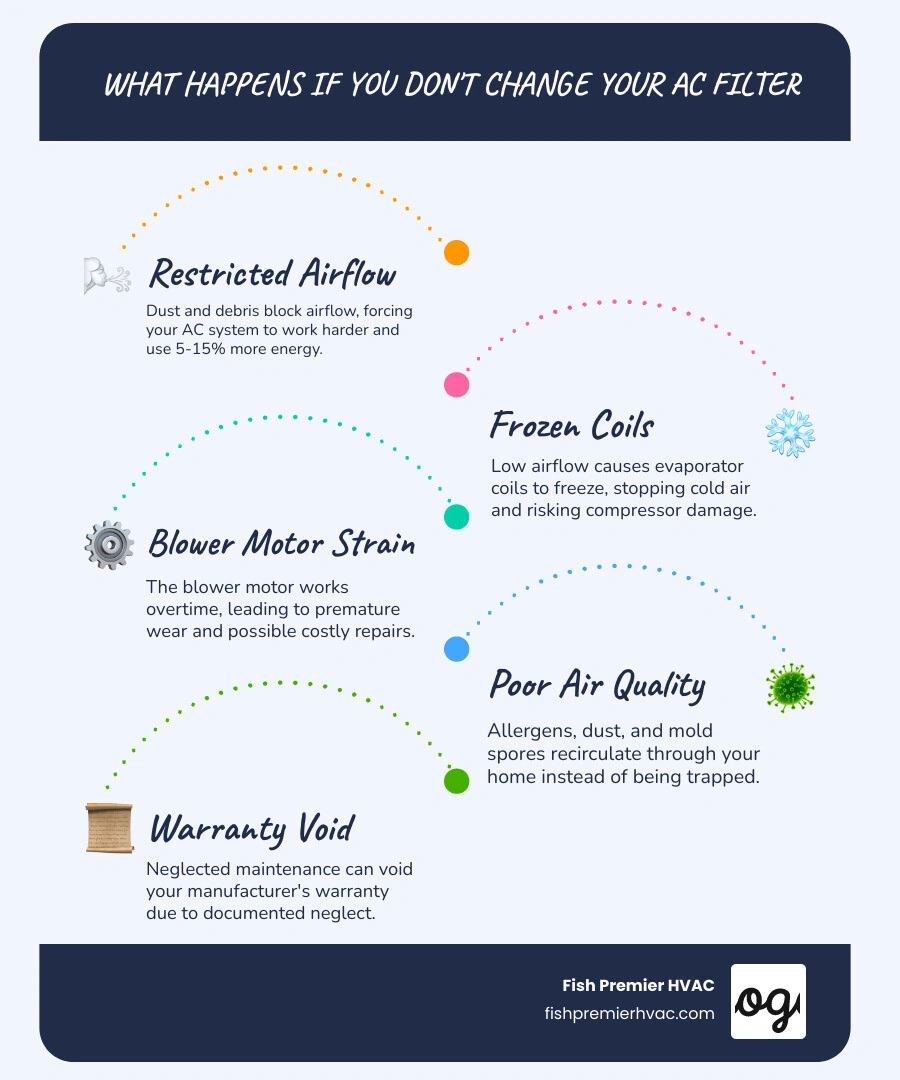
- Restricted airflow forces your system to work harder, driving up energy use by 5–15%
- Frozen evaporator coils can form when airflow drops too low, stopping cold air entirely
- Blower motor strain accelerates wear and can lead to costly component failures
- Allergens and dust recirculate through your home instead of being trapped
- Mold and moisture can build up inside your system and ductwork
- Short-cycling puts repeated stress on your compressor
- Manufacturer warranties may be voided due to documented neglect
Most homeowners don't think twice about their AC filter — until something goes wrong. A clogged filter is one of the most common causes of HVAC breakdowns, yet it's also one of the easiest problems to prevent. In the DFW area, where your system runs hard for much of the year, a neglected filter doesn't just cause discomfort. It quietly chips away at your system's efficiency, your indoor air quality, and your peace of mind.
The good news? Understanding the consequences puts you firmly in control.
What happens if you dont change your ac filter vocabulary:
What Happens If You Dont Change Your AC Filter
To truly understand what happens to your heating and cooling system when a filter is ignored, we have to look past the physical cardboard-and-wire frame and look at the physics of airflow. Your air conditioner is designed to act like a giant pair of lungs. It inhales the warm air from your living spaces, strips out the heat and moisture, and exhales cool, crisp comfort.
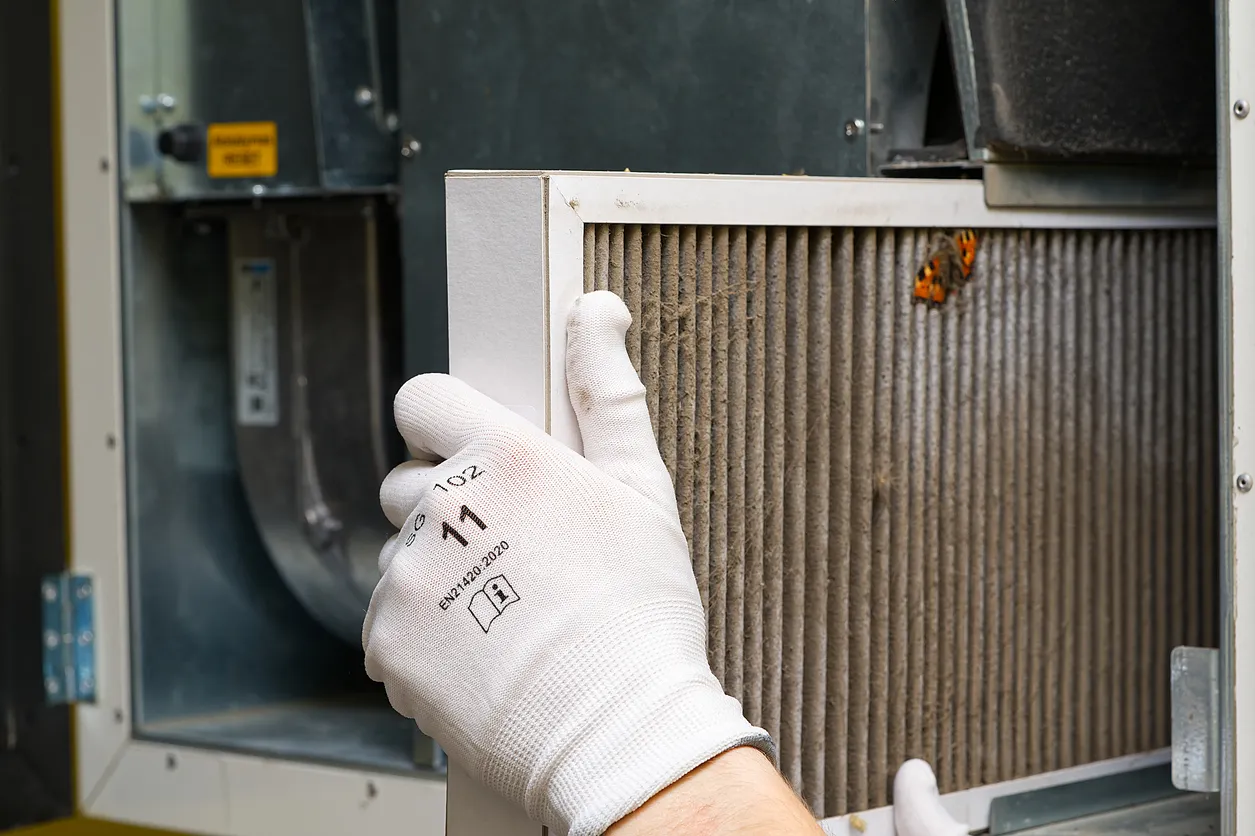
When you forget to change your filter, that "inhalation" becomes restricted. The system is forced to pull air through a dense, felt-like barrier of dust, pet hair, and airborne fibers.

This restricted airflow triggers a dangerous chain reaction. Because the system cannot pull enough warm air across the indoor evaporator coils, the temperature of those coils plummets. Under normal operation, the warm air keeps the coils just warm enough to prevent the condensation on them from turning to ice. Without that continuous stream of warm household air, the moisture freezes instantly.
Once ice begins to form, it acts as an insulator, further blocking heat exchange. The entire indoor unit can quickly turn into a solid block of ice, choking off what little airflow remained. This phenomenon is a classic sign that your AC System Needs Regular Filter Changes to keep the thermodynamic balance stable.
As the physical restriction worsens, the system begins to short-cycle. Short-cycling occurs when the AC turns on and off rapidly. Because the system can't move air efficiently, internal safety sensors detect overheating or freezing and shut the unit down to protect it, only for the thermostat to call for cooling again minutes later. This constant starting and stopping places immense electrical and mechanical stress on your compressor and fan relays.
Mechanical Failures and What Happens If You Dont Change Your AC Filter
If left unaddressed, a clogged filter transitions from an efficiency killer into a mechanical wrecking ball. The first major component to suffer is the blower motor.
Modern HVAC systems often utilize Electronically Commutated Motors (ECM) or standard multi-speed blower motors. These motors are engineered to move a specific volume of air against a designed level of resistance (known in the industry as static pressure). When a dirty filter drives static pressure sky-high, the blower motor must work significantly harder to push air through the restricted barrier. This extra work translates directly to high heat generation within the motor windings, rapidly accelerating wear and causing the motor to burn out prematurely.
Beyond the blower motor, the compressor—the very heart of your outdoor unit—is placed in extreme jeopardy. When the evaporator coils freeze due to low airflow, the liquid refrigerant circulating through them doesn't fully evaporate into a gas. This liquid refrigerant can travel back down the copper lines to the compressor. Compressors are designed to compress gas, not liquid. Attempting to compress liquid refrigerant can instantly destroy the internal valves and pistons, resulting in catastrophic compressor failure.
Furthermore, neglecting this simple maintenance task can have severe financial implications beyond the cost of parts. Most major HVAC manufacturers explicitly state in their warranty terms that regular, documented maintenance is required to keep coverage active. If a technician uncovers a completely collapsed, dust-caked filter during a major system breakdown, the manufacturer may deny your warranty claim, leaving you responsible for the entire cost of the repair. These are exactly the types of preventable AC Problems Found During Tune-Ups that homeowners can easily avoid.
Indoor Air Quality Risks and What Happens If You Dont Change Your AC Filter
While the mechanical damage is occurring hidden away in your attic or closet, your family’s health is also paying a price.
When an air filter becomes completely saturated with debris, it reaches a state of "filter bypass." Because the air can no longer pass through the filter media, the high pressure forces air around the edges of the filter frame. Raw, unfiltered air is sucked directly into your ductwork and recirculated throughout your living spaces.
This creates what we call the dust cycle. The dust, pet dander, pollen, and skin cells that should have been permanently trapped are instead vibrated loose and blown back into your rooms, settling on your furniture, carpets, and countertops within hours of cleaning.
According to the Environmental Protection Agency (EPA), the air inside our homes is, on average, two to five times more polluted than the air outside. In extreme cases, indoor air quality can be up to 100 times worse. When you consider that we spend approximately 90% of our lives indoors, running an AC with a dirty filter is akin to breathing through a vacuum cleaner bag.
For allergy and asthma sufferers, this recirculating cocktail of pollutants can trigger severe flare-ups, chronic fatigue, and frequent respiratory infections. Furthermore, when a filter remains damp from high humidity or system condensation, it becomes a perfect breeding ground for mold spores and mildew. These spores are then distributed through your vents, introducing musty odors and biological contaminants directly into your breathing zone. Replacing a dirty filter with a clean, high-quality alternative can improve indoor air quality by 20% to 30% almost instantly.
The Financial Fallout: Energy Bills and Efficiency Loss
Neglecting your air filter is equivalent to voluntarily paying a premium on your monthly utility bills. When airflow is restricted, your air conditioner has to run for significantly longer periods to bring your home down to the temperature set on your thermostat.
To give you a clearer picture of how a simple filter affects your wallet, consider this comparison of system performance:
| Filter Condition | System Efficiency Impact | Average Energy Consumption | Runtime per Cycle | Risk of Mechanical Failure |
|---|---|---|---|---|
| Clean Pleated Filter | 100% (Optimal) | Baseline | Standard (10-15 mins) | Extremely Low |
| Lightly Soiled Filter | 2–5% Loss | 3–5% Increase | Moderately Extended | Low |
| Heavily Clogged Filter | 10–15% Loss | 5–15% Increase | Severely Extended | High |
| Saturated / Frozen Coil | 30%+ Loss | Up to 30% Increase | Continuous Running | Critical |
According to the Department of Energy, simply replacing a dirty, clogged filter with a clean one can increase your system's efficiency by 5% to 15%, directly lowering your cooling costs.
When your system runs continuously because of restricted airflow, it doesn't just consume more electricity; it also causes rapid wear on every moving part. In dual-fuel systems or heat pumps, a clogged filter during the cooler months can also trigger the auxiliary heat strips. These electric resistance strips consume massive amounts of energy compared to the standard heat pump cycle, causing your winter utility bills to spike dramatically.
In our warm, demanding climate, these inefficiencies compound quickly, explaining Why Do AC Units Wear Out Faster in Hot Climates when routine maintenance is ignored.
Signs Your AC Filter Needs Immediate Replacement
How do you know when your filter has crossed the line from "slightly dusty" to "critically clogged"? Your home and your air conditioner will tell you if you know what to look and listen for.
- Weak Airflow from Vents: If you place your hand over a supply register and the breeze feels more like a gentle whisper than a strong, cool current, your filter is likely choked.
- Whistling or Humming Sounds: When a filter is clogged, the blower fan has to pull air through tiny, restricted gaps. This high-velocity air movement often creates a distinct whistling, whining, or high-pitched humming sound near your return air grilles.
- Rapid Dust Accumulation: If you find yourself dusting your home's surfaces multiple times a week only to see a grey layer return within hours, your filter is likely in bypass mode, circulating dust continuously.
- Musty or Stale Odors: A clogged filter that has trapped moisture will begin to smell like damp cardboard or dirty socks. When the AC turns on, this musty odor is distributed throughout the house.
- Uneven Cooling and Hot Spots: Because restricted airflow prevents conditioned air from reaching the furthest rooms in your home, you may notice significant temperature imbalances between different areas of your house.
If you are experiencing any of these warning signs, it is time to check your filter immediately. For a deeper look at identifying these issues, refer to our guide on When to Change Your HVAC Air Filter.
How Often to Change Your Filter: Types, Pets, and Climate Factors
There is no single "one-size-fits-all" schedule for filter replacement. The ideal frequency depends heavily on your household dynamics, the type of filter you use, and your environment.
For instance, a single occupant living in a pet-free, clean home may only need to change their pleated filter every 90 days. However, a bustling family home in the Dallas-Fort Worth area with multiple pets, children, or allergy sufferers will likely need to replace theirs every 30 to 45 days.
To help tailor your maintenance schedule, check out our localized advice on How Often Should You Change Your AC Filter in Texas.
Standard vs. High-Efficiency Filters (MERV and HEPA)
When selecting a filter, you will encounter the MERV (Minimum Efficiency Reporting Value) rating system, which ranges from 1 to 16 for residential systems.
- MERV 1–4 (Fiberglass Filters): These are the inexpensive, see-through spun fiberglass filters. They are designed primarily to keep large debris (like dog toys or giant dust bunnies) out of your equipment, but they do almost nothing to improve indoor air quality. They must be replaced every 30 days.
- MERV 7–9 (Standard Pleated Filters): This is the sweet spot for most residential homes. These filters trap pollen, mold spores, pet dander, and fine dust without restricting airflow. They should typically be changed every 60 to 90 days.
- MERV 11–13 (High-Efficiency Pleated Filters): Excellent for allergy sufferers, as they capture microscopic particles, bacteria, and smoke. However, because they are tighter, they require more frequent changes (every 30 to 60 days) to prevent airflow restriction.
- HEPA Filters: These filters offer hospital-grade filtration but are generally too thick for standard residential HVAC blowers without specialized modifications. Running a HEPA filter in an incompatible system can choke your airflow and cause immediate system damage.
When selecting your replacement, tighter isn't always better. Staying within the MERV 7 to 9 range provides excellent protection for both your lungs and your system without forcing your equipment to work unnecessarily hard. Learn more about choosing the perfect match in our guide on the Best AC Filter for North Texas Homes.
How Climate Affects Your Filter: From Texas Heat to DFW Humidity
Our local climate plays a massive role in how quickly your air filter clogs. In the Dallas-Fort Worth area, we experience dramatic seasonal shifts—from intense, triple-digit summer heat to heavy spring pollen storms and humid stretches.
During peak summer, your air conditioner runs almost continuously to combat the outdoor heat. Because air is circulating through your system 5 to 7 times a day, your filter is trapping dust and pet hair at an accelerated rate. Additionally, the high humidity can make the trapped organic dust on your filter slightly damp, causing the fibers to swell and further restrict airflow.
In Westlake, Southlake, Colleyville, and Keller, we also deal with local pollen blooms and construction dust that can saturate a filter much faster than standard manufacturer guidelines suggest. To keep your system running smoothly through these intense periods, follow our strategies on How to Maintain Your AC in Extreme Heat.
Step-by-Step Guide to Maintaining and Changing Your AC Filter
Replacing your AC filter is a quick, straightforward task that anyone can perform. Here is how to do it safely and correctly:
Step 1: Turn Off the Power
Always turn your HVAC system off at the thermostat before opening the filter grille or slot. If the system is running while you change the filter, loose dust and raw debris can be sucked directly onto your wet evaporator coils.
Step 2: Locate and Size the Filter
Your filter is typically located in a return air grille on a wall or ceiling, or in a slot directly adjacent to your indoor blower unit (often in an attic, closet, or garage). Note the dimensions printed on the side of your old filter (e.g., 20x20x1).
Step 3: Check the Airflow Direction
Look closely at the edge of both your old and new filters. You will see an arrow printed on the frame. This arrow must point in the direction of the airflow—which is always toward the HVAC unit/blower motor and away from your living space.
Step 4: Slide in the New Filter and Secure
Gently slide the new filter into place, ensuring it fits snugly without gaps. Close and latch the grille or slot cover, turn your thermostat back on, and enjoy clean, unrestricted airflow.
Regularly performing this simple process is one of the single most effective ways to protect your investment. Discover more pro tips in our guide on How to Extend the Life of Your AC in Texas.
Frequently Asked Questions About AC Filter Maintenance
Can a dirty air filter cause my AC to stop blowing cold air?
Yes, absolutely. When a dirty filter severely restricts airflow, the temperature of the indoor evaporator coil drops below freezing. The condensation on the coil turns to ice, creating a physical barrier of frost.
This thermodynamic failure prevents the system from absorbing heat from your home, causing the air blowing out of your vents to feel lukewarm or stop completely.
Is it okay to run my AC without a filter for one night?
We strongly advise against running your system without a filter, even for a single night. Without a filter, raw household dust, pet hair, and airborne debris are sucked directly into the indoor unit.
These particles settle on the wet evaporator coils, forming a thick, muddy grime that is incredibly difficult and expensive to clean. It can also clog your condensate drain line, leading to water leaks and water damage inside your home.
Will a dirty filter void my HVAC manufacturer warranty?
Yes, it can. Most HVAC manufacturers require proof of regular, professional maintenance to honor parts warranties.
If a major component like your compressor or blower motor fails, and the technician finds evidence of chronic neglect—such as a heavily clogged or collapsed filter—the manufacturer may deem the failure a result of owner neglect and deny your warranty claim.
Conclusion
At Fish Premier HVAC, we believe that true home comfort is about more than just temperature—it is about luxury, health, and peace of mind. Our team is dedicated to providing concierge-level service, offering premium installations, innovative high-efficiency systems, and advanced air scrubbers to homeowners throughout the Dallas-Fort Worth area, including Keller, Westlake, Colleyville, and Southlake.
Under Texas License #TACLB99535E, we deliver meticulous, top-rated care tailored to affluent homeowners who demand the very best for their properties. Whether you need a comprehensive system analysis, proactive seasonal maintenance, or a premium air quality upgrade, we are here to ensure your home remains a perfect sanctuary of comfort.
To learn more about keeping your home's comfort systems in pristine condition, explore our comprehensive Benefits of Regular AC Maintenance in Texas or read through our localized AC Maintenance Keller TX Guide.
Ready to experience the ultimate in home comfort and concierge-level care? Schedule luxury air conditioning services with Fish Premier HVAC today and let our expert team elevate your indoor living experience.