%201.avif)
Why Every Homeowner Needs a Standby Generator Strategy
Discover whole home generator benefits and what to know: sizing, fueling, reliability & DFW power outage protection. Get peace of mind now!

.svg)
.svg)
.svg)
Why Every DFW Homeowner Should Have a Standby Generator Strategy
Whole home generator benefits and what to know is something every homeowner in the Dallas-Fort Worth area should understand before the next storm season hits. Power outages in DFW are not rare inconveniences — they are a recurring reality, driven by severe thunderstorms, ice events, extreme heat, and grid strain. When the lights go out, the stakes are high: spoiled food, lost comfort, disrupted work, and in some cases, genuine safety risks for family members who depend on medical equipment.
A whole home standby generator is the answer many discerning homeowners are turning to. Here is a quick summary of what you need to know:
Top whole home generator benefits at a glance:
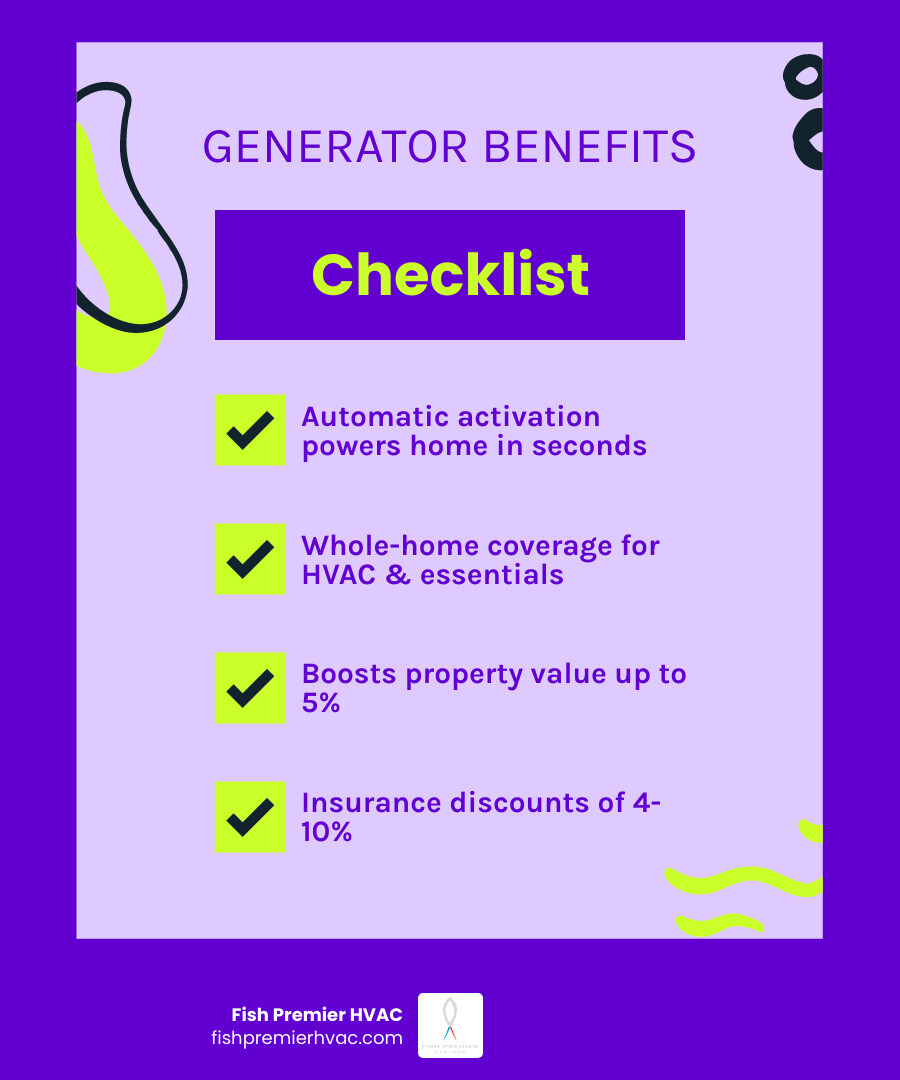
- Automatic activation - powers your home within seconds of an outage, with no manual setup required
- Whole-home coverage - keeps HVAC, refrigerators, lighting, security systems, and medical devices running
- Property value boost - can increase your home's value by up to 5%
- Insurance savings - some insurers offer 4% to 10% discounts on the property portion of your homeowners policy
- Food protection - the FDA recommends discarding perishable food after just four hours without refrigeration
- Long lifespan - with proper maintenance, a standby generator can last 15 to 40 years
- Fuel flexibility - natural gas, propane, and diesel options suit different homes and locations
- Peace of mind - your home stays fully functional, no matter how long the grid is down
Understanding the Whole Home Generator: Benefits and What to Know
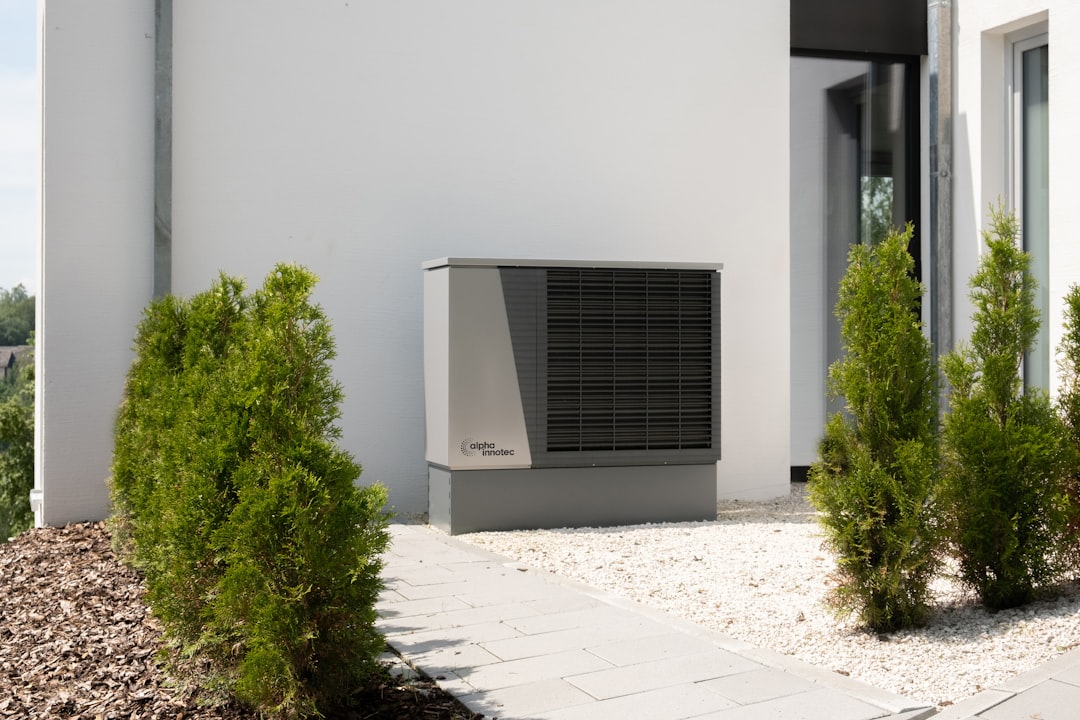
When we talk about a whole-home generator, we are referring to a permanent backup power solution that sits outside your home, much like a central air conditioning unit. Unlike those portable units you might see at a hardware store, these are sophisticated machines integrated directly into your home's electrical system.
The primary mechanism that makes these systems so effective is the automatic transfer switch. This "brain" of the system constantly monitors the utility power coming into your house. The moment it detects a drop in voltage or a complete blackout, it signals the generator to start. Within 10 to 30 seconds, your home is back under full power. This Power Outage Protection ensures that your life doesn't skip a beat, even if a massive North Texas thunderstorm has knocked out the neighborhood grid.
Beyond the immediate comfort of keeping the lights on, there are significant financial incentives. Research indicates that a standby generator can increase your property value by up to 5%. In a competitive market like Southlake or Westlake, this is a major differentiator. Furthermore, many insurance companies recognize the reduced risk of claims—such as those for burst pipes or spoiled food—and may offer a discount of 4% to 10% on the property portion of your homeowners policy.
Whole home generator benefits and what to know: Fueling your peace of mind
Choosing the right fuel source is one of the most critical decisions in your standby strategy. For most of our clients in the DFW area, natural gas is the gold standard. Since it is piped directly into the home, the supply is virtually limitless, allowing the generator to run indefinitely during extended outages.
However, if your property is in a more rural area or lacks a natural gas line, liquid propane is an excellent alternative. Propane is stored in a tank on-site and has an incredibly long shelf life—it won't degrade over time like gasoline. A 500-gallon propane tank can typically power a whole-house generator for about 7 to 10 days of continuous use.
For very large estates or commercial-grade residential needs, diesel is an option known for its energy density and long engine lifespan. However, diesel requires more careful storage management. Regardless of the fuel type, regular upkeep is essential. If your unit begins to struggle, it may be a sign that your Generator Needs Fuel System Service to ensure the lines are clear and the fuel is flowing efficiently when you need it most.
Whole home generator benefits and what to know: Sizing for luxury comfort
Sizing a generator is not as simple as matching it to the square footage of your home. It requires a detailed load calculation performed by a professional. We look at "running watts" (what an appliance needs to stay on) and "startup power" (the surge of energy required to get a motor turning). For example, a large HVAC system can require three times its normal wattage just to kick on.
In our region, keeping the air conditioning running is usually the top priority. To maintain a 3,000-square-foot home with full HVAC support, you are typically looking at a unit in the 20kW to 24kW range. If you only want to power "essentials" like the fridge and a few lights, a smaller unit might suffice, but for the concierge-level comfort our clients expect, we generally recommend sizing for the whole home. Proper Generator Sizing Trophy Club ensures that you never overload the system, as a generator should ideally not exceed 90% of its total capacity.
| Load Type | Essential Loads (8kW - 12kW) | Whole-Home Loads (20kW - 26kW) |
|---|---|---|
| Kitchen | Refrigerator, select outlets | All appliances, electric range, dishwasher |
| Climate | Fans, space heaters | Full Central AC and Heating |
| Safety | Security system, some lights | All interior/exterior lighting, gate motors |
| Luxury | Phone chargers, Wi-Fi | Pool pumps, home theater, EV charging |
Why a Standby Strategy is Essential for DFW Homeowners
Living in the Dallas-Fort Worth Metroplex means dealing with a climate that can be unpredictable and, at times, unforgiving. From the spring tornado season to the sudden ice storms that can paralyze the region, our grid is under constant pressure. A Whole Home Generator Fort Worth TX is no longer a luxury; for many, it is a necessity.
Consider the health implications. For families with members relying on medical equipment like oxygen concentrators or nebulizers, a power outage is a life-threatening emergency. A standby generator ensures these devices never lose power. Then there is the matter of food preservation. Perishable items can begin to spoil in as little as four hours without refrigeration. During a multi-day outage, the cost of replacing a fully stocked gourmet kitchen can be thousands of dollars—not to mention the sheer inconvenience.
Whether you are looking for a Whole Home Generator Keller TX or a solution for a sprawling estate in Colleyville, the goal is the same: absolute resilience. You shouldn't have to worry about the reliability of the Texas grid when you have a custom-tailored power strategy in place.
Key Considerations for Long-Term Reliability
A whole home generator is a significant investment, and like any high-performance machine, it requires professional attention to stay in peak condition. These units are designed to last between 15 and 40 years, or roughly 1,500 to 3,000 hours of run time, but that longevity depends entirely on maintenance.
Annual service is the bare minimum. This includes oil changes, filter replacements, and a thorough inspection of the cooling system and spark plugs. One often overlooked component is the battery. If you find your Whole Home Generator Battery Keeps Dying, it could be a sign of a failing charging circuit or simply that the battery has reached the end of its three-to-five-year lifespan.
We also recommend that homeowners follow a Generator Maintenance Colonial Hills Guide to understand the self-test cycles. Most modern generators will "exercise" themselves once a week for about 10 to 12 minutes to keep the engine lubricated and the battery charged. If you don't hear your generator performing its weekly test, it's time to call in the experts.
Frequently Asked Questions about Standby Power
How long can a whole home generator run continuously?
The continuous run time of a generator is primarily limited by its fuel source and maintenance needs. A natural gas-powered unit can theoretically run for weeks, provided the utility gas lines remain active. However, even these units should be shut down every 24 to 48 hours for a quick oil check during prolonged use.
If you are using liquid propane, your run time depends on the size of your tank. A standard 500-gallon tank typically provides enough fuel for 7 to 10 days of power. It is important to remember that running a generator at full load for days on end increases wear and tear, so having a professional service the unit after any major storm event is a best practice to preserve the engine's lifespan.
Does a standby generator increase property value?
Yes, absolutely. In the high-end real estate markets of North Texas, a standby generator is seen as a premium infrastructure upgrade. Appraisers often recognize that these systems add roughly 4% to 5% to the home's value. Beyond the raw numbers, it significantly increases the "marketability" of a home. Buyers in Westlake and Southlake prioritize safety and convenience; knowing a home is "storm-proofed" can be the deciding factor that leads to a faster sale and a higher closing price.
What is the difference between a standby and a portable generator?
The differences are vast. A portable generator requires you to be home, drag the unit out of storage, fill it with gasoline (which may have degraded), and run heavy-duty extension cords through open windows—which creates a carbon monoxide risk. They are also notoriously loud and can usually only power a few small appliances.
A standby generator is permanently installed, runs on clean-burning natural gas or propane, and starts automatically whether you are home or not. It is significantly quieter—often no louder than a standard AC unit—and has the capacity to power your entire home, including heavy loads like your HVAC system and pool pump. For those seeking a "set it and forget it" solution, there is simply no comparison.
Conclusion
At Fish Premier HVAC, we believe that luxury is defined by peace of mind. Our concierge-level service ensures that every aspect of your Whole Home Generator Westlake TX installation is handled with the utmost care, from the initial load calculation to the final permit inspection.
Whether you are in Keller, Colleyville, or Southlake, we are here to ensure your home remains a sanctuary of comfort, regardless of what the Texas weather has in store. Don't wait for the next "once-in-a-century" storm to realize the importance of a backup power strategy. Contact us today to secure your home’s future with a premium standby generator solution.