%201.avif)
Power Up Right: Generator Sizing Secrets for Trophy Club Homes
Secure your home's power with expert generator sizing Trophy Club tips. Ensure comfort & safety during outages.

.svg)
.svg)
.svg)
Don't Get Left in the Dark: An Introduction to Generator Sizing
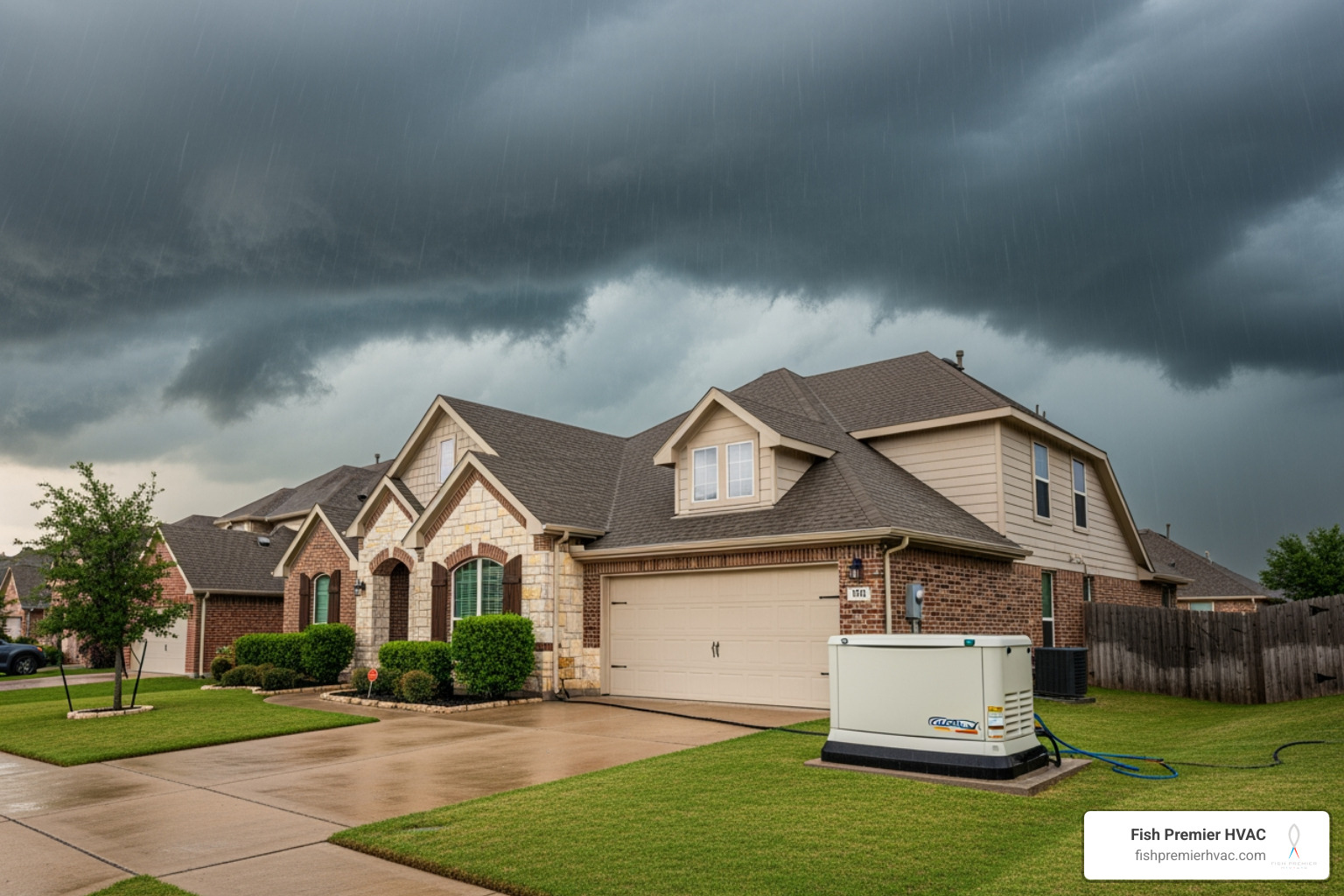
Generator sizing Trophy Club is about more than just buying the biggest unit you can find. When severe weather rolls through North Texas—like the ice storms that left hundreds of thousands without power—your family's comfort, safety, and peace of mind depend on having the right amount of backup power, not just any power. Too small, and your air conditioning won't start; too large, and you're wasting money on fuel and capacity you'll never use. For Trophy Club homeowners who expect nothing less than flawless performance from every system in their home, understanding how to properly size a generator is essential.
Quick Generator Sizing Guide for Trophy Club Homes:
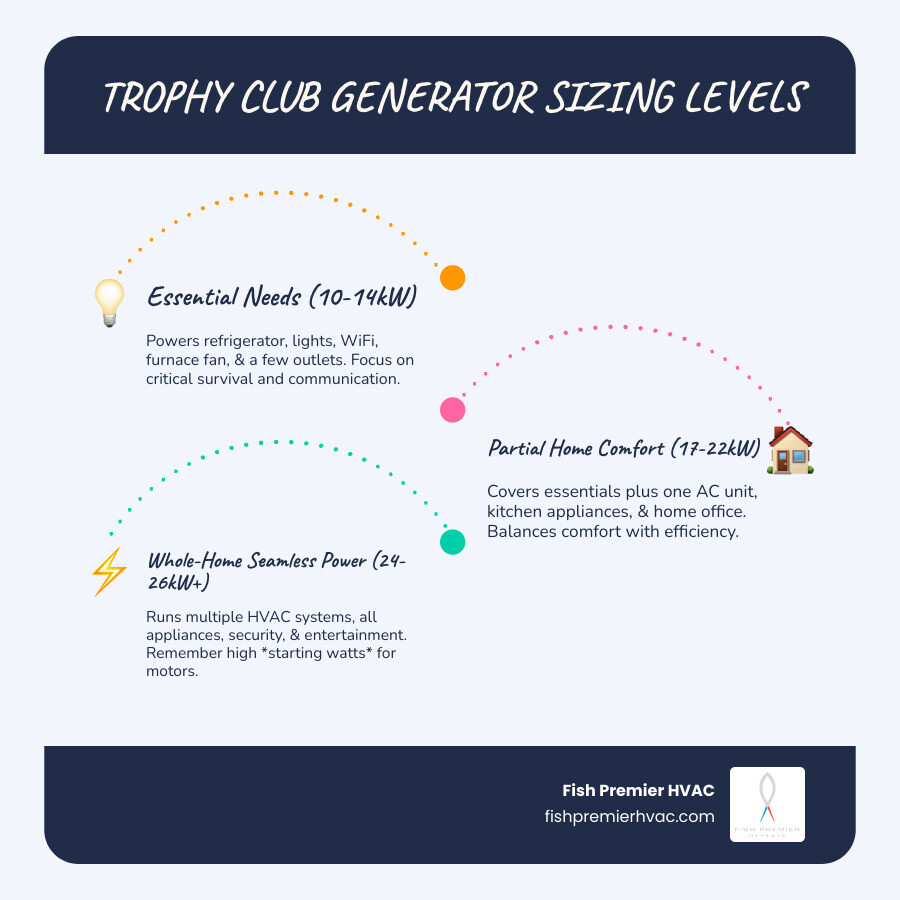
1. Essential Power Only (10-14kW): Refrigerator, lights, WiFi, furnace fan, and a few outlets
2. Partial Home Coverage (17-22kW): Essentials plus one AC unit, some kitchen appliances, and home office
3. Whole-Home Comfort (24-26kW+): Multiple HVAC systems, all appliances, security, and entertainment running seamlessly
4. Key Factor: Always account for starting watts (inrush current)—motors need 2-6x their running power to start
If you're exploring comprehensive backup power solutions, check out our guide on Power Outage Protection. Ready to get a professionally sized system installed? Visit our Generator Installation Dallas-Fort Worth Guide page.
This guide walks you through the four critical steps: assessing your specific power needs, understanding technical factors like starting wattage and home size, choosing between generator types and fuel sources, and ensuring your installation meets safety codes. By the end, you'll know exactly how to approach generator sizing for your Trophy Club property with confidence.
Step 1: Assess Your Home's Unique Power Requirements
The first question every Trophy Club homeowner should ask when considering generator sizing Trophy Club is simple: What absolutely cannot go dark when the power goes out? This isn't about listing every outlet and light switch in your home—it's about identifying what matters most to your family's safety, comfort, and daily life during an outage.
For some families, this means keeping the refrigerator running so groceries don't spoil and maintaining a few lights for safety. For others, it's about medical equipment that can't lose power even for a moment, or a sump pump that protects your basement from flooding during those intense North Texas storms. Your unique needs will shape everything that follows, so taking time to think through your priorities now will save you frustration later.
Calculating Your Essential Load
Let's start with the basics—what we call your essential load. These are the non-negotiables that keep your home safe and functional during an outage. Think about your refrigerator keeping food fresh, enough lights to steer safely at night, your WiFi router so you can stay connected, and perhaps your furnace fan to maintain some level of climate control.
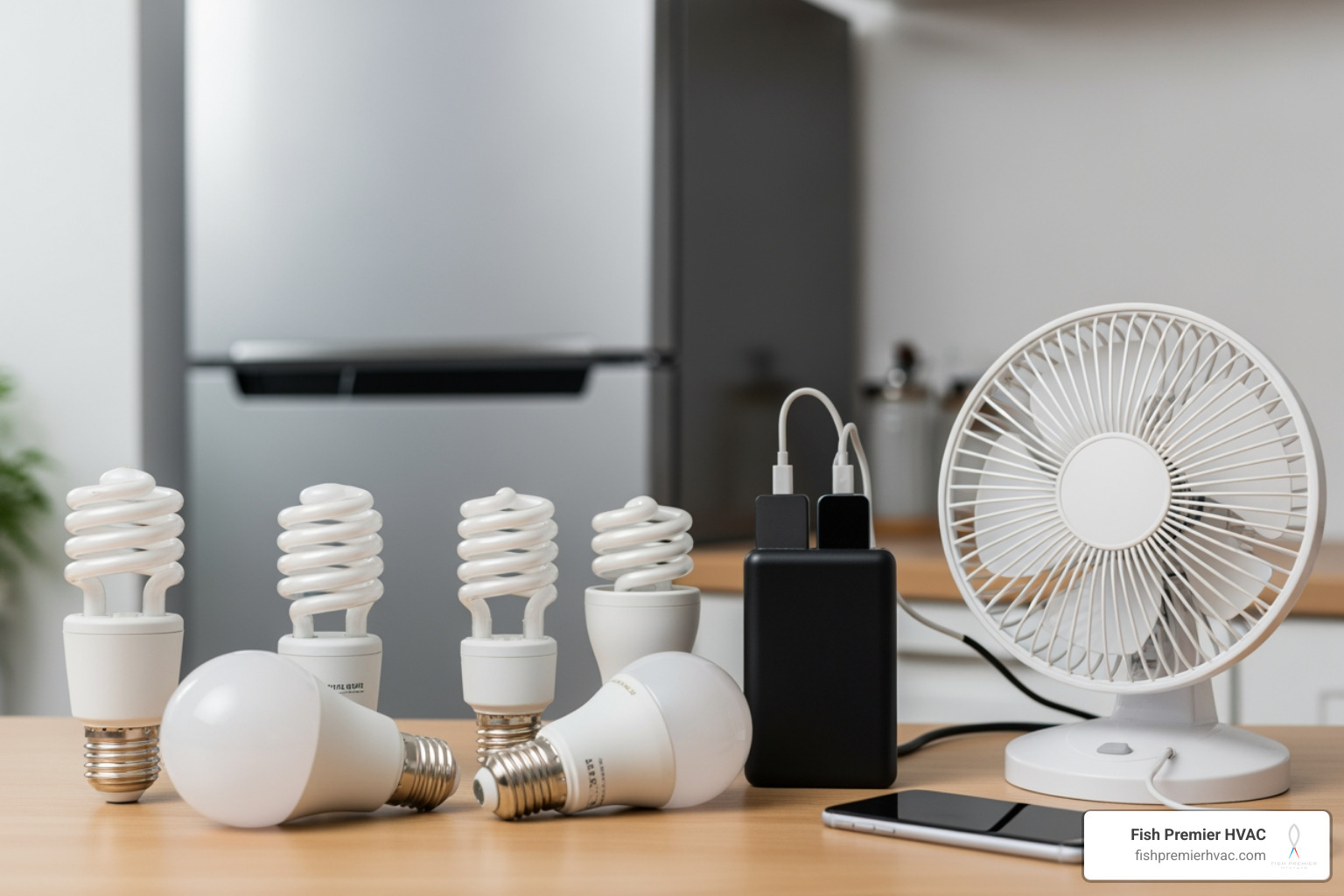
Here's what these essentials typically require: Your refrigerator and freezer will draw about 600-800 running watts, while LED lights use barely any power at all—just 5-20 watts per bulb. A sump pump (if you have one) runs around 800 watts, and a well pump needs approximately 1,050 watts. Your furnace fan uses about 800 watts to circulate air through your home. Add in your wireless router at a mere 5-20 watts, a computer or laptop at 60-250 watts, and maybe a flatscreen TV at 100-150 watts for staying informed during storms.
When you add these up, you're looking at a total essential load that a smaller standby generator—somewhere in the 10kW to 14kW range—can handle comfortably. This approach keeps your food cold, your family safe, and your home functional without breaking the bank on a larger system you don't need. For more insights on protecting what matters most, check out our guide on Power Outage Protection.
Planning for Whole-Home Comfort
But maybe "just the essentials" doesn't cut it for your family. After all, you didn't invest in a beautiful Trophy Club home just to live like you're camping when the power goes out. If you want life to continue as normally as possible—with air conditioning keeping you comfortable during summer outages, your home office running smoothly, and your kitchen fully functional—you're looking at whole-home generator territory.
This is where we start talking about the bigger loads. Your central air conditioning system (typically a 3-5 ton unit) can demand 3,500-5,000 running watts, and that's just to keep it running—starting it requires even more power. Add in an electric water heater, your washer and dryer, multiple refrigerators or freezers, and all those kitchen appliances like your electric range, microwave, and dishwasher.
For most medium to large homes in Trophy Club and surrounding areas like Southlake or Keller, a 22kW generator offers the sweet spot of capacity—enough to power your HVAC system, home office, kitchen appliances, and security systems without hesitation. If your home is larger or has multiple HVAC units serving different zones, a 26kW or larger model ensures every room stays comfortable and every system stays operational, no matter how long the outage lasts.
This whole-home approach means your family's routine stays intact. You're not rationing power or deciding between running the AC and making dinner. Everything just works, exactly as it should. Our guides for Whole Home Generator Southlake TX and Whole Home Generator Keller TX can help you explore what's possible for your specific home. For a deeper dive into matching your home's needs with the right generator size, our Residential Standby Generator Sizing Guide walks you through every consideration.
Step 2: Critical Factors for Accurate Generator Sizing in Trophy Club
Beyond a simple appliance list, technical factors determine the true power your generator needs to produce. Understanding these is key to avoiding an underpowered or oversized unit. The goal for generator sizing Trophy Club is precision, not guesswork.
The Importance of Starting Watts (Inrush Current)
Here's something that catches many homeowners off guard: your appliances don't just have one power requirement. Motor-driven appliances like your air conditioner, refrigerator, or washing machine need a massive surge of power just to get started. This initial burst is called starting watts or inrush current, and it can be anywhere from 2 to 6 times higher than their normal running wattage.
Think about your central air conditioning unit. While it might hum along at 4,000 watts once it's running, it could demand a whopping 12,000 to 24,000 watts for those first few seconds when the compressor kicks on. If your generator isn't sized to handle this peak demand, it will simply trip, shut down, or fail to start the appliance—leaving you sweating in the heat even with a generator running outside.
This is why simply adding up running watts leads to disappointment. A refrigerator that runs at 700 watts might need 2,200 starting watts. Your furnace fan running at 800 watts? It needs 2,300 just to get going. That washing machine humming at 1,150 watts? Add 2,250 for startup.
We always account for the highest starting wattage of any single appliance you plan to run. Modern high-efficiency motors, while great for your electric bill, can sometimes have even higher inrush currents. This is one of the most critical aspects of proper generator sizing Trophy Club homeowners need to understand.
A Guide to Generator Sizing in Trophy Club Based on Home Size
While every home is unique, we can offer some helpful guidelines for generator sizing Trophy Club based on typical home sizes and what you want to keep running. These figures represent the continuous running power (measured in kilowatts, or kW) a generator can provide.
• 10kW - 14kW — Typical Use Case: Essential Power — Common Powered Items: Refrigerator, lights, WiFi, furnace fan, sump pump, key outlets.
• 20kW - 22kW — Typical Use Case: Managed Whole-Home Power — Common Powered Items: Essentials plus one HVAC unit, home office, kitchen appliances, security.
• 24kW - 26kW+ — Typical Use Case: Complete Whole-Home Power — Common Powered Items: Multiple HVAC units, all appliances, electric water heaters, entertainment systems.
A 10kW to 14kW generator works well for smaller homes or for homeowners who just want the essentials covered—the "keep things safe and functional" approach. Step up to a 20kW or 22kW generator, and you're entering the comfort zone. This size handles medium to large homes where you want your HVAC running and life to feel pretty normal during an outage. Many Trophy Club homeowners find this to be the sweet spot. For larger luxury homes or properties with higher energy demands, a 24kW to 26kW or larger generator ensures everything runs as if the power never went out. It's the "life goes on as normal" solution.
Homeowners in Westlake or Fort Worth face similar sizing decisions. We've seen how a properly sized unit transforms an outage from a stressful crisis into barely an inconvenience. Our specialized services for Whole Home Generator Westlake TX and Whole Home Generator Fort Worth TX are custom to meet these diverse needs across the Dallas-Fort Worth area.
Step 3: Choosing the Right Type of Generator and Fuel
With your power needs calculated, the next step is selecting the generator type and fuel source that best fits your lifestyle, budget, and property in Trophy Club. This decision impacts everything from upfront costs to long-term convenience and operational efficiency. It's not just about having backup power—it's about having the right backup power for your specific situation.
Portable vs. Standby Generators: Pros and Cons
Think of this as choosing between a flashlight and a whole-house lighting system. Both provide light, but the experience is entirely different.
Portable generators are the flashlight option. They typically deliver between 1,000 and 3,000 watts, which might keep a few essentials running—a refrigerator, some lights, maybe a TV. The initial investment is lower, and you can move them around for other uses like tailgating or camping. But here's the reality: when the power goes out at 2 AM during a storm, you'll need to stumble outside in the dark, manually set up the unit, connect extension cords through windows or doors, and hope you have enough fuel stored safely. You'll also be listening to that engine noise for hours, and when the tank runs dry, you're refueling in whatever weather caused the outage in the first place. For homeowners seeking basic emergency backup on a tight budget, learning about portable generator installation can provide a starting point.
Standby generators are the whole-house solution. These permanently installed units sit quietly outside your home, connected to your electrical panel through an automatic transfer switch. When the power fails, they detect it within seconds and automatically start up—whether you're home or away, awake or asleep. Most standby units for Trophy Club homes deliver 10,000 watts or more, enough to power your entire home seamlessly. There's no manual setup, no extension cords snaking through doorways, no middle-of-the-night fuel runs. You simply continue living your life. Modern standby generators run on either natural gas or propane, eliminating the need for manual refueling, and many offer remote monitoring through smartphone apps. Yes, the upfront investment is higher, but for generator sizing Trophy Club homeowners who value true peace of mind and uninterrupted comfort, a standby generator is the clear choice.
Fueling Your Power: Natural Gas vs. Propane
Once you've committed to a standby generator, you'll need to choose between natural gas and propane. Both keep the lights on, but they work quite differently.
Natural gas is the "set it and forget it" option. If your Trophy Club home already has a natural gas line, your generator connects directly to that supply. This means unlimited fuel without storage tanks taking up yard space, and you'll never worry about scheduling refills. As long as the gas company's infrastructure stays intact during an outage, your generator keeps running indefinitely. It's incredibly convenient and often cost-effective. The downside? Natural gas delivers less energy per cubic foot than propane, so your generator works a bit harder. And if a major disaster damages the gas grid itself, you're out of luck.
Propane is the independent route. This fuel packs serious energy—more than twice the BTU (British Thermal Unit) content of natural gas per cubic foot. To put that in perspective, a 100,000 BTU furnace burns through 97 cubic feet of natural gas but only 40 cubic feet of propane to produce the same heat. That efficiency means your generator can do more with less fuel. Propane is stored in tanks on your property, giving you complete independence from utility grids. The fuel can sit there indefinitely without degrading, ready whenever you need it. The tradeoff is that you'll need space for the tank and you'll need to arrange periodic refills from a propane supplier.
For generator sizing Trophy Club homes, your choice often depends on what's already available. If you have natural gas service and want maximum convenience, that's a natural fit. If you prefer energy independence or don't have gas service, propane is your answer. Either way, keeping your fuel system properly maintained ensures reliable operation when it matters most. Learn more about this critical maintenance on our Generator Needs Fuel System Service page.
Step 4: Ensuring a Safe and Compliant Installation
Proper connection isn't just about flipping a switch—it's about protecting your home, your family, and even the utility workers who keep our Trophy Club community powered. When it comes to generator sizing Trophy Club and installation, cutting corners on safety isn't an option. A professional, code-compliant installation is the foundation of a reliable generator system that you can trust when you need it most.
The Role of Transfer Switches and Interlock Kits
Let's talk about one of the most dangerous mistakes homeowners can make: connecting a generator directly to their home's electrical panel without proper safety equipment. This practice, called "backfeeding," sends electricity back into the utility lines, creating a potentially fatal shock hazard for utility workers trying to restore power in your neighborhood. It's also illegal and can damage your generator and home appliances.
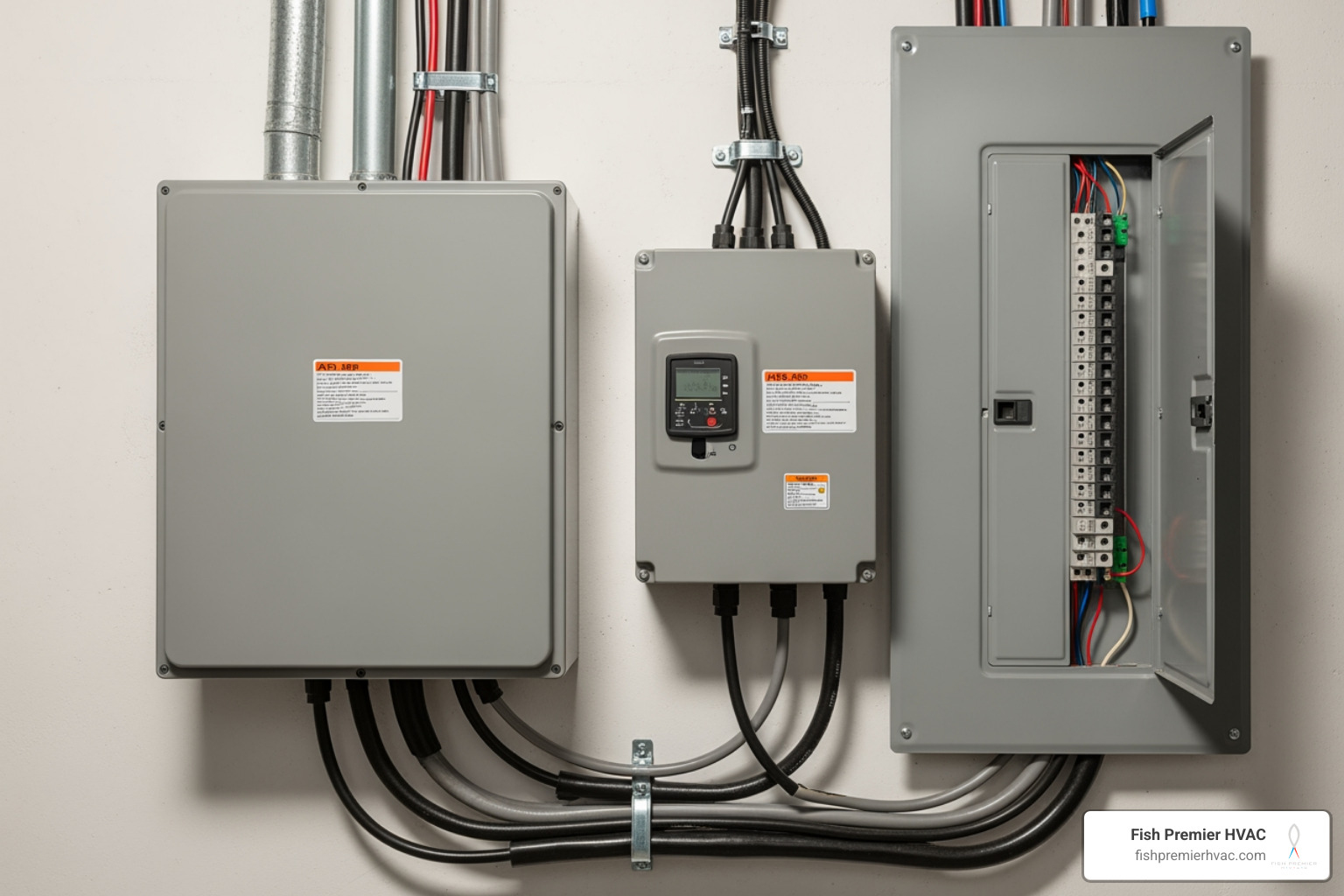
This is where transfer switches and interlock kits become essential. An Automatic Transfer Switch (ATS) is the gold standard for standby generators. Think of it as the intelligent gatekeeper between your home and two power sources. The moment it detects an outage, it disconnects your home from the utility grid and seamlessly switches to generator power—all within seconds, without any action on your part. When utility power returns, it smoothly transitions back and shuts down the generator. This automation completely eliminates the risk of backfeeding while giving you uninterrupted power.
For portable generators, you'll need either a manual transfer switch or an interlock kit. A manual transfer switch lets you safely flip a lever to disconnect from the grid and connect to your generator. An interlock kit takes a slightly different approach—it physically prevents you from turning on both your main utility breaker and generator breaker at the same time, ensuring only one power source feeds your home.
Our Generator Installation Dallas-Fort Worth Guide walks you through exactly how these systems integrate with your home's electrical panel while meeting all electrical code requirements.
Essential Safety Features for Your Generator System
Beyond the transfer switch, a properly installed generator system includes multiple layers of protection. Proper grounding ensures that any electrical faults are safely diverted into the earth rather than through your body or appliances. This isn't just good practice—it's required by electrical code.
Here's something that surprises many homeowners: generators produce carbon monoxide, the same deadly, odorless gas that comes from car exhaust. This is why outdoor placement is absolutely non-negotiable. Your generator must be positioned away from windows, doors, and air intake vents—typically at least 20 feet from your home. Even with proper placement, installing carbon monoxide detectors inside your home adds a critical safety net for your family.
Modern standby generators come equipped with weather-resistant enclosures designed to withstand Texas weather—from scorching summer heat to ice storms. These aren't just cosmetic; they protect sensitive internal components from moisture, debris, and temperature extremes. Quality generators also feature automatic shutdown systems that monitor critical functions like oil pressure, engine temperature, and operating speed. If something goes wrong, the unit shuts itself down before damage occurs.
Surge protection is another feature that often goes unnoticed until you need it. When your generator kicks on, or when utility power returns, voltage fluctuations can damage sensitive electronics like computers, televisions, and smart home systems. Built-in surge protection smooths out these transitions, keeping your expensive appliances safe.
Professional installation brings all these elements together in a system that's not just functional but genuinely safe. Our technicians understand both national electrical codes and Trophy Club's local requirements, ensuring your installation passes inspection the first time. For insights on safe emergency power setups, our guide on Portable Generator Setup for Safe Emergency Power covers the essential safety considerations every homeowner should know.
Frequently Asked Questions about Generator Sizing
What are the most reputable generator brands for home use?
When you're investing in a standby generator for your Trophy Club home, you want a brand that'll be there for you when the lights go out—not one that leaves you stranded. While we work with several quality manufacturers, the key is looking beyond the name on the box. What really matters are the features that keep your generator running smoothly year after year.
Look for brands known for reliability, strong warranties, and quiet operation. The best generators include automatic self-testing modes that run diagnostics weekly, so you know your system is ready before you need it. Remote monitoring capabilities are a game-changer too—imagine checking your generator's status from your smartphone while you're at work, or getting an alert if something needs attention.
Features like self-testing modes and remote monitoring offer added value and peace of mind. Nobody wants a generator that sounds like a freight train in their backyard, so quiet operation matters, especially in our Trophy Club neighborhoods. And a solid warranty? That's the manufacturer's way of saying they stand behind their product.
How do I know if I need a commercial-grade generator?
For most Trophy Club homes, even the larger luxury properties, a robust residential standby generator handles everything beautifully. But there are exceptions. Large luxury homes with extensive electrical loads, multiple large HVAC systems, or home-based businesses may require sizing considerations similar to commercial applications.
Think about it this way: if you're running a home office with server equipment, or you have a workshop with specialized tools, or your home features four or five HVAC zones plus heated floors and a pool system, you might be pushing the boundaries of what a typical residential unit can handle. A 26kW residential generator can power a lot—multiple HVAC systems, all your kitchen appliances, entertainment systems, and more—but there's a ceiling.
If you're not sure where you fall, that's exactly why professional assessment matters. We can evaluate your specific situation and determine whether a residential unit will serve you perfectly or if you need to explore options from our Commercial Standby Generator Sizing Guide. It's about matching the right solution to your unique needs.
Why is professional generator sizing for my Trophy Club home so important?
Here's the thing: Texas weather doesn't mess around. Remember the ice storm of 2023? That late January through early February storm left over 500,000 people shivering in the dark. When Mother Nature decides to flex, you don't want to find your generator is the wrong size.
A professional assessment ensures your generator isn't overworked or underused, protecting your investment and guaranteeing reliable power when you need it most. An undersized generator will struggle and strain, shutting down repeatedly when you're trying to run your AC on a sweltering August afternoon. It's like asking a compact car to tow a boat—technically possible, but you're going to burn out the engine.
On the flip side, an oversized generator wastes your money. You pay more upfront for capacity you'll never use, and the unit runs inefficiently, burning through fuel faster than necessary. Plus, generators that run at low loads for extended periods can develop "wet stacking"—unburned fuel buildup that damages the engine over time.
Professional generator sizing Trophy Club involves complex calculations that go far beyond adding up wattages. We account for starting watts versus running watts, voltage requirements, simultaneous loads, and those critical inrush currents that can spike power demand six times higher than normal operation. We also ensure your installation meets all local codes and safety regulations, protecting your home, your family, and utility workers.
When severe Texas storm events roll through Trophy Club, you deserve complete confidence that your lights will stay on, your AC will keep running, and your family will stay comfortable. That's what proper professional sizing delivers—not just a generator, but genuine peace of mind.
Get a Premium Power Solution for Your Trophy Club Home
Generator sizing Trophy Club isn't just a technical exercise—it's the foundation of your family's comfort and security during those unpredictable Texas weather events. We've walked through the entire process together: calculating your essential loads, understanding the critical role of starting watts, selecting between generator types and fuel sources, and ensuring every installation meets the highest safety standards.
The reality is, when those severe storms roll through North Texas, the difference between a well-sized generator and one that's mismatched for your home is the difference between seamless comfort and frustrating disappointment. Too small, and you're left watching your generator struggle while your AC won't start. Too large, and you've invested in capacity you'll never use, wasting fuel and money with every run.
That's where professional expertise makes all the difference. At Fish Premier HVAC, we bring a concierge-level approach to every generator project in the Trophy Club area. We don't just sell you a unit—we take the time to understand your home's unique power profile, your family's lifestyle, and your expectations for backup power. Whether you're looking to keep just the essentials running or want your entire luxury home operating as if nothing happened, we'll design a solution that fits perfectly.
Our team has helped countless DFW homeowners steer these decisions, from selecting the right kilowatt capacity to choosing between natural gas and propane, to ensuring every wire and connection meets code. We've seen how a properly sized and professionally installed system transforms an outage from a crisis into barely a blip in your day.
Ready to secure reliable backup power for your Trophy Club home? We're here to make the process simple and stress-free. Learn more about selecting the Best Home Standby Generator Fort Worth TX and find how Fish Premier HVAC can deliver the premium power solution your family deserves. Because when the lights go out across the neighborhood, yours should stay on—automatically, seamlessly, and without a second thought.