%201.avif)
The Midnight Shiver Guide to 24 Hour Heating Repair in Westlake TX
Get emergency heating repair in Westlake, TX fast! Spot signs, take safety steps & call 24/7 pros for furnace fixes.

.svg)
.svg)
.svg)
When Your Heating System Fails in the Middle of a Texas Winter Night

Emergency heating repair in westlake, tx becomes a critical need when your furnace or heat pump fails during cold weather, leaving your family uncomfortable and potentially at risk. While Westlake winters are milder than northern climates, sudden cold snaps and freezing temperatures still occur—and when they do, a malfunctioning heating system isn't just inconvenient, it's urgent.
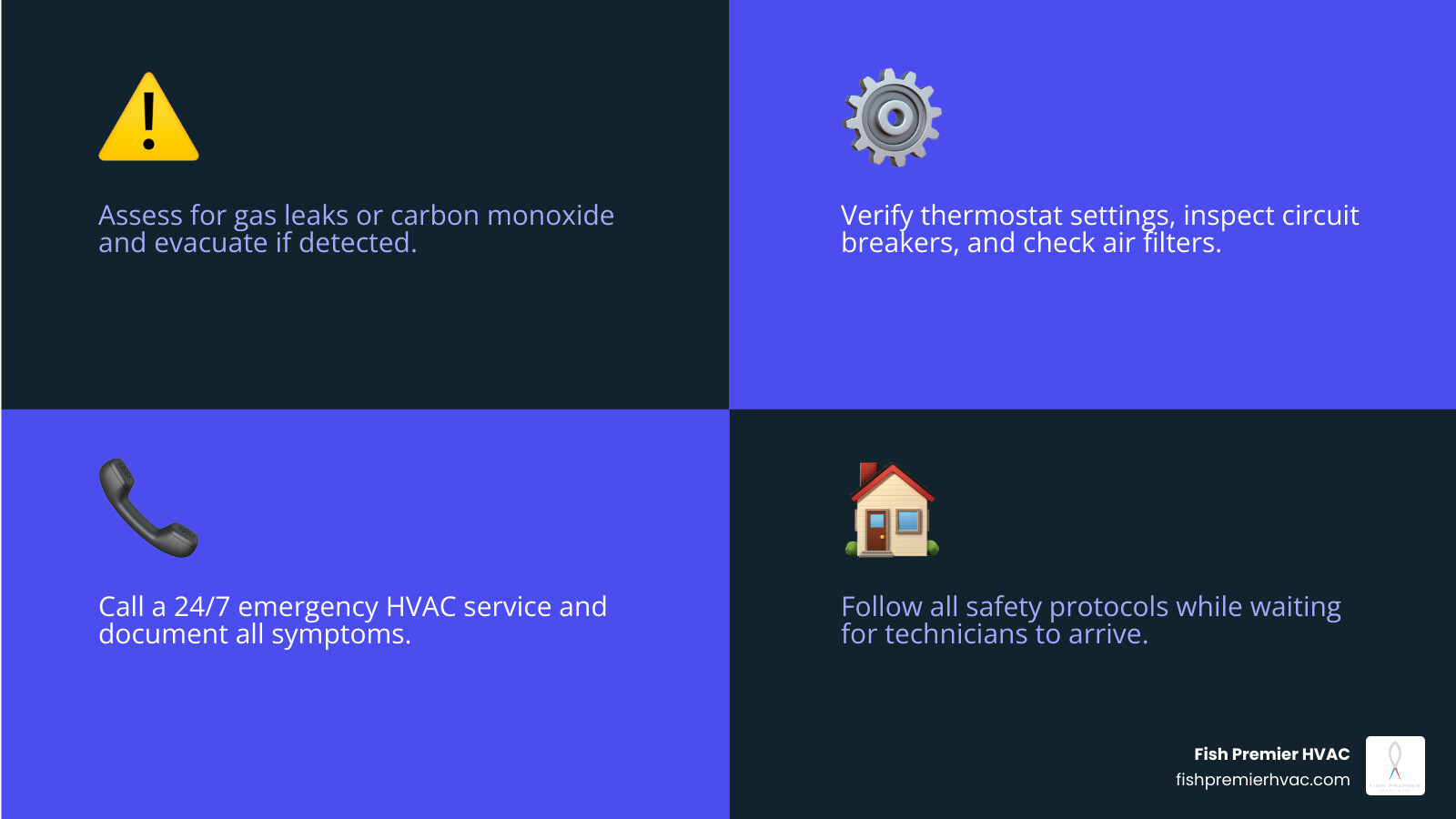
If you need immediate help:
- Check your thermostat settings and circuit breakers first
- Evacuate immediately and call 911 if you smell gas—do not create any sparks
- Call a 24/7 emergency HVAC service for systems that won't turn on, blow cold air, or make unusual noises
- Expect response times of 2-4 hours from local Westlake emergency heating professionals
- Document any error codes, strange sounds, or burning smells to help technicians diagnose faster
For comprehensive heating solutions and preventive maintenance that can help you avoid emergencies altogether, explore our heating services in Westlake, TX. When you're ready to schedule emergency or routine service, contact Fish Premier HVAC for expert care.
The research shows that poor maintenance is the leading cause of heating system failures, and local Westlake services typically respond within 2-4 hours to emergency calls. Whether you live near The Plaza at Solana or Turner Lake, knowing what constitutes a true heating emergency—and what immediate steps to take—can protect your home, your family, and your investment in your comfort system.
Quick emergency heating repair in westlake, tx definitions:
Recognizing the Signs of a Heating Crisis
It’s 2:00 AM, and you’ve just realized that the cozy warmth of your Westlake home has been replaced by a distinct, bone-chilling draft. You might be wondering, my furnace isn't working and it's cold, who can I call for emergency furnace repair in Westlake? Recognizing the early warning signs of a system on the brink can save you from a total breakdown during a freeze.
Your heating system is a complex mechanical beast. Like a car, it often tries to tell you when something is wrong before it completely gives up the ghost. If your furnace starts sounding like a percussion concert—with banging, clanging, or screeching—that is a major red flag. These sounds often indicate loose components, a failing motor, or issues with the ignition process.
Another common sign of trouble is "short cycling." This is when your heater turns on and off frequently without ever reaching the temperature set on your thermostat. Not only is this incredibly inefficient, but it also puts massive strain on the system's internal parts, leading to an inevitable shutdown. If you have a gas furnace, keep an eye on the pilot light. A healthy flame should be a crisp blue; a yellow or flickering orange flame suggests incomplete combustion, which can lead to dangerous carbon monoxide buildup.
What are the signs I need emergency heating repair in Westlake, TX?
While some issues can wait until Monday morning, others demand immediate emergency heating repair in westlake, tx. If your system is exhibiting any of the following, do not wait:
- Strange and Loud Noises: Banging, rattling, or whistling sounds from your ductwork or the unit itself often point to mechanical failure or burner issues.
- Burning Odors: A dusty smell is normal the first time you turn the heat on for the season, but the smell of burning plastic, electrical ozone, or raw gas is an immediate emergency.
- Blowing Cold Air: If the thermostat is set to "Heat" but the air coming from the vents is icy, your system's heating element or burner has failed.
- Frequent Cycling: As mentioned, if the unit can't stay on for more than a few minutes, it’s likely overheating or has a faulty sensor. You can find more emergency-heating-repair-keller-tx-tips here that apply to our Westlake neighbors as well.
- Carbon Monoxide (CO) Alerts: If your CO detector goes off, this is a life-threatening emergency. Carbon monoxide is odorless and colorless; a leak usually stems from a cracked heat exchanger. For 24/7 assistance in these high-stakes moments, residents often look for professional emergency HVAC repairs in Westlake and surrounding areas.
Immediate Steps for Emergency Heating Repair in Westlake, TX
When the heat goes out, panic is a natural response, but staying calm and following a checklist can help you resolve the issue faster—or at least keep your family safe until we arrive. Before you pick up the phone for emergency heating repair in westlake, tx, there are a few "DIY" checks that might save you a service call.
First, check your thermostat. It sounds simple, but sometimes the "Auto/On" switch gets bumped, or the batteries simply died. Ensure it’s set to "Heat" and the temperature is higher than the current room temperature. Next, head to your electrical panel. A sudden power surge can trip the circuit breaker for your HVAC system. If the breaker is tripped, flip it back once. If it trips again immediately, stop—that indicates an electrical fault that requires a professional.
Another common culprit is a clogged air filter. If the filter is caked in dust, it restricts airflow so severely that the system will overheat and shut down as a safety precaution. Replacing a dirty filter can sometimes bring a "dead" furnace back to life instantly. For more detailed guidance, read these westlake-emergency-heating-repair-tips. If these basic checks don't work, it's time to call for professional emergency HVAC repair and installation.
Safety protocols for gas leaks
Safety is our absolute priority. If you smell a "rotten egg" odor (which is the mercaptan added to natural gas to make it detectable), you must act immediately. Natural gas is highly flammable and can be explosive in high concentrations.
- Evacuate Immediately: Get all people and pets out of the house.
- Do Not Create Sparks: Do not turn lights on or off, do not use your phone inside the house, and do not start your car if it's in an attached garage. Any small spark can ignite the gas.
- Call for Help: Once you are a safe distance away, call 911 and your gas utility provider.
- Contact Us: After the authorities have cleared the scene and shut off the gas, contact our team for heating assistance to find and repair the leak.
Common Causes of Heating System Failure
Why did your heater choose the coldest night of the year to quit? Usually, it isn't bad luck—it's physics and mechanical wear. Understanding the "why" can help you prevent the next emergency.
The most common reason for heating failure is a lack of maintenance. Over time, dust and debris accumulate on sensitive components like sensors and burners. According to industry statistics, regular maintenance can reduce breakdowns by up to 70%. When parts are dirty, the system has to work twice as hard to produce the same amount of heat, leading to premature failure.
Other common mechanical failures include:
- Cracked Heat Exchangers: This is often the result of an aging system or restricted airflow causing the metal to expand and contract too violently. This is a serious safety risk as it allows carbon monoxide to enter your home's air supply.
- Faulty Ignitors or Pilot Lights: If the system can't light the fuel, it can't produce heat. This is a common issue in older gas furnaces.
- Electrical Malfunctions: Blown fuses, frayed wiring, or failing capacitors can prevent the blower motor or inducer fan from starting.
- Thermostat Issues: Sometimes the "brain" of the system fails to send the signal to start the heating cycle.
- Wear and Tear: Mechanical parts like belts and bearings eventually wear out. If you hear a high-pitched squealing, a belt is likely on its way out.
For a deeper dive into local system vulnerabilities, see our heating-repair-westlake-tx-guide. Whether you have a traditional furnace or a modern heat pump, these components are all susceptible to the Texas weather swings.
Deciding Between Emergency Repair and System Replacement
When we arrive for an emergency heating repair in westlake, tx, one of the most important questions we help you answer is: "Should I fix this, or is it time for a new one?" This isn't always an easy decision, especially in the middle of a cold snap.
Age is a major factor. Gas furnaces typically last 15-20 years, while heat pumps generally need replacement after 10-15 years. If your system is approaching these milestones, emergency repairs might just be a "band-aid" on a larger problem. Furthermore, modern high-efficiency HVAC units can reduce your energy consumption, eventually paying for themselves in energy savings.
If you're facing a major failure, consult our furnace-repair-westlake-tx page or our emergency-heating-installation-colleyville-guide for help navigating the replacement process.
Frequently Asked Questions
How quickly can I expect emergency heating repair in Westlake, TX?
In a true emergency, time is of the essence. Most local Westlake services, including our team, aim for a response window of 2-4 hours. Because Westlake is a smaller community, local technicians who are familiar with the area's specific housing styles—from the historic estates to the modern developments near Solana—can often navigate to your home quickly.
Response times can vary based on the severity of the weather. During a major North Texas ice storm, call volumes spike. This is why we prioritize emergencies involving vulnerable individuals, such as the elderly or families with infants. For reliable local service, you can also look into our heating-service-westlake-tx.
How can I prevent future heating emergencies?
The best emergency heating repair in westlake, tx is the one you never have to call for! Prevention is significantly more efficient and less stressful than a midnight breakdown.
- Annual Tune-Ups: Schedule a professional inspection every fall. We check for gas leaks, clean burners, and test safety controls.
- Filter Changes: Change your filters every 30-90 days. It is the simplest thing you can do to protect your system.
- Smart Monitoring: Modern smart thermostats can alert you to unusual patterns or if the temperature drops below a certain point while you're away.
- Clear the Vents: Ensure that furniture, rugs, or curtains aren't blocking your return or supply vents.
- Listen and Smell: Don't ignore small noises or "funny" smells. Addressing a small rattle now prevents a big bang later.
For more prevention strategies, check out these emergency-heating-installation-keller-tx-tips.
What is the difference between emergency repair and routine maintenance?
Think of routine maintenance like an oil change for your car—it’s a scheduled, proactive service designed to keep things running smoothly. Routine maintenance includes cleaning, lubricating, and minor adjustments.
Emergency repair, on the other hand, is reactive. It's what happens when a component has already failed, and the system is no longer providing heat. Emergency repairs often involve replacing major parts like blower motors, circuit boards, or gas valves. While maintenance is a planned expense, an emergency repair is an urgent necessity. You can learn more about the nuances of these services on our heating-repair-westlake-tx page.
Conclusion
At Fish Premier HVAC, we understand that your home is your sanctuary. When the Texas winter tries to invade that sanctuary, we are here to push it back. We don't just fix heaters; we provide concierge-level service that ensures your family's comfort and peace of mind.
Whether you need a quick fix for a furnace that won't start or you are looking to upgrade to a high-efficiency HVAC system, our team is dedicated to the highest standards of luxury and reliability. We also offer advanced solutions like air scrubbers to keep your indoor air pristine and standby generators to ensure your heat stays on even when the North Texas grid falters.
Don't let a "midnight shiver" turn into a weekend-long ordeal. If you are experiencing a heating crisis, or if you simply want to ensure your system is ready for the next cold snap, reach out to us. We serve Westlake, Keller, Colleyville, and Southlake with the premium care your home deserves.
For all your heating-repair-westlake-tx needs, trust the experts who treat your home like their own. Stay warm, Westlake!