%201.avif)
A Comprehensive Guide to Choosing Your Home Backup Power
Compare whole home generator vs portable generator options for DFW outages. Discover automatic power, capacity, installation & more for luxury homes.

.svg)
.svg)
.svg)
Experiencing Frequent Power Outages in DFW? What to Know Before Choosing Backup Power
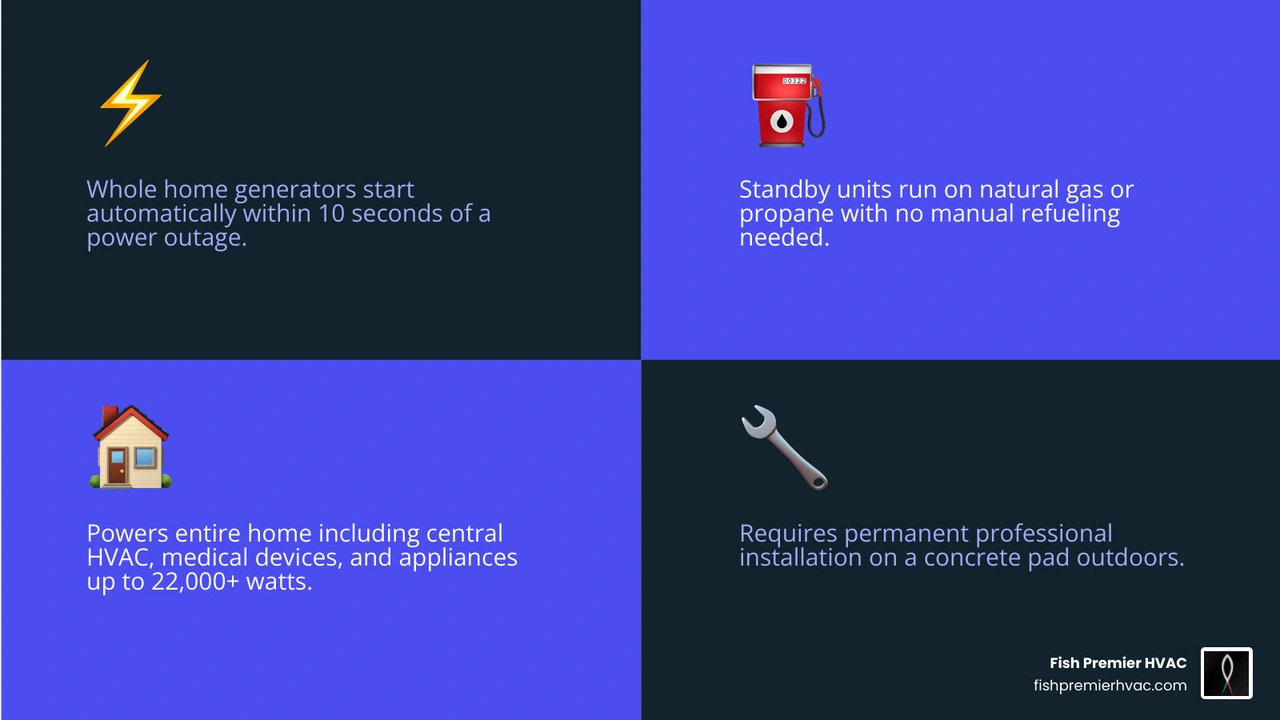
When it comes to a whole home generator vs portable generator comparison, the core difference comes down to three things: automation, power capacity, and installation. Here is a quick breakdown:
| Feature | Whole Home (Standby) | Portable Generator |
|---|---|---|
| Startup | Automatic (within 10 seconds) | Manual setup required |
| Power Output | 8,000 – 22,000+ watts | 2,500 – 8,500 watts |
| Fuel Source | Natural gas or propane (no refueling) | Gasoline (manual refueling every few hours) |
| Installation | Permanent, professional install required | No installation; plug-and-play |
| HVAC Support | Yes, full central AC and heat | Limited; struggles with central HVAC |
| Safe Distance Required | N/A (permanently placed outdoors) | At least 20 feet from the home |
| Portability | No | Yes |
| Best For | Whole-home protection, medical needs, frequent outages | Budget buyers, renters, occasional short outages |
Power outages in the Dallas-Fort Worth area are not rare events. Summer heat waves push the grid to its limits, and winter storms can knock out power for days at a time. For homeowners who depend on HVAC systems, medical equipment, or smart home technology, losing power is more than an inconvenience — it is a genuine risk.
That is why so many DFW homeowners are weighing their backup power options right now. The two most common choices — a whole home standby generator and a portable generator — both provide backup power, but they serve very different needs, come with very different levels of convenience, and suit very different lifestyles.
This guide breaks down everything you need to know to make the right call for your home and family.
Understanding the Core Differences: Whole Home Generator vs Portable Generator Comparison
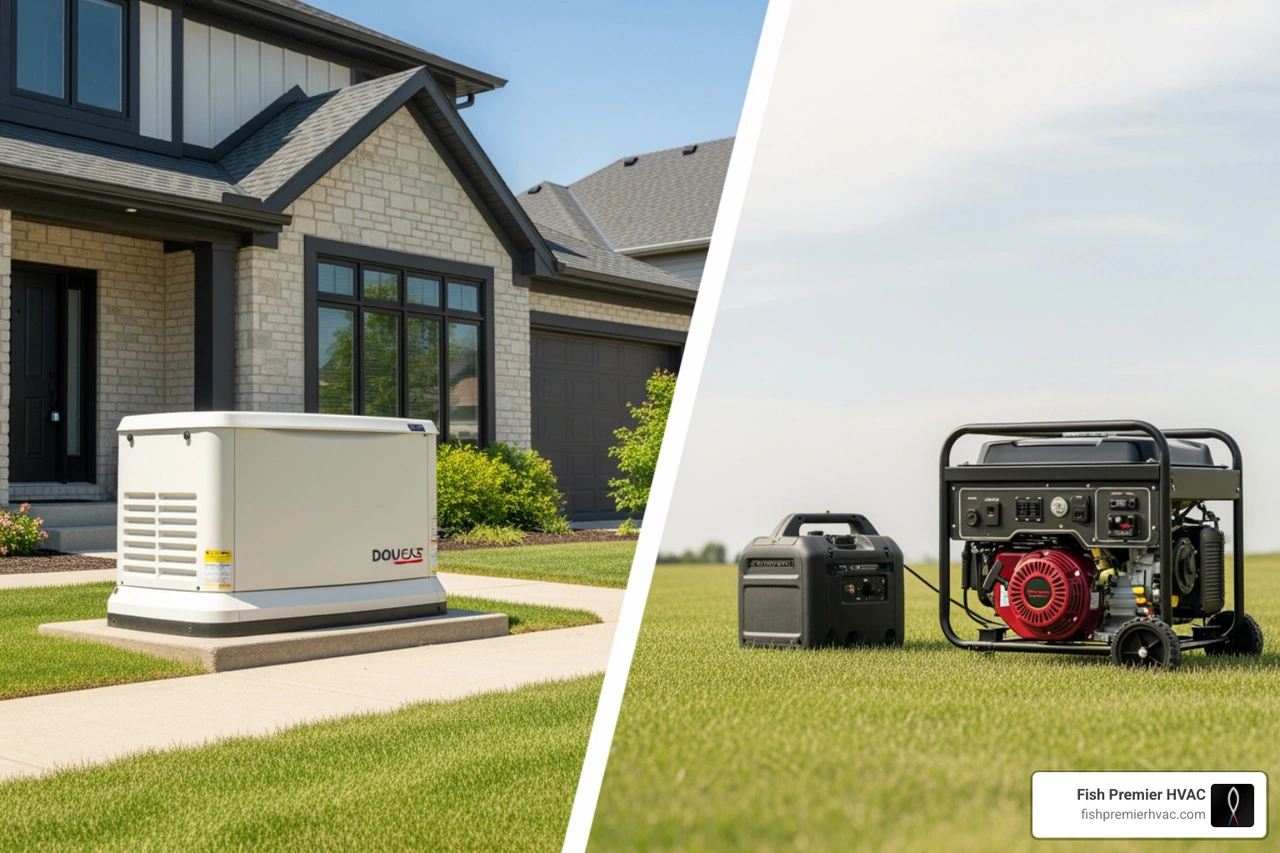
When we look at a whole home generator vs portable generator comparison, we are essentially looking at two different approaches to Power Outage Protection.
A whole home generator, often called a "standby generator," is a permanent fixture on your property. It looks much like a central air conditioning unit and is bolted to a concrete pad. It remains stationary and is integrated directly into your home’s electrical system and fuel lines. It is designed to be a "set it and forget it" solution.
On the other hand, a portable generator is exactly what it sounds like: a movable engine on wheels. You store it in your garage or shed and roll it out when the sky turns gray. While portables offer flexibility and a lower-commitment backup option, they require significant manual labor and careful management during an actual emergency.
For many DFW homeowners, the choice often comes down to how much work you want to do when the power fails. Do you want an automatic backup solution that restores comfort quickly, or a portable option that requires manual setup each time an outage happens?
Automatic vs. Manual Startup Processes
The startup process is perhaps the most dramatic point of difference in any whole home generator vs portable generator comparison.
With a whole-home system, an Automatic Transfer Switch (ATS) acts as a 24/7 sentry for your home. It constantly monitors the utility grid. Within about 10 seconds of detecting a power failure, the ATS disconnects your home from the grid and signals the generator to start. This happens whether you are at home, at work, or away. For those seeking the Best Home Standby Generator Fort Worth Tx, this seamless transition is often the primary reason to choose standby power.
Portable units require a hands-on approach. When the power goes out, you must:
- Locate the generator and roll it at least 20 feet away from the house.
- Check the oil and fill the tank with fresh gasoline.
- Start the engine (often via a pull-cord or electric start).
- Run heavy-duty extension cords through open windows or doors to your appliances, or plug the unit into a pre-installed manual transfer switch.
If the outage happens at 2:00 AM during a North Texas ice storm, the manual process can be cold, dark, and dangerous.
Fuel Sources and Refueling Logistics
Fuel is the lifeblood of your backup plan, and how you get it determines your runtime.
Standby generators typically tap into your home’s existing natural gas or large-scale liquid propane supply. Natural gas provides an essentially continuous runtime as long as utility lines remain active. Propane is also highly reliable and does not degrade over time like gasoline does. However, if you are running both a high-efficiency furnace and a generator off a single propane tank during a deep freeze, you must monitor your levels closely. We often recommend a Generator Needs Fuel System Service to ensure these connections remain tight and efficient.
Portable generators usually run on gasoline. This presents a logistical challenge because a typical portable unit can consume a substantial amount of fuel during an extended outage. Storing large amounts of gasoline on-site can create safety concerns, and if local gas stations are closed due to the same outage, refueling becomes more difficult. Some modern portables are "tri-fuel," meaning they can run on gas, propane, or a natural gas quick-connect, which offers more flexibility but still requires manual setup.
Capacity Needs: Whole Home Generator vs Portable Generator Comparison

The amount of power you need is the next major factor. In a whole home generator vs portable generator comparison, the standby unit is the undisputed heavyweight champion.
Standby units generally range from 8,000 to 22,000 watts (and can go much higher for estate-sized properties). This is enough to power your entire home, including "heavy lifters" like your central air conditioning, electric water heater, and kitchen appliances. This level of capacity is vital for homeowners who want to maintain a "business as usual" lifestyle during an outage.
Portable units typically output between 2,500 and 8,500 watts. While 8,500 watts sounds like a lot, it disappears quickly. You might be able to run your refrigerator, some lights, and a few fans, but starting a 5-ton AC unit is usually out of the question for most portables. For our clients, we often perform Generator Sizing Trophy Club assessments to ensure the selected unit won't fail under the pressure of a Texas summer.
Managing High-Demand Appliances and HVAC Systems
If your goal is to keep your family cool during a 100-degree August afternoon, a whole-home system is almost always the answer. Central HVAC systems require a massive "surge" of power just to start the compressor.
A Whole Home Generators Colleyville Tx installation is designed specifically to handle these loads. Standby units are rated for thousands of hours of operation and can manage multiple high-draw appliances simultaneously through load-shedding technology. This technology "prioritizes" your power, ensuring the AC gets what it needs without tripping the breaker.
Portable units, even large ones, often lack the 240-volt capacity or the raw amperage to support a whole-house HVAC system. You might find yourself having to choose between running the microwave and keeping the bedroom cool.
Clean Power for Sensitive Smart Home Technology
Modern DFW homes are filled with sensitive electronics: OLED TVs, high-end kitchen appliances, and complex smart home ecosystems. These devices require "clean" power with low Total Harmonic Distortion (THD).
Standard portable generators can sometimes produce "dirty" power—voltage fluctuations that can fry sensitive circuit boards over time. If you choose a portable, you must look for an inverter model that produces a "pure sine wave."
However, a high-quality Whole Home Generator Keller Tx is engineered to provide utility-grade power. With THD levels often below 5% (and sometimes as low as 1.5%), standby units are safe for everything from your home office server to your high-tech air scrubbers.
Installation Requirements and Property Considerations
The installation of these two systems couldn't be more different. A portable generator requires no real "installation," though we highly recommend having a licensed electrician install a manual transfer switch or an interlock kit. This allows you to safely feed power into your home’s electrical panel without using a web of extension cords.
A standby generator is a major home improvement project. It requires:
- A permanent concrete pad or a pre-formed high-density base.
- Professional plumbing to connect to natural gas or propane lines.
- Licensed electrical work to install the Automatic Transfer Switch.
- Municipal permits and, in many cases, HOA approval.
In our Generator Installation Dallas Fort Worth Guide, we detail how these "soft costs" and requirements vary by city. For example, Westlake and Southlake often have strict codes regarding where a unit can be placed relative to property lines and air intakes.
Safety Protocols: Carbon Monoxide and Backfeeding
Safety is the most critical part of any whole home generator vs portable generator comparison.
Portable generators carry a significant risk of carbon monoxide (CO) poisoning if used incorrectly. They must be placed at least 20 feet away from the house, with the exhaust pointed away from windows, doors, and vents. Never, under any circumstances, should a generator be run in a garage, even with the door open.
There is also the risk of "backfeeding." This happens when a homeowner tries to power their house by plugging a generator into a standard wall outlet. This is incredibly dangerous; it can electrocute utility workers trying to fix the lines and can cause an electrical fire in your home. A professionally installed Whole Home Generator Southlake Tx system or a proper portable transfer switch eliminates this risk entirely by mechanically isolating your home from the grid.
Long-Term Value and Property Resale Impact
Is a generator an investment? In the DFW luxury market, the answer is a resounding yes.
A standby generator is viewed much like a kitchen remodel or a pool—it is a permanent asset that adds tangible value to the property. Buyers in storm-prone areas are often willing to pay a premium for a home that is "disaster-proof."
While a portable generator is a great tool, it is a personal asset that you take with you when you move. It doesn't typically increase the resale value of the home itself, although having a home pre-wired with a transfer switch is an attractive feature. For those looking at a Whole Home Generator Fort Worth Tx, the peace of mind it offers to future buyers can be a significant selling point.
Maintenance and Reliability Over Time
Like any engine, generators need love to stay reliable.
Standby generators are designed to be self-sufficient. They perform a weekly "exercise" cycle—running for about 20 minutes to circulate oil, check the battery, and ensure the system is ready. However, they still require annual professional maintenance to change the oil, filters, and spark plugs. If you notice your Whole Home Generator Battery Keeps Dying, it is usually a sign that the charging system or the battery itself needs attention.
Portable generators require more "hands-on" maintenance. Because they often sit for months or years between uses, the gasoline in the tank can turn into a varnish-like substance that clogs the carburetor. Owners must use fuel stabilizers or run the unit dry before storage. We often see portable units fail to start during an actual emergency because they were not properly maintained during the off-season.
Ongoing Service and Warranty Compliance
To keep your warranty valid and your home protected, we recommend a Generator Maintenance Colonial Hills Guide approach: regular, documented service.
Many modern standby units offer remote monitoring via mobile apps. This allows you (and us) to receive alerts if the unit fails a self-test or needs a fuel system service. This concierge-level of oversight ensures that when the DFW grid fails, your backup plan doesn't.
Frequently Asked Questions about Whole Home Generator vs Portable Generator Comparison
Can a portable generator safely power my entire house?
Technically, a very large portable generator (12,000+ watts) can power many circuits in your home if it is connected via a 50-amp transfer switch. However, it requires strict "load management." You would likely need to turn off the AC to use the dryer or avoid using the oven while the well pump is running. For a true "whole home" experience without limitations, a standby unit is the only real option.
Which generator type is best for DFW HOA restrictions?
Standby generators are generally better for HOA compliance because they are permanent, professional installations that can be screened with landscaping. Portable generators are often louder and the sight of extension cords running through windows can lead to HOA complaints. In places like Westlake, there are specific decibel limits and aesthetic requirements that a professional installer can help you navigate.
Do standby generators require manual refueling during long outages?
No. This is one of their greatest advantages. If connected to a natural gas line, they have a continuous fuel supply. If connected to a large propane tank (typically 500+ gallons), they can often run for a week or more before needing a delivery, depending on the electrical load.
Conclusion
Choosing between a whole home generator vs portable generator comparison is about balancing your need for convenience against your budget and lifestyle. Portable generators are excellent for short-term, "essential-only" backup, but they demand your time and physical effort when you are least likely to want to give it.
At Fish Premier HVAC, we provide concierge-level service for homeowners who want the ultimate in residential comfort. Whether you are in Keller, Southlake, Colleyville, or Westlake, we specialize in premium installations that integrate seamlessly with your high-efficiency HVAC systems. We don't just install equipment; we provide a comprehensive plan for Whole Home Luxury.
From our Fort Worth home base, we offer expert analysis and prompt service to ensure your family is never left in the dark. We are available Monday-Friday from 8:00 am to 6:00 pm, with after-hours emergency services ready when the Texas weather takes a turn.
Ready to protect your home? If you are looking for a Whole Home Generator Westlake Tx or anywhere in the DFW area, contact us today. Let us help you find the perfect balance of innovation, luxury, and reliability.
Fish Premier HVACExpert HVAC Service For Whole Home ComfortTexas License #TACLB99535E