%201.avif)
How a Backup Generator Keeps Your HVAC Running During Storms
Discover how does a whole home generator work to keep your HVAC running during storms. Learn setup, ATS, fueling & maintenance for reliable power.

.svg)
.svg)
.svg)
How a Whole Home Generator Works — And Why It Matters for Your HVAC
How does a whole home generator work is a question more DFW homeowners are asking — especially after storms knock out power for hours or days at a time. Here's the short answer:
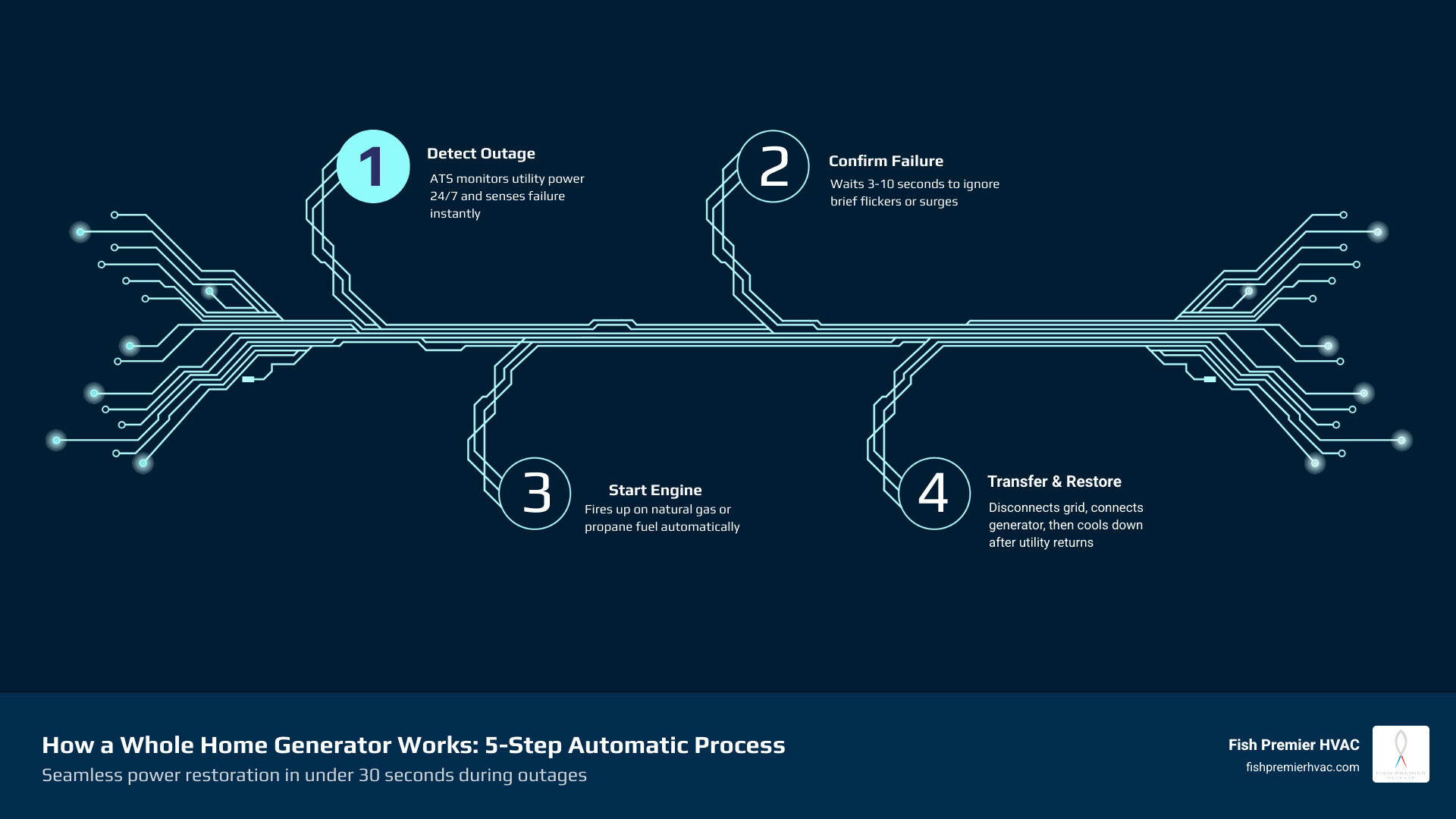
A whole home generator works in 5 automatic steps:
- Detects the outage — A built-in automatic transfer switch (ATS) monitors your utility power 24/7.
- Confirms the failure — The system waits a few seconds to rule out a brief flicker.
- Starts the engine — The generator fires up on natural gas or propane automatically.
- Transfers power — The ATS disconnects your home from the grid and connects it to the generator — typically within 10–30 seconds.
- Restores utility power — When grid power returns, the ATS switches back and the generator runs a cool-down cycle before shutting off.
No manual steps. No extension cords. No going outside in a storm.
For homeowners in Southlake, Colleyville, or Westlake, that seamless handoff means your HVAC system — the most power-hungry appliance in your home — keeps running without interruption. During a Texas summer heat wave or a February ice storm, that's not a luxury. It's a necessity.
The US electricity reliability index sits at 98.6 out of 100, which sounds reassuring — until you realize that remaining 1.4% of downtime can mean multi-day outages during peak weather events. In North Texas, those events are becoming more frequent, not less.
What is a Whole Home Standby System?
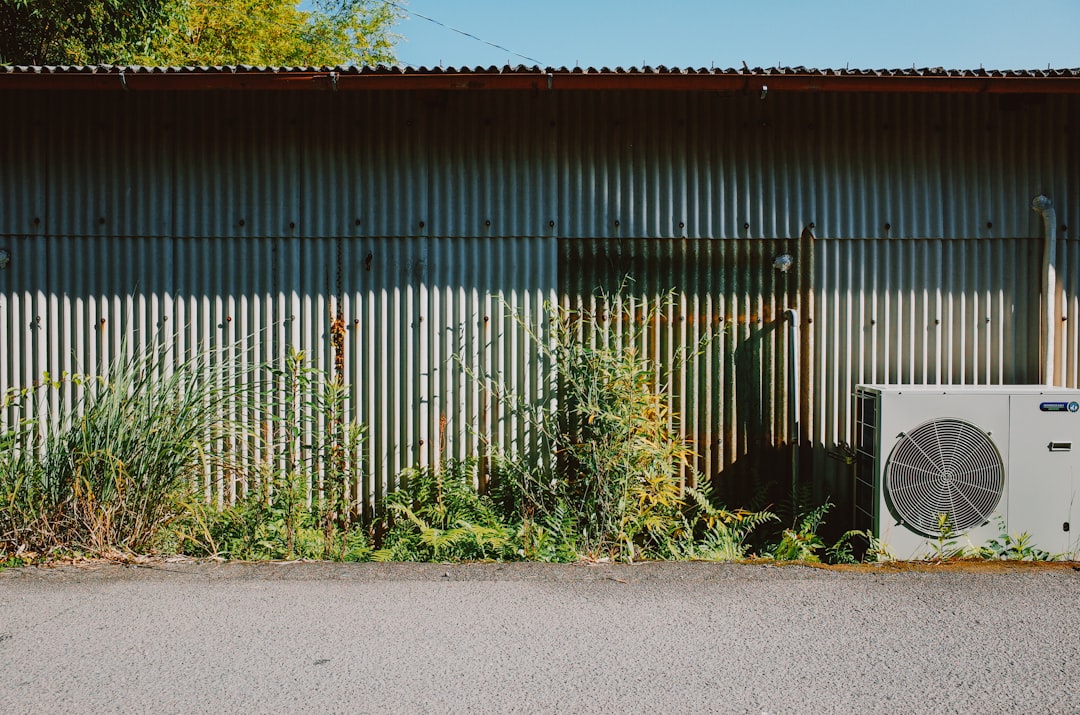
When we talk about Power Outage Protection, we aren't talking about the loud, gas-guzzling machines you pull out of the garage. A whole home standby system is a permanent piece of equipment, much like your central air conditioning unit, that sits outside on a concrete or composite pad.
Unlike portable units, these systems are hardwired into your home’s electrical panel and connected directly to a fuel source like natural gas or liquid propane. This means you never have to worry about running out to a gas station in the middle of a thunderstorm to buy fuel. For residents looking for a Whole Home Generator Fort Worth Tx, the primary appeal is the "set it and forget it" nature of the technology.
| Feature | Standby Generator | Portable Generator |
|---|---|---|
| Activation | Fully Automatic | Manual Setup & Start |
| Fuel Source | Natural Gas/Propane Line | Gasoline (Manual Refill) |
| Power Capacity | 8,000 to 22,000+ Watts | 2,500 to 8,500 Watts |
| HVAC Support | Powers Central AC/Heat | Usually Lights/Fridge Only |
| Weather Protection | Weatherproof Enclosure | Must be Shielded/Moved |
| Home Value | Increases ROI (approx. 60%) | No Impact on Home Value |
Beyond the convenience, these units are built to last. A well-maintained standby generator can provide reliable service for 20 to 40 years. In the luxury real estate markets of North Texas, having a permanent backup power solution is often seen as a significant asset, recouping a large portion of its value during a home sale.
How Does a Whole Home Generator Work Step-by-Step?
To truly understand how does a whole home generator work, we have to look at the "brain" of the operation: the Generator Transfer Switch Colonial Hills. This device is the gatekeeper between the utility grid and your home.
- Constant Monitoring: Even when the sun is shining, the system is awake. It monitors the voltage coming from the utility lines.
- The Drop: When a transformer blows or a line goes down, the voltage drops to zero.
- The Verification: The system waits briefly. This prevents the generator from starting up every time there is a momentary "hiccup" or flicker in the grid.
- The Handshake: Once the outage is confirmed, the generator’s engine cranks. Once it reaches the correct speed and stable voltage, the transfer switch "flips." It disconnects your home from the dead utility lines and connects it to the generator.
- The Return: When the grid is repaired, the system senses stable utility power. It doesn't switch back immediately; it waits to ensure the grid is steady. After switching you back to utility power, the generator continues to run for a few minutes. This "cool-down" cycle allows the engine components to shed heat before the unit shuts off and returns to standby mode.
The Mechanics: How Does a Whole Home Generator Work Internally?
At its core, a generator is a machine that converts mechanical energy into electrical energy through a process called electromagnetic induction. This principle, discovered in the 1830s, is still what we use to provide the Best Home Standby Generator Fort Worth Tx today.
Inside the unit, a heavy-duty engine (similar to a car engine) spins a shaft. This shaft is connected to an alternator. The alternator contains an armature—a coil of wire—that rotates within a magnetic field. As the wires move through the magnetic field, an electrical current is "induced" or created.
Modern systems also include sophisticated voltage regulators. These ensure that the power coming out of the generator is "clean" and stable, which is critical for protecting sensitive electronics like your smart thermostat, high-efficiency HVAC controls, and home computers.
Understanding the Automatic Transfer Switch (ATS)
The ATS is the most critical safety component of the entire system. Its job is twofold: automation and protection.
First, it manages the "load." If you have a smaller generator, the ATS can be programmed for "load shedding," which means it prioritizes the most important circuits (like your HVAC and refrigerator) and temporarily disables less critical ones to prevent the generator from overloading.
Second, it prevents "backfeeding." This is a dangerous situation where electricity from a generator flows back out into the utility lines. This can be fatal for utility workers trying to repair the grid. The ATS ensures your home is an "electrical island," completely isolated from the grid while the generator is running.
Fueling and Sizing Your System for North Texas Weather
Choosing the right fuel and size is where many homeowners get overwhelmed. In the DFW area, most of our clients choose natural gas because it provides an "indefinite" runtime. As long as the gas utility is flowing, your generator is running. For homes without natural gas, a large liquid propane tank (usually 500 gallons) is the standard, providing about 5 to 7 days of continuous power.
If your Generator Needs Fuel System Service, it may struggle to start when you need it most. Regular checks of gas pressure and fuel lines are essential for reliability.
Sizing is equally important. A Generator Sizing Trophy Club assessment involves calculating the "starting watts" of your appliances. HVAC systems, for example, require a massive surge of power just to get the compressor started.
Essential HVAC and Home Loads to Consider:
- 3-Ton Central AC: 3,000–5,000 running watts; 7,500–12,000 starting watts.
- Gas Furnace Fan: 700–800 watts.
- Refrigerator: 300–800 watts.
- Sump Pump: 800–1,000 watts.
- Standard Lights: 60–75 watts per bulb.
Most 2,000-square-foot homes in our area require a 16kW to 20kW generator to handle a full HVAC load along with lights and kitchen appliances.
Regional Solutions for DFW Homeowners
North Texas weather is unique. We deal with extreme heat that puts immense pressure on air conditioners and sudden ice storms that can snap power lines. We specialize in providing tailored solutions like Whole Home Generators Colleyville Tx and Whole Home Generator Keller Tx to ensure your specific home layout and local codes are met.
Whether you are looking for a Whole Home Generator Southlake Tx or a system for a sprawling estate in Westlake, we focus on high-efficiency integration that keeps your luxury HVAC systems protected from the surges often associated with grid failure.
Maintenance and Safety for Long-Term Reliability
A standby generator is an engine, and like any engine, it needs love. One of the most common issues we see is when a Whole Home Generator Battery Keeps Dying. Because the generator sits idle most of the time, the battery must be kept on a "trickle charger" powered by your home’s electricity. If that charger fails, the generator won't have the "juice" to start when the power goes out.
Following a Generator Maintenance Colonial Hills Guide is the best way to ensure longevity. This includes:
- Exercise Cycles: Most units are programmed to run for 10–20 minutes once a week. This lubricates the engine seals and ensures the battery is charging.
- Oil and Filter Changes: Just like a car, generators need oil changes. This is typically done once a year or every 200 hours of operation.
- Clearance: Ensure there is at least three feet of open space around the unit. Debris, long grass, or mulch can block the air intake and cause the unit to overheat.
- Safety: Always ensure your generator is installed at least 5 feet away from windows, doors, and vents to prevent carbon monoxide from entering your home.
For a complete look at the setup process, our Generator Installation Dallas Fort Worth Guide covers everything from permitting to final testing.
Frequently Asked Questions about How Does a Whole Home Generator Work?
How long can a standby generator run continuously?
A standby generator can run for as long as it has fuel. If connected to a natural gas line, it can theoretically run for weeks. If running on a 500-gallon propane tank, most homes can get 5 to 7 days of continuous power. However, we recommend checking the oil level every 24 hours during extended use. Most manufacturers suggest a full service (oil and filters) every 400 to 500 hours of cumulative runtime.
Are whole home generators loud enough to disturb neighbors?
Modern standby generators are designed with sound-attenuating enclosures. Most operate at 65–75 decibels, which is roughly the volume of a normal conversation or a quiet vacuum cleaner. While you will hear a low hum during the weekly self-test, it is rarely loud enough to bother neighbors, especially since most units are placed away from property lines and bedroom windows.
Is a whole home generator worth the investment in 2026?
As of April 2026, the strain on the Texas electrical grid remains a top concern for homeowners. With a cost-to-value return of approximately 60%, a generator is a sound financial move. More importantly, it provides "peace of mind" insurance. It prevents thousands of dollars in potential losses from food spoilage, frozen pipes, or mold growth caused by a lack of humidity control during a summer outage.
Conclusion
At Fish Premier HVAC, we believe your home should be a sanctuary of comfort, no matter what the North Texas weather decides to do. Our concierge-level service ensures that your backup power system is perfectly integrated with your high-efficiency HVAC, providing a seamless transition when the grid fails.
If you are ready to explore a Whole Home Generator Westlake Tx or need expert advice on protecting your home in Keller, Colleyville, or Southlake, we are here to help. We don't just install equipment; we provide the luxury of reliability and the comfort of knowing your family is protected. Contact us today to schedule a consultation and take the first step toward true energy independence.