%201.avif)
Why Your AC Smells Like Dirty Socks in Late August
A sudden locker-room odor from your vents is likely dirty sock syndrome. See how months of heavy summer cooling create bacterial buildup on your evaporator coil, and when to call a pro.


.svg)
.svg)
.svg)
The Sudden Stench: Facing Late Summer AC Odors
Late August end-of-season cooling is supposed to bring relief from the intense heat, but a sudden, foul odor coming from your vents can quickly ruin the comfort of your home just as you transition into the back-to-school routine. If you are wondering exactly why your AC smells like dirty socks in late August, you are dealing with a very specific, highly documented HVAC phenomenon. It usually happens just as the summer begins to wind down. You walk into your living room, the air conditioner kicks on, and instead of crisp, clean air, you are hit with a stale, locker-room stench that permeates the entire house. This jarring experience often leads homeowners to panic, assuming an animal has perished in the ductwork or that the system is suffering from a catastrophic electrical failure.
Here's the thing: in our years of servicing Fort Worth homes, we've found that this distinct, musky scent is almost always a condition known in the industry as "dirty sock syndrome." It is a common but highly misunderstood issue that plagues many residential cooling systems after months of heavy operation. The good news is that this odor does not mean your equipment has reached the end of its lifespan, nor does it require a complete system overhaul. However, it does force an important decision point for homeowners: determining whether this frustrating odor stems from a simple clogged condensate drain line backing up into your home, or if it requires professional, deep-level coil sanitization to eradicate a biological issue inside the air handler.
Addressing the root cause of this smell is a crucial part of maintaining your home's indoor air quality. If you need assistance diagnosing the exact source of the odor, reaching out to our team for professional air conditioning services is the safest and most effective way to restore fresh air to your living spaces.
What Exactly is 'Dirty Sock Syndrome'?
The short answer is that Dirty Sock Syndrome is the foul, stale odor caused by a massive buildup of mold, mildew, and bacterial growth directly on the indoor components of your air conditioning system. While the name sounds slightly comical, the reality of what is happening inside your unit is pure biology. Your air conditioner does not just cool the air; it also dehumidifies it. As warm, humid indoor air passes over the freezing cold evaporator coils, moisture is pulled out of the air, leaving the coils constantly wet during operation.
This dark, damp environment creates the perfect breeding ground for organic growth. Even with a high-quality air filter in place, microscopic household dust, pet dander, skin cells, and cooking oils inevitably make their way into the ductwork and stick to the wet coil. This organic matter becomes a continuous food source for microbial colonies. When a local homeowner recently reached out to Fish Premier HVAC about a strange odor, our responding technician provided a thorough HVAC lesson, explaining exactly how these microbes naturally present in the air colonize this wet surface over time, eventually multiplying to the point where they emit a highly noticeable, sour smell.
It is important to clarify the difference between the smell of microbial growth and other common HVAC odors. Dirty sock syndrome smells distinctly like damp, unwashed laundry, old gym shoes, or a wet basement. If you smell something that resembles rotten eggs, sulfur, or a deceased animal, that is a completely different issue. Similarly, a burning plastic or electrical smell indicates a mechanical or wiring problem that requires immediate emergency shutdown. The dirty sock smell, while highly unpleasant and disruptive, is strictly a biological issue tied to moisture and bacteria.
The Biology of Your Evaporator Coil
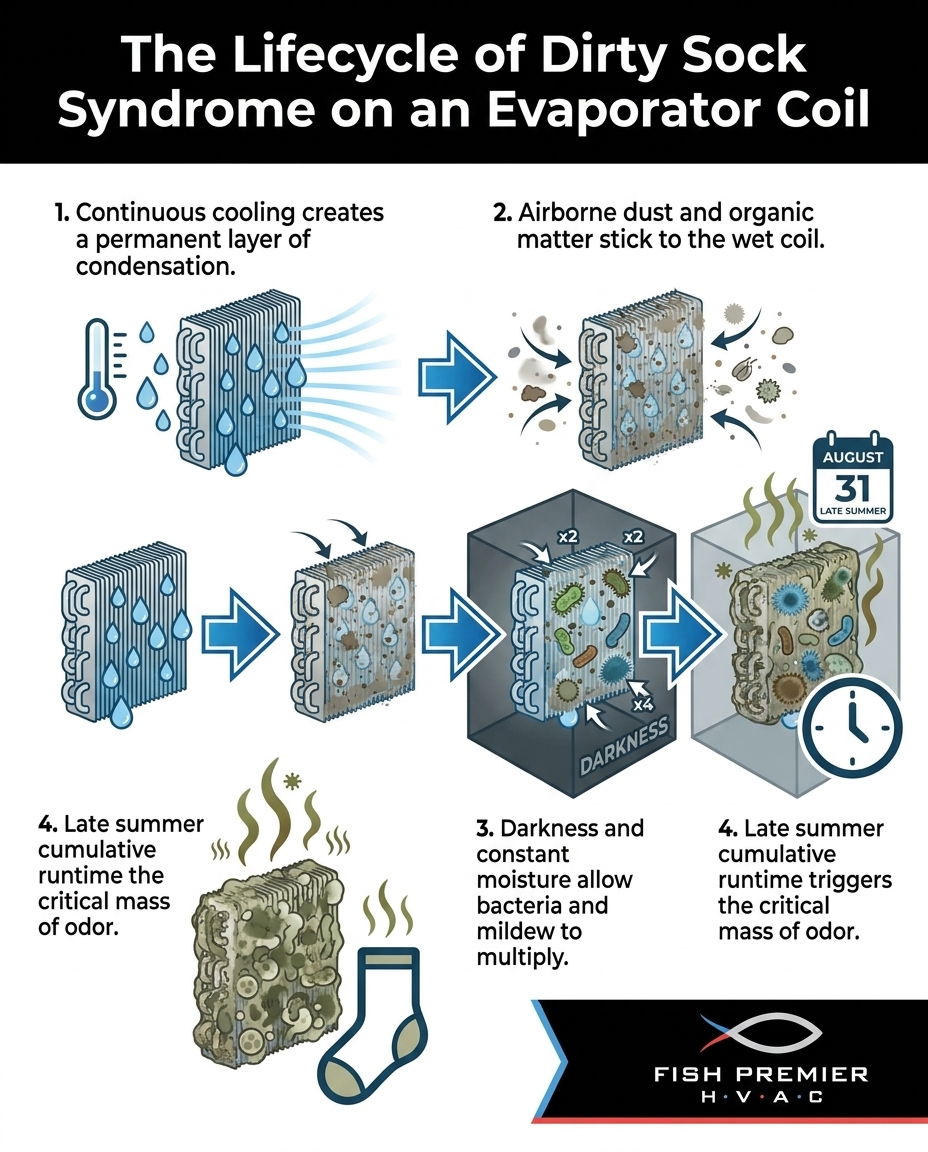
To understand the odor, you have to understand the transition of air passing over cold coils. Inside your indoor air handler, the evaporator coil is filled with ultra-cold refrigerant. When your blower fan pushes warm household air across this freezing metal, rapid condensation occurs—much like water droplets forming on the outside of a glass of ice water on a hot day. This condensation is supposed to drip down into a drain pan and flow out of your house. However, the spaces between the aluminum fins on the coil are incredibly tight. Moisture naturally clings to these fins, meaning the coil remains coated in a thin layer of water for as long as the system is running. Microbes thrive in this exact environment, anchoring themselves to the wet metal and feeding on the microscopic debris that bypasses your air filter.
Why Late August? The Cumulative Toll of Texas Heat
You might be wondering why this smell suddenly appears at the end of the summer rather than in May or June. The answer lies in the cumulative toll of the regional climate. In our service area of Fort Worth TX, the summer brings prolonged periods of extreme heat paired with high humidity. During the early summer months, your air conditioner might get occasional breaks, allowing the indoor coil a brief chance to dry off between cooling cycles. However, as the intense heat persists week after week, the heat saturation in your home's building materials increases, forcing your system to run almost continuously to maintain a comfortable indoor temperature.
By the time late August and the back-to-school transition arrive, your air conditioner has likely been running non-stop for three to four months. In our experience, this represents the absolute peak of cumulative AC runtime. Because the system is constantly cycling, the evaporator coil never has an opportunity to fully dry out. It remains permanently damp, day and night, for weeks on end. This unbroken streak of moisture is exactly what allows the bacterial colonies to reach a critical mass. The microbes multiply exponentially until the colony is large enough to suddenly produce a highly noticeable, sour odor that gets pushed through every vent in your home.
This is not an isolated issue. Systems working overtime in nearby communities face the exact same cumulative moisture challenges. For instance, our Fish Premier HVAC technicians performing AC tune-ups in Keller frequently observe coils that are heavily coated in biological growth by the end of the summer season. The continuous demand of the Texas heat simply overpowers the system's ability to shed moisture, turning the indoor air handler into a permanent, damp breeding ground for the exact bacteria responsible for dirty sock syndrome.
Evaporator Coil vs. Condensate Drain: Locating the Source
While the evaporator coil is the primary suspect for dirty sock syndrome, it is not the only component that can cause your vents to smell like a swamp. The condensate drain system is equally capable of producing foul, moisture-related odors. Understanding the difference between these two components is critical for properly diagnosing the source of the stench.
The evaporator coil is where the air is actively cooled and moisture is extracted from your indoor air. The condensate drain line is the plumbing mechanism where that extracted moisture exits the home. When the system is functioning normally, water drips off the coil into a shallow drain pan, then flows down a PVC pipe to the exterior of your house. However, this drain line can easily become clogged with the same dust, algae, and biological slime that affects the coil. When a blockage occurs, water backs up into the drain pan and sits stagnant inside your air handler.
• Evaporator Coil — Primary Function: Extracts heat and moisture from indoor air — How It Causes Odors: Bacterial colonies grow directly on the constantly wet metal fins — Odor Characteristics: Sour, musky, "dirty sock" or locker-room smell
• Condensate Drain Pan — Primary Function: Catches water dripping off the coil — How It Causes Odors: Clogged lines cause water to pool and stagnate inside the cabinet — Odor Characteristics: Swampy, stagnant water, or heavy mildew smell
Stagnant water in a backed-up drain pan mimics the dirty sock smell very closely, making it difficult for the average homeowner to tell the difference. This highlights the importance of having a professional diagnosis to differentiate between a biologically contaminated coil and a blocked drain line. Our licensed technicians have the tools to measure airflow, inspect the plenum, and check the drainage pitch to pinpoint the exact source of the moisture issue. Ignoring either of these problems can lead to severe consequences. A dirty coil will restrict airflow and drastically reduce system efficiency, while a clogged drain pan will eventually overflow, causing costly water damage to your ceilings or floors. If you suspect a drainage issue, scheduling AC repair in Westlake or your local area is the best way to prevent a minor odor from turning into a major mechanical failure.
Why DIY Coil Cleaning is a Costly Mistake
When faced with a terrible smell coming from the vents, many homeowners are tempted to take matters into their own hands. A quick search online might suggest buying cheap, foaming coil cleaners or spraying a diluted bleach solution directly into the air handler. At Fish Premier HVAC, we always warn our customers that the quick fix is almost always a trap: attempting to clean an evaporator coil yourself is a highly risky and potentially costly mistake that should be avoided at all costs.
First and foremost, consumer-grade chemical sprays and foaming aerosols rarely solve the root problem. They may mask the odor temporarily with heavy perfumes, but they do not possess the precise pH balance required to safely eradicate entrenched bacterial colonies. More importantly, the physical structure of an evaporator coil is incredibly fragile. The aluminum fins that facilitate heat transfer are thinner than paper and packed tightly together. Brushing them, scrubbing them, or applying harsh, corrosive chemicals like bleach will easily bend, crush, or chemically pit the metal. Once the fins are damaged or flattened, airflow is permanently restricted, which can cause the entire system to freeze over and eventually destroy the compressor.
Furthermore, simply accessing the evaporator coil often requires disassembling parts of the sheet metal plenum and navigating the blower cabinet. This poses significant electrical and mechanical risks to anyone without professional training. High-voltage components and sharp sheet metal edges make the air handler a dangerous environment. True eradication of the bacteria requires specialized, professional-grade treatments that neutralize the biological growth without degrading the delicate aluminum fins. Instead of risking catastrophic damage to your equipment with DIY chemicals, homeowners should explore long-term solutions, such as the benefits of installing a whole-house air scrubber, which actively neutralizes airborne contaminants before they ever reach the coil.
Frequently Asked Questions About Odorous Air Conditioners
Why does my AC smell like dirty socks?
Your AC smells like dirty socks because bacterial and microbial colonies have grown on the indoor evaporator coil. As the system cools your home, it pulls moisture out of the air, leaving the internal metal coils constantly wet. Over months of heavy summer usage, this dark, damp environment traps dust and organic matter, creating a perfect breeding ground for bacteria. When the air blows across this contaminated, wet coil, it picks up the sour, locker-room odor and distributes it throughout your entire house.
Is dirty sock syndrome dangerous?
While dirty sock syndrome is generally not considered a severe medical emergency, it can significantly degrade your indoor air quality and cause discomfort. The presence of mold, mildew, and bacteria in your airstream can act as a major respiratory irritant. For individuals who suffer from asthma, severe allergies, or compromised immune systems, breathing in this contaminated air daily can aggravate their symptoms, leading to coughing, sneezing, and general respiratory fatigue. Our team always recommends resolving this air quality issue promptly for the comfort and well-being of your household.
How do you get rid of dirty sock smell in AC?
Getting rid of the dirty sock smell requires professional coil cleaning and sanitization to completely remove the biological growth from the metal fins. Our licensed technicians use specialized, non-corrosive treatments to eradicate the bacteria without damaging the delicate aluminum components of your system. To prevent the smell from returning in the future, installing advanced air purification technology, such as ultraviolet (UV) lights inside the air handler, is highly recommended to continuously neutralize microbes before they can colonize the wet surfaces.
Can a dirty filter cause AC to smell?
Yes, a severely clogged or dirty air filter can indirectly cause your AC to smell by restricting proper airflow and trapping excess moisture inside the system. When the filter is completely blocked with dirt and debris, the blower motor struggles to pull enough warm air across the evaporator coil. This lack of airflow prevents the condensation on the coil from evaporating properly, keeping the internal components wetter for longer periods. Additionally, a failed filter allows more organic dust to bypass into the system, providing a larger food source for the bacteria that cause dirty sock syndrome.
Will dirty sock syndrome go away on its own in the winter?
The odor may temporarily fade during the winter months when you switch to heating, but the underlying bacterial growth will not go away on its own. When the furnace runs, the high heat dries out the evaporator coil, forcing the microbial colonies into a dormant state, which temporarily stops the foul smell. However, the organic matter remains stuck to the metal fins. As soon as the weather warms up and you turn the air conditioning back on in the spring, the condensation returns, the bacteria reactivate, and the dirty sock smell will come back immediately.
Eradicating the Bacteria: Professional Solutions That Last
When you are dealing with entrenched biological growth inside your HVAC system, temporary fixes will only lead to recurring frustration. Eradicating the bacteria permanently requires premium, professional solutions that address the root cause of the moisture and contamination. The process begins with professional coil sanitization. A highly trained technician will carefully access the evaporator coil and apply specialized, pH-balanced cleaning agents designed specifically for HVAC equipment. These treatments safely break down the biological slime, mold, and bacteria, washing them away down the condensate drain without causing any chemical degradation or physical damage to the fragile aluminum fins.
However, cleaning the coil only resets the system to zero; it does not prevent the bacteria from returning during the next major heat wave. To achieve lasting results, advanced air purification technology must be integrated into the system. Installing high-output UV germicidal lights directly over the evaporator coil is one of the most effective strategies available. These lights shine continuously on the wet metal, disrupting the DNA of any mold spores or bacteria that attempt to colonize the surface, rendering them unable to multiply. Coupled with active air scrubbers that release purifying ions into the ductwork, you can actively neutralize biological contaminants throughout your entire home.
This comprehensive approach is the hallmark of our Concierge HVAC Service here at Fish Premier HVAC. Rather than just applying a temporary chemical bandage, we focus on root-cause eradication and long-term air quality improvements. During a recent late-summer heatwave, a Fort Worth homeowner reached out to us because they thought their odorous, struggling unit needed a full replacement. Our technician focused strictly on their actual needs, avoiding unnecessary services and providing honest advice on targeted sanitization and air purification instead, which fully resolved the issue and earned their long-term loyalty. By investing in whole-home air purification, you ensure that your system operates cleanly and efficiently, free from the biological buildup that causes seasonal odors.
Breathe Easier for the Rest of the Season
Dealing with foul odors from your vents is incredibly frustrating, but understanding why your AC smells like dirty socks in late August is the first step toward a permanent solution. The sour, locker-room stench is a natural consequence of heavy, cumulative usage and prolonged condensation, but it absolutely does not have to be a permanent feature of your home. You do not have to suffer through the final weeks of summer breathing in stale, contaminated air.
Professional intervention can quickly and safely restore fresh, clean air to your living spaces while protecting the mechanical integrity of your cooling system. By avoiding risky DIY chemicals and opting for expert coil sanitization paired with advanced air purification, you can eliminate the bacteria at its source. Our team at Fish Premier HVAC encourages you to schedule a professional inspection to diagnose the exact source of the smell—whether it is a dirty coil or a clogged drain—so you can breathe easier and enjoy a comfortable, odor-free home for the rest of the season.