%201.avif)
How to Protect Your Home During Power Outages in Texas
Protect your home during power outages in Texas with proven backup power solutions and essential emergency strategies for DFW homes.

.svg)
.svg)
.svg)
Power Outages in Texas Are Not a Matter of "If" — They're a Matter of "When"
Protecting your home during power outages in Texas is one of the most important things you can do as a homeowner in the Dallas-Fort Worth area. Texas leads the entire country in weather-related power outages, with more than 1,500 major outages recorded between 2000 and 2021 — and 83% of those were directly tied to weather. From brutal summer heat waves that push the grid to its breaking point, to sudden winter freezes that catch both homeowners and infrastructure off guard, losing power in Texas is a real and recurring threat.
The good news? There are clear, practical steps you can take right now to protect your home, your appliances, your family, and your comfort — before the next outage hits.
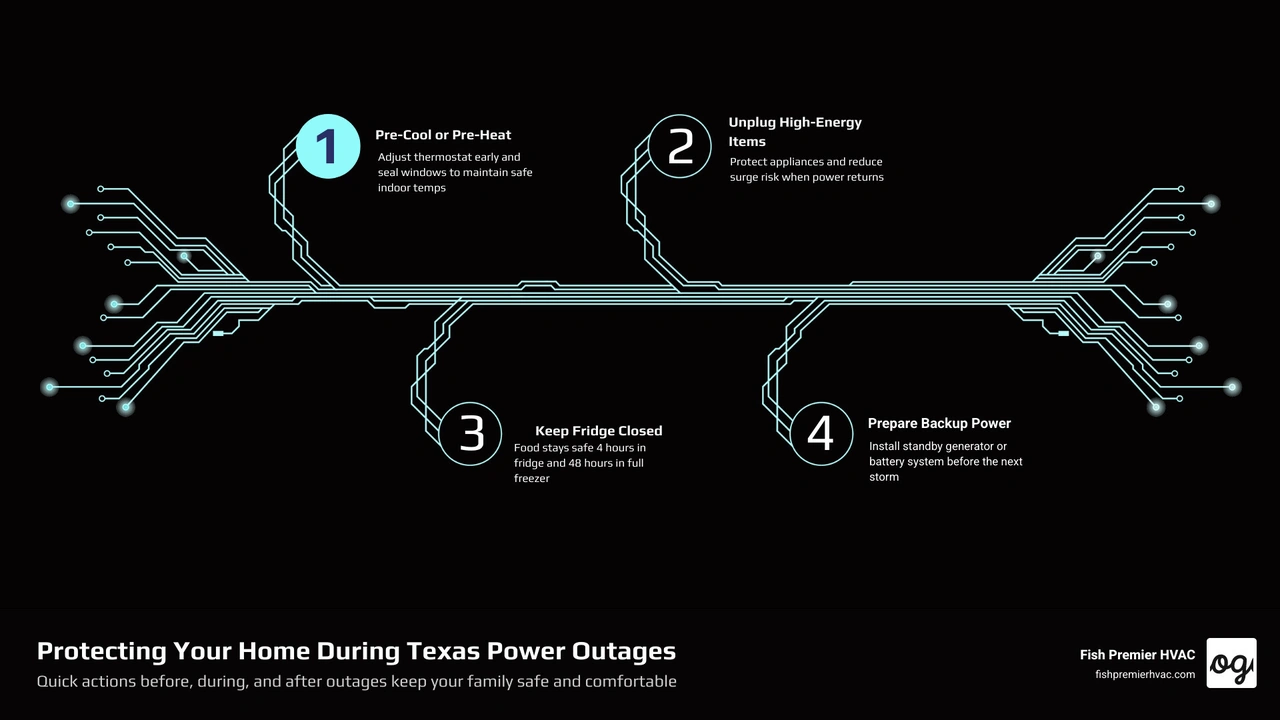
Here's a quick overview of how to protect your home during a Texas power outage:
1. Before an outage — Pre-cool or pre-heat your home, seal windows and doors, unplug high-energy appliances, and build a season-ready emergency kit
2. During an outage — Keep refrigerator and freezer doors closed, avoid running gas appliances for heat, and use surge protectors on sensitive electronics
3. For backup power — Consider a whole-home standby generator or battery backup system to maintain essential comfort and safety
4. For your HVAC system — Protect your AC unit before storms, schedule regular maintenance, and inspect equipment after severe weather
5. For food and medications — Refrigerated food stays safe for about 4 hours; a full freezer holds for up to 48 hours if kept closed
6. For safety — Never run a generator indoors, stay 20+ feet from windows when placing one outside, and install carbon monoxide detectors
Whether you're bracing for a summer thunderstorm or a winter freeze, this guide walks you through everything Dallas-Fort Worth homeowners need to know to stay safe, comfortable, and protected.
Quick look at protecting your home during power outages in texas:
• how a whole home generator protects you during storms
• how texas storms affect your hvac system
• post storm hvac checklist for texas homeowners
Why the Texas Power Grid Faces Frequent Outages
To effectively shield our homes, we first have to understand what we are up against. The Texas power grid operates largely as an independent entity, which means importing power from neighboring states during emergencies isn't always an option. This unique setup, combined with increasingly volatile weather patterns, places immense stress on our local infrastructure.
Between 2000 and 2021, Texas reported more weather-related power outages than any other state in the nation, totaling 1,542 major outages. When we look at the data, the connection between severe weather and grid failure is undeniable: about 83% of all major U.S. power outages during this two-decade window were weather-induced.
Breaking down those weather-related outages nationally:
• Severe Weather (Thunderstorms, Tornadoes, and High Winds): 58%
• Winter Weather (Ice Storms and Extreme Cold): 22%
• Tropical Cyclones (Hurricanes and Tropical Storms): 15%
In the Dallas-Fort Worth metroplex—including premium residential areas like Keller, Southlake, Colleyville, and Westlake—we regularly experience the full spectrum of these threats. Spring brings violent thunderstorms loaded with lightning, which causes an estimated $5 billion in property damage annually across the United States. Lightning strikes can instantly fry delicate HVAC electronics, melt wiring, and trigger devastating power surges.
To make matters worse, our intense summer heatwaves drive electricity demand to record highs as millions of air conditioners run simultaneously. This massive demand can lead to localized equipment failures, blown transformers, or rolling blackouts. To understand how these severe weather patterns interact with your home's most critical comfort system, explore our detailed guide on how texas storms affect your hvac system.

Essential Strategies for Protecting Your Home During Power Outages in Texas
Successfully protecting your home during power outages in Texas requires a dual-season approach. Preparing for a 105°F July afternoon requires a completely different set of tactics than prepping for a 15°F January freeze.
Protecting Your Home During Power Outages in Texas: Summer Heat Waves
When a severe summer storm or grid overload knocks out the power, your home can quickly turn into an oven. Without air conditioning, indoor temperatures can climb to dangerous levels in a matter of hours.
• Pre-Cooling Strategies: If you receive a conservation warning or notice a severe storm heading toward the DFW area, pre-cool your home. Lower your thermostat to 68°F. This "cold-banking" strategy allows your home's thermal mass (walls, furniture, floors) to absorb the cold, helping your living spaces stay cooler for longer once the power cuts out. To optimize your HVAC's daily performance ahead of time, check out the best thermostat settings for energy savings in texas.
• Indoor Temperature Management: Once the power goes out, keep all blinds, curtains, and cellular shades tightly drawn to block out the radiant heat of the Texas sun. Keep doors and windows closed to lock in the cool air. Only open windows during the late evening or early morning if the outdoor air is significantly cooler than the indoor temperature.
• Summer Emergency Kit: Keep a dedicated bin stocked with warm-weather survival gear. This should include battery-powered or rechargeable personal fans, cooling towels, instant cold packs, a high-quality first-aid kit, and plenty of electrolyte replacement packets.
• Water Storage: Always store at least one gallon of water per person (and pet) per day. During extended outages, municipal water treatment facilities can lose power or experience pressure drops, leading to boil-water advisories.
• Managing High-Energy Appliances: Identify your home's heaviest energy users. Air conditioners, electric water heaters, clothes dryers, and pool pumps draw massive amounts of electricity. If you are running on backup battery power or a portable generator, these appliances must be switched off to avoid overloading your system.
Protecting Your Home During Power Outages in Texas: Winter Freezes
Texas homes are historically engineered to shed heat rather than retain it. When a winter freeze strikes and the power fails, indoor temperatures can plummet rapidly, putting your plumbing and your family at risk.
• Pipe Freeze Prevention: Frozen pipes can burst and cause catastrophic water and electrical damage. When temperatures drop below freezing, insulate all exposed outdoor faucets and pipes in unheated areas (like attics or crawlspaces). Indoors, open cabinet doors under kitchen and bathroom sinks to allow what little warm room air remains to circulate around the plumbing.
• The Dripping Faucet Rule: Let your faucets drip cold water slowly. Moving water is much harder to freeze, and keeping the faucet open relieves the pressure buildup inside the pipe if localized freezing does occur.
• Winter Emergency Kit: Your winter kit should focus on heat retention. Stock up on heavy thermal blankets, sleeping bags rated for cold temperatures, hand warmers, warm winter clothing (layers, beanies, gloves), and a battery-operated carbon monoxide detector.
• Home Insulation: Check the weatherstripping around your doors and windows before winter arrives. Apply temporary window insulation film or hang heavy blankets over drafty windows to seal in residual heat. If you experience a heating failure during a winter storm, utilize our emergency heating repair guide westlake tx to troubleshoot and protect your property.
Immediate Actions to Take When the Power Goes Out
What you do in the first few minutes of a blackout can save you thousands of dollars in appliance repairs and prevent dangerous electrical emergencies.
1. Confirm the Outage: Check your electrical panel to ensure you haven't simply tripped a main breaker. Look outside to see if your neighbors' homes are also dark.
2. Unplug Sensitive Electronics: When the power grid eventually comes back online, it often does so with a massive electrical surge. This high-voltage spike can ruin televisions, computers, smart home hubs, and microwave ovens. Unplug these devices immediately.
3. Protect Your HVAC System: Switch your thermostat to the "Off" position. This prevents your air conditioner or furnace from short-cycling or trying to start up simultaneously with every other appliance on the street when power is restored, which can cause severe motor damage.
4. Keep Fridge and Freezer Closed: Your refrigerator will keep food safely cold for approximately 4 hours if the door remains closed. A full freezer will maintain its temperature for up to 48 hours (or 24 hours if it is only half-full).
5. Address the "Half-Power Effect" (Brownouts): If your lights are dim, flickering, or only half of your home's outlets are working, you are likely experiencing a brownout. This drop in voltage is highly dangerous for motors. Immediately shut off your AC and unplug your refrigerator to prevent their motors from burning out. For a detailed post-storm inspection routine, refer to our post storm hvac checklist for texas homeowners.
Backup Power Solutions: Generators vs. Battery Systems
When it comes to securing uninterrupted comfort and safety, relying solely on the grid is no longer a viable strategy for many luxury homeowners. Investing in a dedicated backup power solution is the ultimate way to ensure peace of mind.
Whole-Home Standby Generators
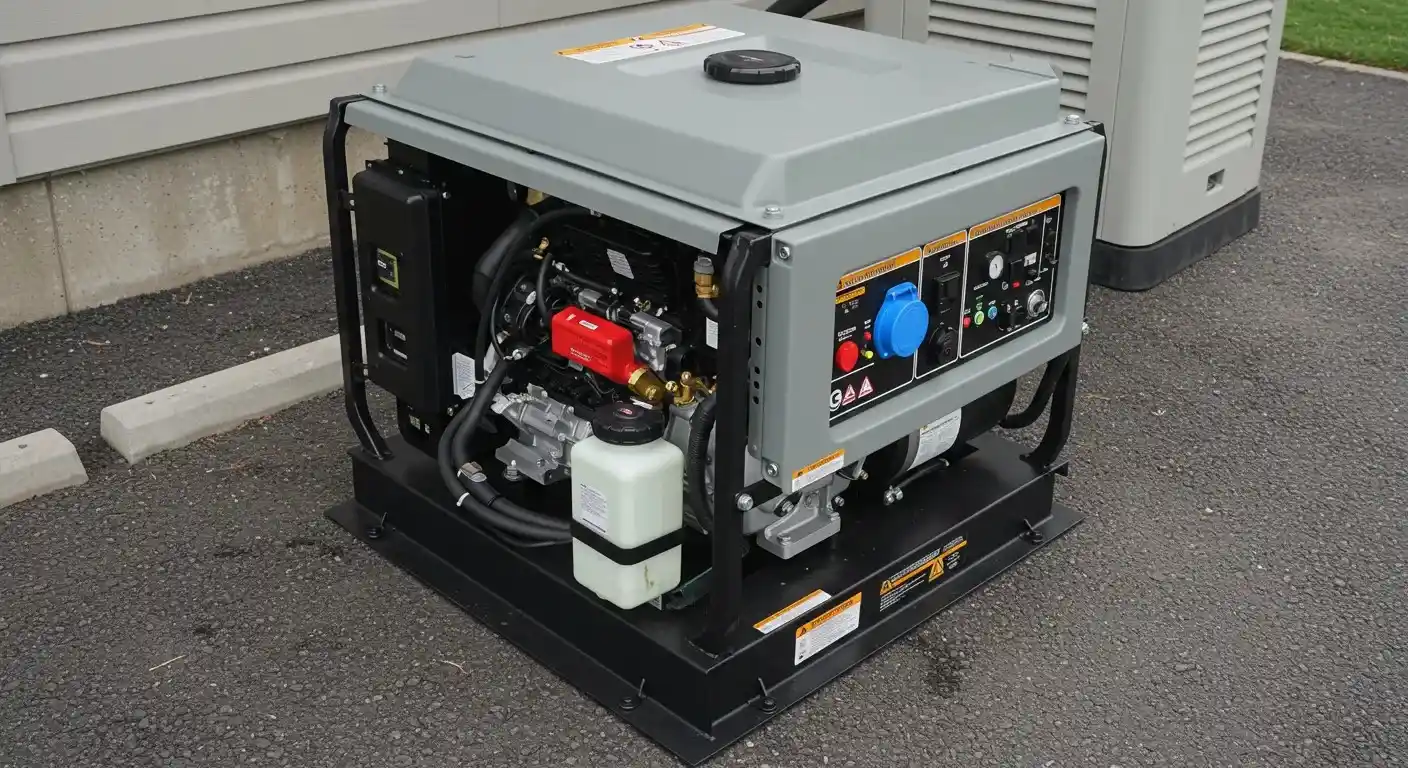
A whole-home standby generator is the gold standard for storm preparedness. Installed permanently outside your home, these units run on your property’s natural gas or liquid propane supply.
When the utility power fails, an automatic transfer switch (ATS) detects the interruption within seconds, safely disconnects your home from the utility grid, ignites the generator engine, and transfers the electrical load to the generator. This seamless transition ensures your lights, security systems, refrigerators, and HVAC systems keep running without a hitch.
However, standby generators require proper planning and upkeep. Selecting the correct size is critical to ensure it can handle the starting wattage of your air conditioning compressors. Homeowners can learn more about sizing by reading what size whole home generator do i need and explore the physical installation process in our guide on whole home generator installation what to expect.
Additionally, safety is paramount. Generators must be placed at least 20 feet away from windows, doors, and fresh air intakes to prevent dangerous carbon monoxide (CO) poisoning. For a complete look at the advantages of these systems, see whole home generator benefits and what to know.
Whole-Home Battery Backup Systems
Whole-home battery backup systems (such as smart lithium-iron-phosphate battery banks) represent a modern, silent, and emission-free alternative to traditional combustion generators.
• How They Work: These systems sit between your electrical panel and the grid, constantly charging when utility power is normal. When an outage occurs, they transition to battery power almost instantly (often with a tiny half-second delay).
• Backup Duration & Limitations: The average power outage in Texas lasts about 2.5 hours. Under low-energy usage (lights, Wi-Fi, refrigerator), a standard single-unit home battery can easily provide power for up to 20 hours. Under moderate use, this drops to 12 to 14 hours.
• Managing High-Energy Loads: High-energy appliances like your central AC, electric clothes dryer, or water heater will drain a battery backup rapidly. If a battery system is overwhelmed by a sudden surge in demand, it will automatically shut off to protect itself. Most modern smart batteries will attempt up to three automatic restarts before requiring you to manually reset them via a smartphone app.
• Smart Integration: Pairing your battery with energy-efficient smart home devices allows you to dynamically shed non-essential loads during an outage. This extends your battery life significantly. To learn more about how smart home upgrades manage energy demand, read our analysis on do smart thermostats really save money.
• Fuel Source — Whole-Home Standby Generator: Natural Gas or Liquid Propane — Whole-Home Battery Backup: Electricity (Grid or Solar)
• Noise Level — Whole-Home Standby Generator: Moderate (similar to an outdoor AC unit) — Whole-Home Battery Backup: Completely silent
• Run Time — Whole-Home Standby Generator: Indefinite (as long as fuel is supplied) — Whole-Home Battery Backup: Finite (typically 10–20 hours per charge)
• Maintenance — Whole-Home Standby Generator: Annual engine service & fuel line checks — Whole-Home Battery Backup: Minimal (mostly software updates)
• Emissions — Whole-Home Standby Generator: Yes (carbon monoxide; must be placed outdoors) — Whole-Home Battery Backup: None
• Transition Time — Whole-Home Standby Generator: 10 to 30 seconds — Whole-Home Battery Backup: Near-instantaneous (<0.5 seconds)
Frequently Asked Questions About Texas Power Outages
How long will food stay safe in my refrigerator and freezer during an outage?
Your refrigerator will keep food safely cold (below 40°F) for up to 4 hours if you keep the doors closed. A full, unopened chest or upright freezer will maintain freezing temperatures for about 48 hours (or 24 hours if it is only half-full).
Once the power is restored, inspect your food carefully. Throw away any perishable items (meat, poultry, seafood, milk, eggs, or leftovers) that have been exposed to temperatures above 40°F for two hours or more. Remember: when in doubt, throw it out.
What is the difference between a brownout and a blackout, and how do they affect my HVAC?
A blackout is a complete loss of electrical power to an area. A brownout is a temporary drop in voltage from the utility provider, often characterized by dimming or flickering lights.
While a blackout simply shuts your HVAC system down, a brownout is far more dangerous. When voltage drops, your air conditioner's electric motors must draw significantly more current (amperage) to keep running. This extra current generates intense heat, which can quickly melt wire insulation, damage control boards, and burn out your expensive compressor motor.
To safeguard your equipment, we highly recommend installing a dedicated system monitor with surge suppression. If your system has already suffered from electrical fluctuations, do not hesitate to schedule an emergency hvac repair fort worth.
How often does a whole-home standby generator require maintenance?
Like any motor, standby generators require routine maintenance to ensure they perform flawlessly when called upon. You should schedule professional maintenance at least once a year or every 100 hours of run time, whichever comes first.
A standard maintenance checklist includes:
• Checking and replacing the engine oil and oil filter
• Inspecting and cleaning the air filter
• Checking battery health, terminal connections, and charge levels
• Examining fuel lines for cracks or leaks
• Testing the automatic transfer switch (ATS) operation
To keep your backup power system in peak condition, consult our comprehensive generator maintenance colonial hills guide.
Secure Your Comfort with DFW's Luxury HVAC & Generator Experts
Protecting your home during power outages in Texas is about more than just keeping the lights on—it's about preserving your family's safety, protecting your property, and maintaining your standard of living. At Fish Premier HVAC, we specialize in delivering "Whole Home Luxury" and "Expert HVAC Service For Whole Home Comfort."
Serving affluent homeowners across Keller, Westlake, Colleyville, and Southlake, our team provides concierge-level service, premium installations, and advanced residential power and climate solutions. Whether you need a high-efficiency HVAC system upgrade, an advanced air scrubber, or a professionally installed whole-home standby generator, we bring unmatched expertise and attention to detail to every project.
We operate under Texas License #TACLB99535E out of our Fort Worth location. We are available during our standard business hours (Monday-Friday, 8:00 AM - 6:00 PM) and offer prompt, expert after-hours emergency services when you need us most.
Don't wait for the next storm to test your home's defenses. Contact us today to learn more about our premium Power Outage Protection solutions.